Table of Contents
- What You’ll Need Before You Start Styling
- Step 1: Plan Your Layout and Spatial Flow
- Step 2: Choose a Neutral Palette for Understated Elegance
- Step 3: Layer Lighting for Warmth and Function
- Step 4: Layer Textures and High-End Materials
- Step 5: Select Statement Pieces That Work Hard
- Step 6: How to Style a Coffee Table With Luxury Decor
- Step 7: Quiet Luxury Living Room Ideas for a Timeless Look
- Frequently Asked Questions
Last Updated: September 17, 2026
What You’ll Need Before You Start Styling
Functional luxury decor is the practice of choosing pieces that look refined and work hard every day. This guide walks you through seven steps to get there.
- A tape measure and a notepad
- Painters tape for marking zones on the floor
- Your room’s main dimensions written down
- A list of how the room actually gets used
- Photos of any furniture you plan to keep
- A budget range for the full project
Buying a statement piece before you measure is the most common and costly mistake. A sofa that is 15 cm too deep can cut a walkway below the 90 cm minimum and make the whole room feel cramped.
Step 1: Plan Your Layout and Spatial Flow
Spatial flow is how people move through and use a room without bumping into furniture. A good functional layout starts with two numbers: walkway width and seating distance.
Measure Walkways and Conversation Zones
Keep main walkways at least 90 cm wide. Side paths can drop to 60 cm. For conversation, pull seating 2.5 to 3.5 meters apart. Closer feels tense. Farther feels distant.
Choose Multipurpose Furniture That Earns Its Space
Multipurpose furniture does two jobs in one footprint. A storage ottoman holds blankets and seats a guest. A console with drawers hides clutter and anchors a wall.
Step 2: Choose a Neutral Palette for Understated Elegance
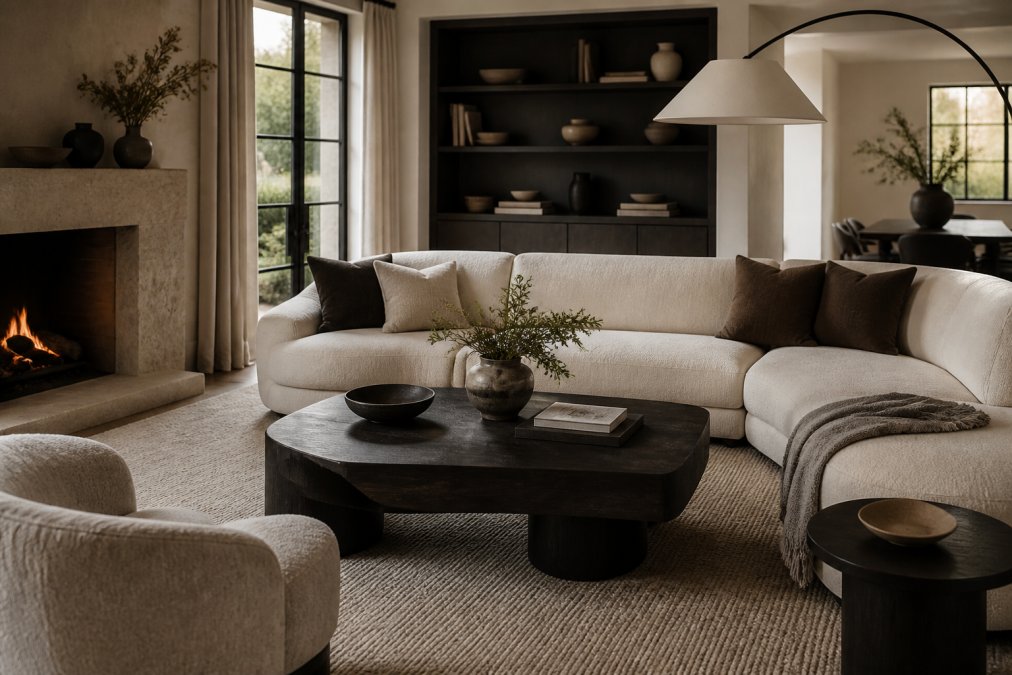
A neutral palette is a base of soft whites, warm greys, taupes, and creams. It creates understated elegance and makes the room easy to change over time.
Step 3: Layer Lighting for Warmth and Function
Layered lighting means using three types of light together: ambient, task, and accent. This mix gives a room both warmth and function at any hour.
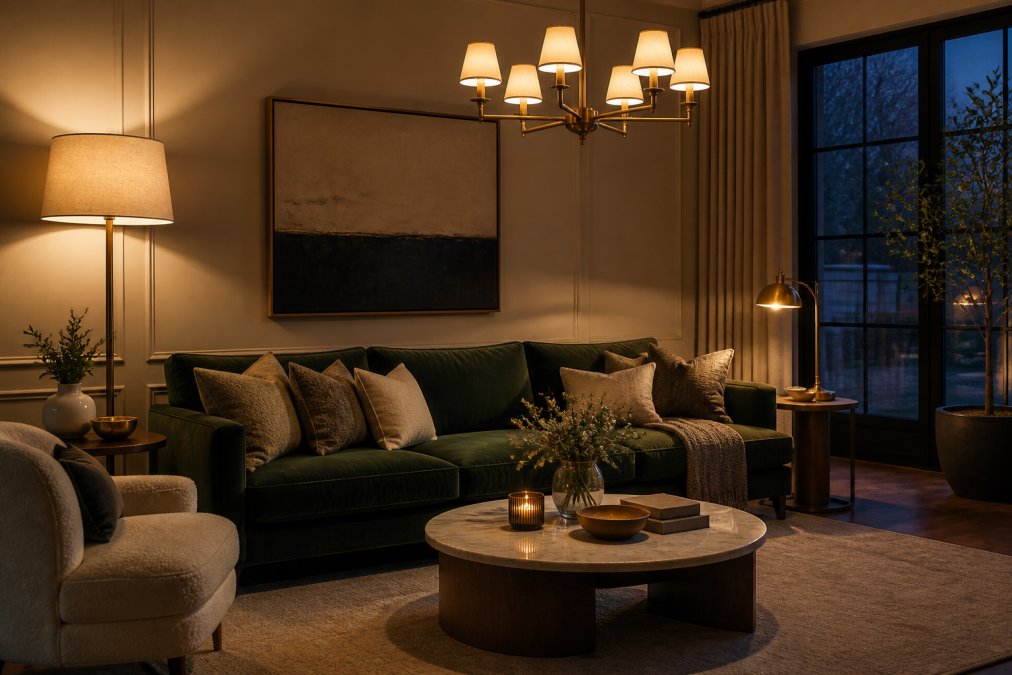
Warm bulbs in the 2700K to 3000K range flatter skin tones and wood finishes. Cool white bulbs make even expensive furniture look flat and clinical.
Step 4: Layer Textures and High-End Materials
Texture layering is the art of mixing materials so a room feels rich to the eye and the hand. High-end materials do the heavy lifting here.
Step 5: Select Statement Pieces That Work Hard
A statement piece is a focal point that also serves a daily purpose. The best ones earn attention and use in equal measure. Most guides stop at aesthetics. The real test is whether the piece still feels good and looks good after a year of daily use.
Anchor the Room With One Piece
Choose one anchor per room. A sculptural floor lamp, a hand-finished console, or a unique cabinet all qualify. Then let the rest of the room stay quiet. Two anchors compete; one anchor directs the eye.
The Ergonomics Check Most Guides Skip
A beautiful chair you cannot sit in for an hour is a sculpture, not furniture. Before you buy, run three quick checks:
- Seat height. For a lounge chair, look for a seat height around 16 to 18 inches. Below 15 inches, most adults struggle to stand up without pushing off the arms.
- Seat depth. A depth of 20 to 22 inches fits most adults. Deeper than 24 inches and shorter users will slide forward to keep their feet on the floor.
- Arm height. Arms around 25 to 27 inches from the floor let you rest your forearms without hunching. Low arms look sleek but offer no support.
Durability and Finish: The Question to Ask First
A statement piece you love but cannot clean will frustrate you within a year. Ask what the finish is and how it is maintained before you fall for the silhouette.
- Performance fabrics (solution-dyed acrylic, tight-weave polyester blends) resist spills and clean with mild soap and water. Good for households with kids or pets.
- Aniline leather develops a patina but stains easily and needs conditioning. Better for low-traffic rooms.
- Lacquered or high-gloss finishes show every fingerprint. Matte and oiled finishes hide wear better in daily-use rooms.
- Marble and stone tops etch from citrus and wine. A honed finish hides etching better than polished.
Match the Piece to the Room’s Real Job
| Piece | Second Job | Best For |
|---|---|---|
| Storage ottoman | Seating and blanket storage | Small rooms |
| Console with drawers | Entry catch-all and display | Hallways |
| Nesting tables | Flexible surface and display | Tight corners |
| Bench with shelf | Seating and shoe storage | Entryways |
| Upholstered armchair with a tight back | Reading seat that holds its shape | Corners and reading nooks |
If a statement piece has no second job and no comfortable seat, treat it as art. Budget for it like art, not like furniture, and place it where it will not be sat on.
A Note on Sustainable Luxury Materials
A growing share of buyers ask where a piece comes from and what it is made of. Look for solid hardwood frames (kiln-dried hardwood outlasts particleboard by years), FSC-certified wood, and natural fibers like wool, linen, and cotton. These materials age well and often look better with time. They also tend to be repairable, which is the quiet secret behind a piece that stays in a room for decades.
Step 6: How to Style a Coffee Table With Luxury Decor
Styling a coffee table with luxury decor comes down to three layers: a base, a stack, and a living element. Keep it to three to five objects total.
Step 7: Quiet Luxury Living Room Ideas for a Timeless Look
Quiet luxury living room ideas focus on quality over logos. The look is calm, cohesive, and built to last. It never shouts. What most guides leave out is the part that actually keeps a quiet-luxury room looking expensive six months in: maintenance, restraint, and a few high-low moves that stretch the budget.
Build Cohesion Without Matching Sets
Start with a cohesive aesthetic across all pieces. Repeat one material, like brass or walnut, in three places. This ties the room together without matching sets. Repeat one color in three values (light, mid, deep) and one finish (matte, satin, or polished) across the room. Three repeats read as intentional; four or more read as a theme.
Choose Timeless Over Trend
Choose timeless design over fast trends. A clean-lined sofa in a neutral fabric will outlast any patterned piece. Add personality through art and accessories you can swap. When a trend tempts you, ask whether the piece would look at home in a photo from ten years ago. If not, rent the trend through a cushion or a throw, not a sofa.
Keep Surfaces Calm
Keep the room clutter-free. Store everyday items in closed cabinets and drawers. A calm surface is the clearest sign of a well-designed space. A simple rule: no more than three objects on any flat surface, and at least one of them should be functional (a lamp, a tray, a bowl).
Maintain the Finishes That Make It Look Expensive
This is the step almost every guide skips. Quiet luxury only stays quiet when the finishes are cared for.
- Marble and stone. Wipe spills promptly. Citrus, wine, and vinegar etch the surface. Use a pH-neutral stone cleaner, never an acidic all-purpose spray. Reseal every 6 to 12 months depending on use.
- Velvet. Vacuum with a soft brush attachment on low. Steam lightly to lift crushed pile. Rotate cushions monthly so wear is even.
- Silk and linen. Dry clean silk. Wash linen cold and air-dry to avoid shrinkage. Both fade in direct sun, so rotate or line with a UV-blocking panel.
- Brass and unlacquered metals. A patina is the point. If you want it bright, a lemon-and-salt paste works, but it strips the protective layer, so use it sparingly.
- Wool rugs. Rotate every 6 months so foot traffic does not create a visible path. Vacuum without a beater bar to protect the fibers.
High-Low Moves That Keep the Look
Quiet luxury does not require an unlimited budget. A few swaps deliver the same calm at a fraction of the cost:
- Splurge on the anchor, save on the supporting cast. Put the budget into the sofa or the statement light. Save on side tables, bookends, and secondary textiles.
- Buy one great lamp instead of three average ones. A single well-made brass or alabaster lamp reads more expensive than a trio of mass-market fixtures.
- Use a large, inexpensive wool rug under a smaller, high-end one. Layering hides wear and adds depth for less than one oversized luxury rug.
- Reframe existing art. A new mat and frame can make a print look bespoke for a fraction of new art.
- Swap hardware, not furniture. New solid-brass pulls on a plain cabinet change the whole piece.
Shop With Function in Mind
For those ready to shop high quality decor online, look for pieces that blend beauty with daily function. Read the care instructions before you buy. If a piece needs a specialist to clean and you do not have one, it will not stay luxurious for long. That blend of beauty, care, and daily function is what makes a room both lovely and livable.
Frequently Asked Questions
What is the 60-30-10 rule for decorating living rooms?
The 60-30-10 rule is a classic proportion guide for building a cohesive palette. Use 60 percent of a dominant neutral (walls, large upholstery), 30 percent of a secondary tone (rug, curtains, accent chairs), and 10 percent of an accent color (pillows, art, small decor). In a functional luxury decor scheme, keep the 60 and 30 in refined neutrals like warm white, greige, or taupe, and let the 10 percent carry a metal or deep jewel tone. This keeps the room calm while still giving the eye a focal point.
How do you balance functionality and aesthetics in high-end design?
Start with how the room is actually used: traffic paths, seating count, and storage needs. Then choose pieces that solve those needs without visual clutter. A bench with hidden storage, a coffee table with a lower shelf, or a console with cable management all serve a purpose while looking intentional. The rule is simple: if a piece does not serve a daily function or anchor the design, it does not stay. That is the core of functional luxury decor.
What are the best materials for durable luxury home decor?
Look for high-end materials that age well: kiln-dried hardwood frames, top-grain or full-grain leather, wool and performance-blend textiles, and stone or metal surfaces with a protective finish. For upholstery in homes with kids or pets, performance fabrics rated for 30,000 double rubs or more hold up to daily use. Solid brass, bronze, and powder-coated metals resist tarnish and scratches better than plated finishes. These choices keep the room looking refined for years, not months.
How can I incorporate quiet luxury into my living room decor?
Quiet luxury living room ideas focus on restraint: fewer pieces, better materials, and a muted palette. Choose one or two statement pieces, like a sculptural floor lamp or a hand-finished coffee table, and keep the rest understated. Layer textures such as boucle, linen, and cashmere in similar tones rather than adding pattern. Hide clutter in closed storage, and let architectural features like molding or a stone fireplace be the visual interest. The result feels calm, expensive, and timeless.
Building a living room that feels refined and holds up to daily life is a real challenge. Most rooms fail not from a lack of style, but from a lack of function. Verra Luxe Home offers a curated collection of premium decor built to blend artistic elegance with practical use. Every piece is chosen for beauty and durability, so your space stays a sanctuary of style for years. Browse the collection and find pieces that work as hard as they look.