Table of Contents
- Why Layering Textures Matters More Than Color
- How to Layer Textures in Decor: The 5-Step Foundation
- How to Mix Patterns and Textures Without Clashing
- Understanding Visual Weight in Interior Design
- Texture Layering by Room: Living, Bedroom, and Dining
- Decorating Tips for Non Designers: Rules of Thumb
- Texture Maintenance and Budget-Conscious Choices
- Conclusion: Build Your Cohesive Palette
- Frequently Asked Questions
Last Updated: September 7, 2026
Most decorating advice treats color as the star of the room. Texture layering is the quiet workhorse that makes a space feel finished, inviting, and personally yours. Learning how to layer textures in decor transforms a flat, catalog-style room into one with depth, warmth, and history. We curate pieces meant to be mixed, not matched, and this guide shows a method to build cohesive, tactile interiors.
Texture layering is the practice of combining materials with different surfaces, weights, and finishes to create visual and physical depth in a room. The goal is a space that feels balanced and inviting rather than chaotic or flat.
The good news? You do not need a design degree or a bottomless budget. The process breaks down into five repeatable steps. Below, we’ll show you exactly how to apply them, room by room, with practical rules that prevent the dreaded “Pinterest fail.”
Why Layering Textures Matters More Than Color
A room painted entirely in one color can still feel rich if the textures are right; the reverse is rarely true. Texture provides the sensory experience of a home, the visual weight that grounds a space, and the coziness that invites you to stay.
Color grabs attention, but texture holds it. When you master materiality, your neutral palette becomes anything but boring, a monochromatic scheme in linen, wool, and wood reads as sophisticated, while the same scheme in all-smooth surfaces reads as sterile.
How to Layer Textures in Decor: The 5-Step Foundation
Texture layering follows a simple logic: start broad, then build specificity. You are constructing a composition, and each step adds a new dimension of depth and warmth.
Step 1: Start with a Neutral Base
Your foundation is the largest surface area: the sofa, the rug, the bed. Choose a neutral base in a solid color. This is not about being boring; it is about creating a canvas. A neutral palette in oatmeal, warm gray, or soft taupe allows every subsequent layer to stand out without competing for attention.
The base should have some texture of its own, ideally a medium-weight weave that is neither too slick nor too rough. This establishes the primary ground rule for everything that follows.
Step 2: Add Soft Furnishings
Next, introduce soft furnishings that invite touch. Think throw pillows and blankets in varying materials: a smooth velvet cushion against a nubby wool throw. These pieces are the easiest to swap seasonally, making them a low-commitment way to experiment with layering.
A common mistake is buying a matching pillow set. Instead, choose pillows that share a color family but differ in texture and finish. This creates cohesion without uniformity.
Step 3: Introduce Hard and Rough Surfaces
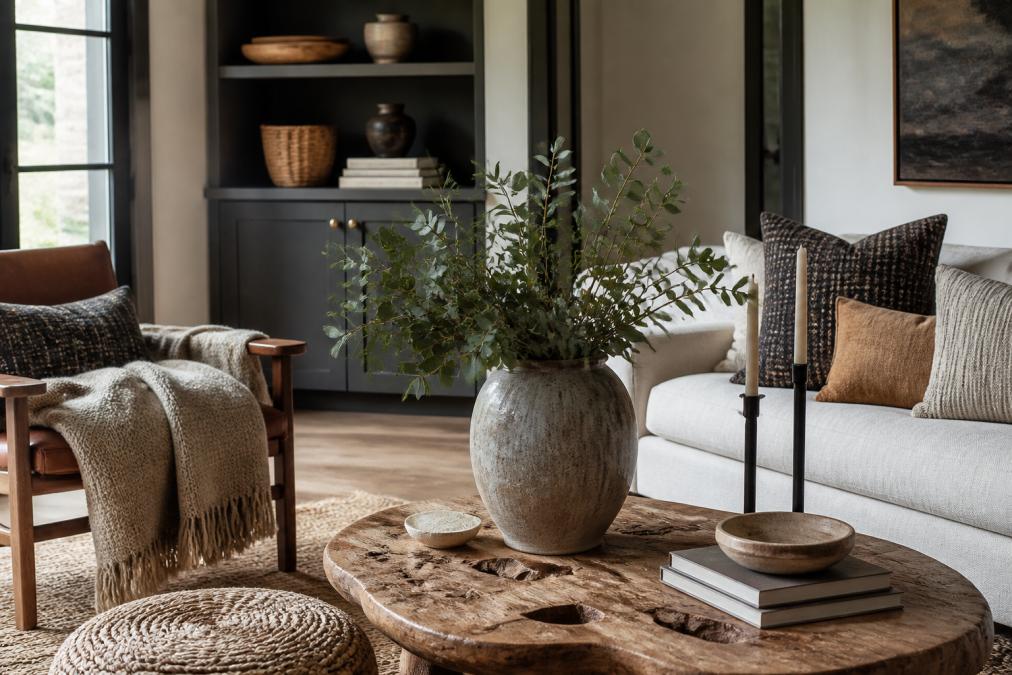
Now balance the softness with hard and rough surfaces. This is where contrast lives. A rough wooden coffee table, a stone vase, or a metal floor lamp adds a different materiality that makes the soft textiles feel even softer by comparison.
The interplay between a chunky knit throw and a smooth ceramic lamp base is what gives a room its professional, layered look. Without this step, rooms can feel overly feminine or one-dimensional.
Step 4: Layer in Nubby and Organic Textiles
Bring in the nubby, organic textiles that add character. Think boucle chairs, jute rugs, linen curtains, or a rattan pendant light. These materials introduce an imperfect, handmade quality that mass-produced smooth finishes lack.
Organic textures like wood grain, woven seagrass, and raw linen add warmth and a sense of nature, which psychologically grounds a space.
Step 5: Finish with Statement Pieces
Finally, add statement pieces that carry visual weight. This could be a sculptural vase, an oversized mirror with a textured frame, or a piece of wall art. These items should be the exception to the rule, the moment your eye rests.
A statement piece works best when it contrasts with its surroundings, whether through scale, sheen, or an unexpected material.
When you layer textures, aim for odd numbers in your groupings, three pillows, five objects on a tray. Odd groupings feel more organic and less rigid than even sets.
How to Mix Patterns and Textures Without Clashing
The fear of clashing stops many people from experimenting. The solution is a simple ratio: keep your base solid, limit patterns to two complementary prints, and vary their scale.
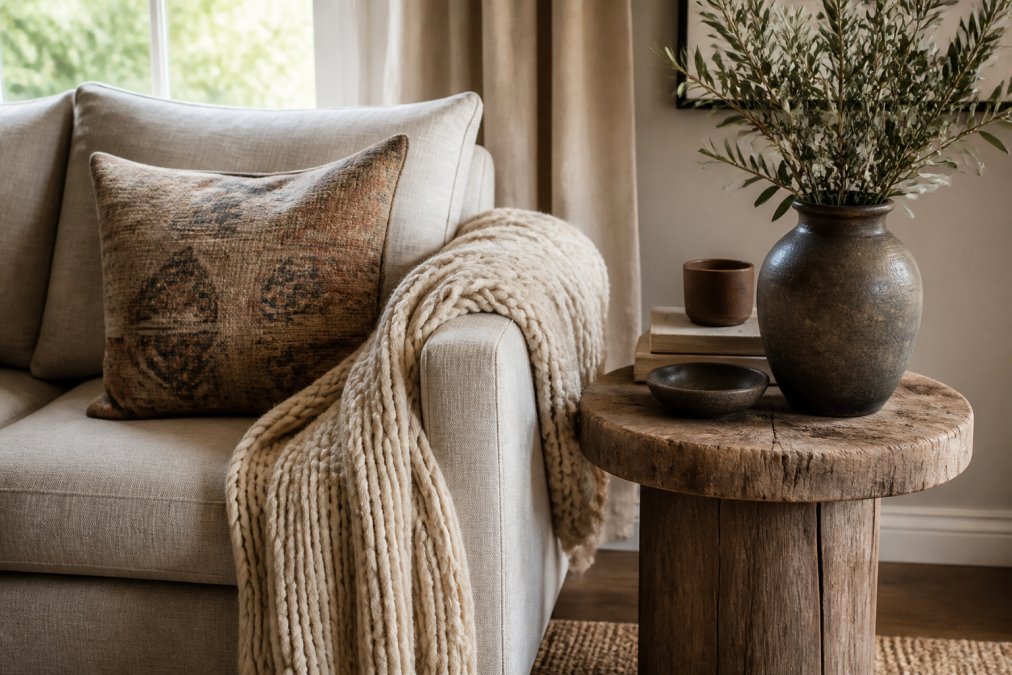
If one pattern is large and floral, pair it with a small geometric print. They should share at least one color from your undertones to feel connected. For example, a striped pillow and a floral one both containing a hint of rust will look intentional together.
The same logic applies to textures. A chunky cable knit and a smooth velvet will not clash; they will complement. Clashing happens when two items compete for the same visual space, such as two bold patterns of identical scale or two shiny metallic finishes side by side.
Understanding Visual Weight in Interior Design
Visual weight in interior design refers to how much attention an object draws based on its size, color, and texture. A large, dark, rough object feels heavier than a small, light, smooth one; balance is achieved by distributing this weight evenly.
Use this principle to fix a room that feels “off”: if a large sofa sits on one wall, balance it with a substantial bookcase or large plant on the opposite side; if a space feels top-heavy, add a dark, textured rug to ground it.
Texture directly influences visual weight, a rough, dark wall hanging anchors a space more than a delicate, light print of the same size. Consider how each piece’s materiality contributes to the overall composition and balance.
Texture Layering by Room: Living, Bedroom, and Dining
Each room has a primary function, and texture should support it. Here’s a detailed, actionable breakdown, what to layer, in what order, and what to avoid, so you can apply the 5-step foundation to real spaces.
Living Room: Comfort and Conversation
The living room is where texture does the heaviest lifting. Start with the largest surface: the rug. A common professional trick is the layered rug approach, place a flat-weave sisal or jute rug (8×10 feet or larger) as the base, then top it with a smaller, higher-pile wool or patterned rug (5×7 or 6×9 feet) angled slightly off-center. This instantly adds depth underfoot without a full remodel.
Next, address the sofa. If it’s smooth leather or flat cotton, add a textured throw, chunky knit, cable knit, or faux fur, draped over one arm. Then choose pillows with contrasting textures and scales: one smooth velvet, one nubby boucle or woven, and one with a subtle pattern, sticking to a palette of 2-3 colors.
For hard surfaces, mix materials: a rough-hewn wood coffee table, a matte ceramic vase, and a brushed brass floor lamp. Avoid placing two shiny metallic finishes side by side, they compete. Instead, pair a glossy ceramic lamp base with a matte wood table.
Pro tip: In high-traffic areas, choose performance fabrics (e.g., Crypton or Sunbrella) for upholstery and rugs (crypton.com). They resist stains and are easier to clean, essential if you have kids or pets.
Bedroom: Maximum Coziness and Tactile Comfort
The bedroom is your sanctuary, so prioritize softness and warmth. Start with the bed, the visual and physical anchor. Layer in this order:
- Smooth cotton sheets (high thread count, like 400+ for a crisp feel).
- A textured quilt or coverlet, think matelassé or a light waffle weave, folded at the foot.
- A chunky knit or cable-knit throw draped across the bottom third.
- Pillows with varied finishes: two sleeping pillows in smooth cotton cases, two accent pillows in velvet or linen, and one lumbar pillow in a nubby weave or faux leather.
This creates a hotel-like look without a whole new set. For the floor, add a plush wool or shag rug (at least 5×8 feet) that extends beyond the sides of the bed, softening the transition from bed to floor and feeling luxurious underfoot.
Lighting matters too: a woven rattan or fabric drum pendant adds texture overhead, while a ceramic or stone table lamp on the nightstand introduces hard-soft contrast.
Avoid: Overloading the bed with too many pillows, it becomes impractical. Stick to 4-6 pillows total, and ensure the textures differ but the colors harmonize.
Dining Room: Durability Meets Elegance
The dining room balances durability with sophistication. Start with the table: if it’s smooth wood or glass, add a textured runner, linen, jute, or woven cotton, to break up the surface and add warmth. For everyday dining, choose stoneware or ceramic plates with a matte glaze; they feel more tactile than shiny porcelain.
Layer in linen or cotton napkins with a visible weave, and use a wooden or stone centerpiece, a large bowl, candlesticks, or a sculptural branch, to add organic texture. For seating, consider chairs with upholstered seats in a performance fabric or leather; both are durable and add softness.
Lighting: a pendant light with a textured shade, rattan, fabric, or hammered metal, draws the eye and adds dimension. Avoid all-glass or all-metal fixtures, which can feel cold.
Pro tip: in a dining room, the contrast between shiny glassware and a matte, rough table surface creates sophisticated tension. Mix a polished glass or crystal water glass with a matte ceramic dinner plate for a layered look.
Quick Reference: Room-by-Room Texture Checklist
| Room | Foundation | Soft Layer | Hard/Contrast Layer | Organic Accent |
|---|---|---|---|---|
| Living | Layered rugs (sisal + wool) | Velvet pillows, chunky throw | Wood coffee table, brass lamp | Rattan basket, stone vase |
| Bedroom | Smooth sheets + quilt | Chunky knit throw, velvet pillows | Ceramic lamp, wood nightstand | Jute rug, linen curtains |
| Dining | Textured runner on table | Linen napkins, upholstered chairs | Stoneware plates, wood centerpiece | Rattan pendant, ceramic bowl |
This table gives you a starting point, adjust based on your existing furniture and style. The key is to ensure each layer serves a purpose and contributes to the overall sensory experience.
Decorating Tips for Non Designers: Rules of Thumb
If you feel intimidated, these decorating tips for non designers will keep you on track. Rules exist to be broken, but only after you understand them.
- The 60-30-10 rule: Use your neutral base for 60% of the room, a secondary texture or color for 30%, and an accent texture for the remaining 10%.
- The “touch test”: Before buying, imagine touching the item. If you cannot describe its texture in one word (smooth, rough, nubby, slick), it may not add enough value.
- Edit ruthlessly: Layering is not hoarding. Step back and remove one item. If the room still looks complete, you have achieved the right balance.
- Stick to a family: Choose textures that feel like they belong to the same aesthetic, coastal, rustic, or modern, to maintain a cohesive look.
The most common mistake is adding too many accent textures at once. A room with boucle, velvet, leather, fur, and rattan in equal measure looks cluttered, not curated. Limit yourself to three or four distinct textures per main seating area and edit your decor choices from there.
Texture Maintenance and Budget-Conscious Choices
Most texture-layering guides assume a designer budget and a housekeeper. But layered textures, especially rugs, throws, and upholstery, collect dust, pet hair, and stains. And if you’re on a budget, you need to know where to splurge and where to save. This section covers both.
Maintenance: Keeping Layered Textures Clean and Fresh
Layering textures means more surfaces to clean, but it doesn’t have to be a burden. Here’s a room-by-room maintenance routine that keeps your space looking curated, not dusty.
Rugs: vacuum at least once a week and rotate them every 3-6 months for even wear. For wool or sisal rugs, use a vacuum without a beater bar to avoid fraying. Spot-clean spills immediately with mild detergent and water, blot, never rub. Consider a professional steam clean once a year in high-traffic areas.
Upholstery: check the care label, most performance fabrics (like Crypton or Sunbrella) can be wiped with a damp cloth. For velvet, use a soft brush to lift the pile. Leather should be wiped with a damp cloth and conditioned every 6-12 months to prevent cracking.
Throws and pillows: wash removable covers according to the label, most can go in the machine on a gentle cold cycle. Air-dry to prevent shrinkage. For non-removable throws, spot-clean or dry-clean as needed.
Hard surfaces: dust wood tables regularly and polish with a wood-safe cleaner. Stone or ceramic pieces can be wiped with a damp cloth. Avoid harsh chemicals that strip finishes.
Pro tip: use a lint roller or rubber glove to quickly remove pet hair from upholstery and throws, it’s cheaper than a specialized brush and works surprisingly well.
Budget-Conscious Texture Layering: Where to Spend and Save
You don’t need a designer budget to achieve a layered look. The secret is to prioritize items you touch and use daily and get creative with the rest.
Splurge on:
- The sofa, the anchor of your living room; a quality frame and fabric will last for years.
- The bed, a good mattress and high-quality sheets (400+ thread count) improve sleep and comfort.
- A large rug, it defines the space and is hard to replace, so invest in a durable material like wool or a performance blend.
Save on:
- Throw pillows and blankets, easy to swap seasonally, so buy budget-friendly options and replace them when trends change.
- Accent decor, vases, trays, and candleholders can be found at thrift stores or discount home goods for a fraction of the designer price.
- Curtains, ready-made linen or cotton curtains from big-box stores look high-end when hung properly (floor-length and slightly pooling).
Thrifting and DIY:
- Thrift stores and flea markets are goldmines for wooden frames, brass candlesticks, ceramic vases, and vintage textiles, items with a patina that new pieces lack, adding instant character.
- DIY texture projects: a simple linen slipcover for a worn armchair, a painted rattan tray, or a reupholstered ottoman can add significant texture for less than you think. Even adding new trim to a plain curtain can make it look custom.
- Mix high and low: pair a premium, durable sofa with budget-friendly pillows. The mix of quality and trend pieces is a hallmark of collected, lived-in interiors.
Budget-friendly material swaps:
- Instead of expensive boucle, try a faux boucle or chunky cotton knit, similar texture at a fraction of the cost.
- Instead of a wool rug, consider a jute or sisal rug, natural, textured, and affordable.
- Instead of designer ceramic vases, look for stoneware or terracotta at craft stores or online marketplaces.
The Bottom Line
Texture layering should not come at the cost of practicality, or your wallet. By prioritizing maintenance and making smart budget choices, you can create a space that feels luxurious and lived-in without the designer price tag. The goal is a room that responds to touch, has depth and warmth, and reflects your values, that’s the definition of a sanctuary.
Conclusion: Build Your Cohesive Palette
Mastering how to layer textures in decor is less about strict rules and more about training your eye to see materiality. Start with a solid neutral base, add softness, introduce contrast with hard surfaces, and finish with organic, nubby details that add character. Approach a room this way and you build a cohesive palette that feels both intentional and effortlessly personal.
The challenge is resisting the urge to buy everything at once. Take your time, let each layer settle, and edit as you go. When you’re ready to find pieces that blend artistic elegance with practical durability, a curated collection is designed to mix seamlessly with what you already own, helping you transform your house into a true sanctuary of style.
Frequently Asked Questions
What is the 70/30 rule in interior design?
The 70/30 rule suggests that roughly 70% of a room’s visual interest should come from a dominant element, like a neutral base color or a primary texture, while the remaining 30% comes from contrasting accents. This prevents a space from feeling chaotic. When layering textures, apply this by keeping your main upholstery and walls understated, then using the smaller percentage for bold patterns, rough finishes, or shiny statement pieces.
Does layering textures make a room look cluttered?
No, layering textures does not make a room look cluttered if you follow a few guidelines. Clutter happens when there is no visual cohesion or when every piece fights for attention. To avoid this, stick to a consistent color palette with similar undertones and vary the scale of your items. A room with a neutral palette and diverse textures, from a nubby wool rug to a smooth ceramic vase, feels curated and warm, not messy.
How do I balance different textures in a single room?
Balancing textures relies on controlling visual weight. Pair heavy, rough items like a chunky knit throw or a reclaimed wood coffee table with lighter, smooth pieces like a glass lamp or a silk cushion. Aim for contrast rather than matching. If you use a high-sheen material, balance it with a matte finish nearby. This contrast creates depth and prevents any single surface from feeling out of place.
What is the difference between visual texture and tactile texture?
Tactile texture is how a surface actually feels to the touch, such as the softness of velvet or the roughness of jute. Visual texture is an illusion; it is how a surface appears to feel based on its pattern or materiality. For example, a rug with a high-contrast geometric print has visual texture, while a plain, fluffy rug has tactile texture. A sophisticated interior layers both types to create depth and interest.
The secret to a professional-looking home is not perfection, it is thoughtful composition. By focusing on tactile variety and visual weight, you can create interiors that feel layered, warm, and uniquely yours. Explore the exclusive decor pieces at Verra Luxe Home and get started on building a space that inspires creativity and everyday living.