Table of Contents
- The Shift to Artistic Home Decor in 2026
- 1. Maximalist Details Within Minimalist Spaces
- 2. The Power of Artistic Statement Pieces for Living Room
- 3. Sculptural Elements and Organic Shapes
- 4. Curated Eclectic Home Aesthetic and Vintage Integration
- 5. Textile Art and Decor Accent Pillows as Wall Features
- 6. Sustainable Materials and Artisan Craftsmanship
- 7. The Psychology of Color and Dopamine Decor
- Frequently Asked Questions
Last Updated: September 8, 2026
After years of sterile minimalism, homeowners are craving spaces that reflect personality and feel genuinely lived-in. Modern artistic home decor trends for 2026 are defined by curated, expressive interiors that balance bold statements with everyday comfort. This guide breaks down the seven defining trends of the year and shows you how to bring them into your own space.
The overarching theme is a departure from the “showroom” look. People are blending styles, mixing vintage finds with contemporary art, and choosing decor that sparks joy and conversation. Below, we explore each trend, what makes it work, and how to execute it without overwhelming your space.
The Shift to Artistic Home Decor in 2026
Artistic home decor is the practice of treating every element in a room as a piece of the composition, not just a functional object. It moves beyond hanging a single painting to curating an environment where texture, color, and form work together, prioritizing pieces with character or a handcrafted feel over generic, trend-driven items.
This shift is driven by a desire for authenticity. Many homeowners have spent years in neutral, safe spaces and are now ready for more visual interest. The result is design that feels personal and collected over time, embracing imperfection and celebrating the artisan over the assembly line.
1. Maximalist Details Within Minimalist Spaces
The first major trend is a nuanced blend: maximalist details sitting comfortably within a minimalist framework. This is not a return to clutter but about using a restrained palette and clean lines as a canvas for a few high-impact, expressive elements, such as a simple, light-filled room with one wall covered in a bold, textural wallpaper.
The key is curation. Where a purely minimalist room might feel cold, a single striking element creates warmth and a focal point, allowing you to experiment with bolder aesthetics without a full maximalist overhaul. A common mistake is adding too many competing details, which turns a curated space into a chaotic one. The goal is a deliberate tension between calm and energy.
2. The Power of Artistic Statement Pieces for Living Room
The living room is where artistic statement pieces for living room truly shine. This is the space for the oversized abstract painting, the uniquely shaped coffee table, or the hand-thrown ceramic vase that commands attention, serving as the anchor of the room’s design.
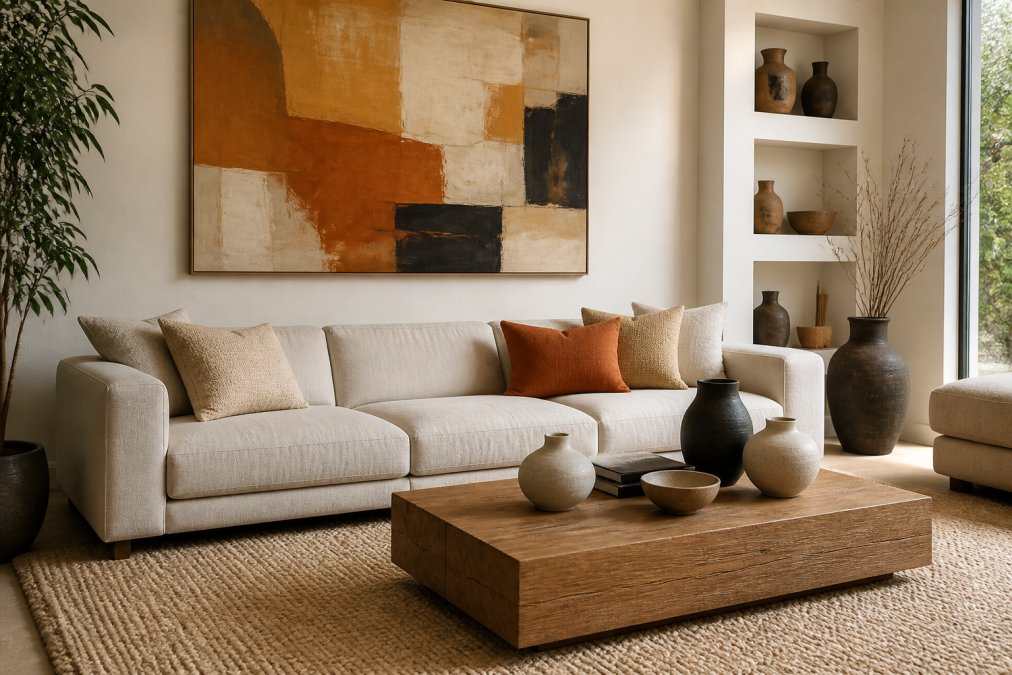
When selecting a statement piece, consider its visual weight and how it interacts with the room’s layout. A large-scale artwork can define a seating area, while a sculptural floor lamp can draw the eye upward. A useful guideline is to let the statement piece dictate the room’s color story and build around it with quieter, supporting elements (architecturaldigest.com).
3. Sculptural Elements and Organic Shapes
Rigid, straight lines are giving way to fluid, organic forms. Sculptural elements, from curved sofas to amoeba-shaped mirrors and rounded vases, are central to the modern artistic home, softening a room’s geometry and introducing a sense of movement and natural flow.
This trend often feels out of reach for apartment dwellers or those on a budget, but sculptural design is highly scalable and can be achieved with inexpensive, DIY, and small-space solutions.
The Budget-Conscious Approach: DIY and Thrift
Before you invest in a high-end curved sofa, consider that the essence of this trend is the shape, not the price tag. A weekend project can yield a striking, sculptural accent piece for under $50 (bhg.com). For example, you can create an organic-shaped mirror by purchasing a standard round mirror and framing it with flexible, bendable molding or rope, shaped into a freeform outline and painted to match your trim.
Thrift stores and online marketplaces are treasure troves for this aesthetic. Look for items with curves and irregular forms: a ceramic vase with a twisted silhouette, a wooden bowl with a natural, uneven edge, or a floor lamp with a sculptural, arched stem. A coat of spray paint in a matte, earthy tone can unify disparate thrifted finds into a cohesive collection, saving money and giving a second life to well-made objects.
Small-Space Integration: The Power of One
In a small apartment, a large, curvy sofa can overwhelm a room. The solution is to use sculptural elements as deliberate focal points. A single, sculptural accent chair in a corner, perhaps a used piece reupholstered in a bold, textured fabric, can transform the room’s energy, becoming the visual anchor while the rest of the furniture remains simple and functional.
Another effective small-space strategy is to take the sculptural element vertical. A tall, arched floor mirror adds a curve and reflects light, making the room feel larger. A wall-mounted, sculptural shelf with an irregular design provides both storage and art, eliminating the need for a separate console table. Choose one or two high-impact items that serve a dual purpose rather than multiple purely decorative objects.
Material and Finish Considerations
When selecting or creating sculptural pieces, the material and finish are critical. The trend is moving away from high-gloss surfaces toward natural, tactile materials like matte ceramics with a speckled glaze, limewash-painted walls, and furniture made from solid, unvarnished wood. These materials look more grounded and age better, developing a patina over time.
A common mistake is mixing too many sculptural forms without a unifying element. To avoid a chaotic look, choose a consistent material or finish across your pieces. For example, if you have a curved, boucle-upholstered chair, pair it with a coffee table and vases that share a similar off-white or cream tone. This principle of unity-through-material makes a sculptural space feel intentional and sophisticated, regardless of budget or square footage.
Quick Win: For an instant, low-cost sculptural update, visit a local craft store and purchase a bag of air-dry clay. Shape it into a set of small, organic, freeform bowls or a twisted candle holder. Once dry, paint them in a muted, earthy tone. These handmade pieces add a personal, artistic touch.
4. Curated Eclectic Home Aesthetic and Vintage Integration
The curated eclectic home aesthetic is the antithesis of the matched furniture set. It is about building a space that looks like it has evolved over time, mixing a modern sofa with a mid-century armchair and a rustic wooden trunk. Vintage integration is a key driver, as people seek out pieces with history that cannot be found in a new furniture store.
The challenge with eclectic decor is making it look intentional. The secret lies in a unifying element, whether a consistent color palette, a repeated material, or a similar level of formality. For example, a collection of disparate chairs can be unified by reupholstering them in the same fabric. Eclecticism also offers a sustainable path, giving new life to well-made furniture instead of contributing to disposable, fast furniture.
5. Textile Art and Decor Accent Pillows as Wall Features
Textiles are no longer confined to the floor or the sofa. The trend for 2026 elevates fabric to an art form, with woven wall hangings, macrame, and large-scale fabric panels used as primary wall features, adding softness and texture that framed prints cannot match.
Alongside wall hangings, decor accent pillows have evolved into key artistic elements. Pillows with bold, painterly patterns or hand-embroidered details function as a more accessible form of art, allowing for easy experimentation with color and pattern. When styling, use pillows to pull colors from a wall hanging or rug and tie the room’s palette together.
6. Sustainable Materials and Artisan Craftsmanship
A growing awareness of environmental impact is reshaping purchasing decisions. In 2026, there is a strong preference for decor made from sustainable materials like reclaimed wood, recycled metal, and organic fibers, going hand-in-hand with a renewed appreciation for artisan craftsmanship.
This movement is a direct response to the homogeneity of mass-produced goods. Consumers are increasingly interested in the story behind a piece. Choosing artisan-made decor often means owning a one-of-a-kind item that will last for decades. While these pieces may require a larger initial investment, their durability and timeless design are valued.
7. The Psychology of Color and Dopamine Decor
The final major trend looks inward, focusing on how our environment affects our mood. Dopamine decor is a design philosophy centered on choosing colors, patterns, and objects that genuinely make you happy, moving away from purely safe, neutral palettes toward bolder hues and expressive florals.
This section explores the psychological mechanisms and provides a practical framework for applying dopamine decor that is both personal and enduring.
The Science Behind the Palette
Color psychology is rooted in how our brains process visual stimuli (peer-reviewed research). Warm colors like reds, oranges, and yellows are associated with energy and excitement, making them ideal for social spaces like a dining room or a home office. Cool colors like blues, greens, and purples are linked to calmness and relaxation, making them a natural fit for bedrooms and reading nooks.
The most powerful psychological effect comes from personal association. A color that is calming for one person might be stressful for another, based on individual memories. The most effective dopamine decor is about identifying the shades that resonate with your own history. A practical exercise is to look through your wardrobe or photo library; the colors you are consistently drawn to are strong indicators of the palette that will make you feel most at home.
The 60-30-10 Rule and the Power of Accents
A common fear is that dopamine decor means painting every wall a bright, saturated color. This misconception leads to buyer’s remorse and a chaotic space. The most successful application uses a structured approach, such as the classic 60-30-10 rule: 60% of the room should be a dominant, often neutral, color (walls, large rug, sofa), 30% a secondary color (curtains, armchair, bedding), and 10% an accent color used for pops of joy (art, pillows, vases, books).
This framework allows you to inject vibrant colors without overwhelming the space. For example, in a living room with white walls (60%) and a navy blue sofa (30%), you can introduce small, colorful art prints, a bright yellow throw pillow, and orange ceramic vases (10%). This approach is budget-friendly and low-commitment, as the 10% accent pieces are easy to swap out seasonally, preventing the space from feeling dated.
Longevity and the ‘Slow Decor’ Movement
A significant critique of dopamine decor is that it encourages impulsive, trend-driven purchases. The counter is the ‘slow decor’ movement, which applies the principles of slow living to interior design, advocating for curating a small collection of meaningful, high-quality pieces over time.
When applying dopamine decor with longevity in mind, the focus shifts from the color to the meaning behind it. A vibrant, hand-woven textile from a trip, a piece of art created by a friend, or ceramics from a local potter are dopamine-inducing because of their stories, not just their hues. These pieces are less likely to feel dated because their value is tied to personal narrative, aligning with sustainable and artisan-craft trends.
Avoid the ‘Carnival Effect’. A common pitfall is using too many high-intensity colors in equal measure. This can lead to visual overstimulation and anxiety, the opposite of the intended effect. Always balance a bold accent color with a significant amount of neutral space to give the eye a place to rest.
A Practical Framework for Your Space
To start, choose one room you want to feel more energizing or calming and identify the primary emotion you want to evoke. Select a dominant neutral base, choose one secondary color that supports the mood, and curate a small collection of accent pieces in a contrasting, joyful color, such as a stack of art books with bright spines or a single, large-scale abstract painting. This structured approach harnesses the psychological power of color to create a home that supports your well-being without falling into a fleeting trend.
Frequently Asked Questions
What is the newest home decor trend for 2026?
The newest artistic home decor trend for 2026 is the blend of minimalist structure with expressive, curated details. This means keeping clean lines in your furniture while introducing bold elements like abstract paintings, sculptural lighting, and textured textiles. The focus is on creating visual interest through contrast, such as pairing a modern sofa with vintage accent pillows. This approach allows for personal expression without overwhelming the space, moving away from purely sparse interiors toward more layered, character-rich rooms.
How do I balance modern functionality with artistic decor?
Balance comes from selecting artistic statement pieces that serve a purpose or anchor a room without hindering daily use. Start with functional furniture in neutral tones, then layer in art through wall hangings, sculptural vases, and decor accent pillows. Ensure high-traffic areas remain clutter-free by choosing one focal artistic piece per zone. For example, a large canvas above a console table adds drama, while durable, textured pillows provide comfort and style without sacrificing practicality.
What are the most trending home decor items for a curated look?
For a curated eclectic home aesthetic, trending items include large-format abstract wall art, handcrafted ceramic vases, and organic-shaped mirrors. Textile art and decor accent pillows with unique weaves or patterns are also essential for adding warmth. These items work together to create a collected-over-time feel. Focus on pieces with artisan craftsmanship and sustainable materials to ensure longevity, as these elements form the backbone of a space that feels intentional and personalized rather than mass-produced.
How do I style accent pillows to complement artistic wall decor?
To style decor accent pillows with artistic wall decor, pull a secondary color from the artwork to use in your pillow selection. If your wall piece features bold strokes, choose pillows in solid, soft tones to balance the visual weight. Alternatively, if the art is minimal, use pillows with expressive florals or textures to add depth. Mixing two or three pillow sizes and shapes creates a casual, layered look that connects the seating area to the overall artistic theme of the room.