
Table of Contents
- What Curated Home Furniture Actually Means
- Building a Cohesive Look with Decor Accent Pillows
- How to Style a Living Room Like a Designer
- Eclectic Home Decor Tips for a Collected, Not Cluttered Look
- Performance Fabrics and Custom Upholstery That Last
- Space Planning and Sustainable Sourcing for Curated Home Furniture
- Frequently Asked Questions
Last Updated: September 24, 2026
What Curated Home Furniture Actually Means
Curated home furniture is a deliberately assembled collection of pieces chosen for how they relate to one another, not a room filled one item at a time. The distinction comes down to intent, proportion, and material quality. Below, we break down how to build a room that looks collected rather than catalogued, and why that approach holds up for years instead of one season.
Curated vs. Mass-Produced: The Real Difference
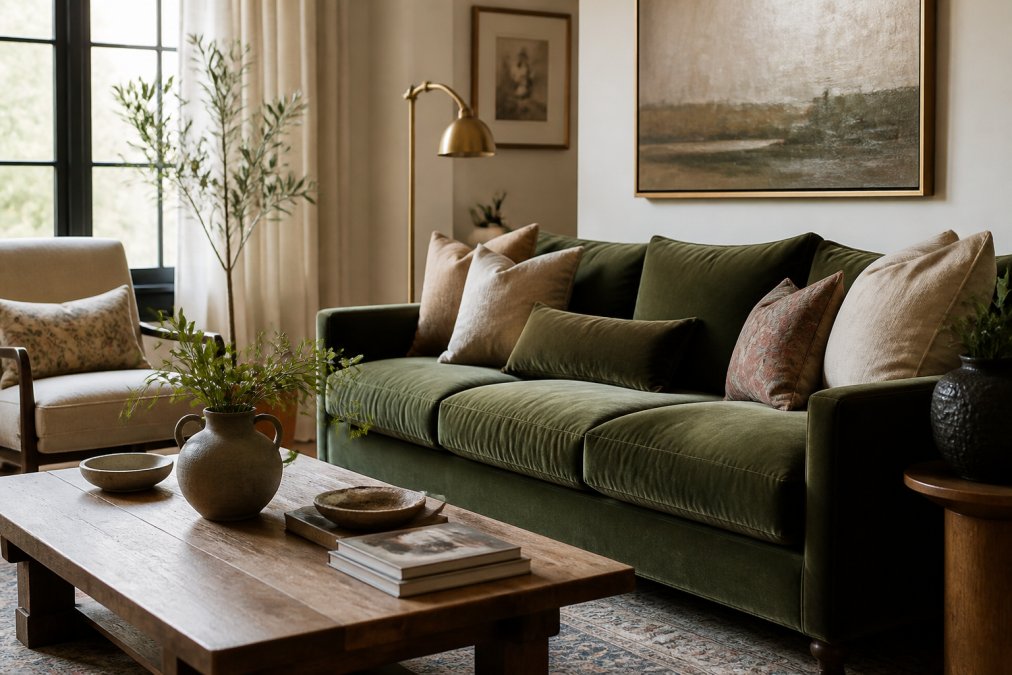
Mass-produced furniture is engineered for volume. Curated home furniture is engineered for longevity. That difference shows up in three places: joinery, material density, and finish consistency. A common mistake is assuming price alone signals quality. It doesn’t. What most guides miss is that a single well-made statement piece anchors a room better than five mid-tier items bought to fill space.
| Factor | Mass-Produced | Curated |
|---|---|---|
| Selection basis | Availability and trend cycle | Proportion, palette, and material harmony |
| Lifespan | Often a few years | Typically a decade or more with care |
| Resale and repair | Limited | Often repairable and sought after |
Buy one piece you love and build around it. Rooms assembled from a single anchor point consistently look more intentional than rooms filled to a budget.
Building a Cohesive Look with Decor Accent Pillows
Decor accent pillows are the fastest, lowest-risk way to test a color palette before committing to larger purchases. They carry texture, pattern, and color into a room without the cost or permanence of upholstery. The trick is treating them as a composition, not a collection, and getting the sizing and fill right so they actually hold their shape.
Sizing, Fill, and the Details Most Guides Skip
The most common mistake is buying pillows that are too small for the furniture. A standard sofa seat is roughly 22 to 24 inches deep, so a 20-inch square pillow reads as undersized on it. A practical rule: the pillow should span at least two-thirds of the seat depth. For a typical sofa, that means 22-inch squares for the back layer and 18- to 20-inch squares for the front layer.
Mixing Textures and Patterns Without the Clash
Texture does the heavy lifting. Pair a smooth fabric with a nubby one, then introduce pattern at a smaller scale than the room’s largest motif. If your rug has a bold geometric print, keep pillows in a smaller stripe or a solid with visible weave. Color palette coordination matters more than pattern matching. Pull one secondary color from your rug or art and repeat it in the pillows, and the room will read as deliberate even if nothing matches exactly.
Care and Rotation: The Maintenance Angle
Pillows are the highest-wear textile in most living rooms because they get handled, sat against, and sun-exposed daily. A few habits extend their life significantly:
- Rotate and flip pillows weekly so one face doesn’t take all the wear and sun fade.
- Vacuum covers on low suction with a brush attachment monthly to lift dust before it works into the weave.
- Spot-clean with a mild detergent and cool water; blot, don’t rub, to avoid pile distortion on velvet and chenille.
- Check the care code on the cover, many performance and linen-blend covers are machine washable on cold, while velvet and silk typically require professional cleaning.
- Store seasonal covers clean and flat, not compressed in a vacuum bag, which can set creases in structured fabrics.
Rotate pillow covers seasonally instead of buying new inserts. Storing two sets of covers takes one drawer and gives you a fresh room twice a year for a fraction of the cost of new pillows. Label the storage bag with the cover size so you don’t have to re-measure next season.
How to Style a Living Room Like a Designer
Learning how to style a living room like a designer comes down to three moves: establish a focal point, vary height, and leave negative space. Designers rarely fill every surface. They group objects in odd numbers, layer lighting at three heights, and keep at least one wall or corner deliberately quiet so the eye has somewhere to rest.
The 2/3 Rule and Other Layout Principles
The 2/3 rule holds that furniture should occupy roughly two-thirds of a room’s footprint, leaving one-third open for circulation. It’s a starting point, not a law, but it prevents the two most common layout errors: floating furniture in the middle of a large room and cramming seating against every wall.
Other principles worth applying:
- Anchor seating on a rug large enough that front legs sit on it
- Keep 18 inches between a coffee table and sofa for legroom
- Pull furniture off the walls in large rooms to create conversation zones
- Match lamp height to the surface it sits on, not the room’s ceiling height
Eclectic Home Decor Tips for a Collected, Not Cluttered Look
Eclectic home decor tips work best when they follow one constraint: repeat a single element across every piece. That element can be a metal finish, a wood tone, or a color. Without it, “eclectic” collapses into “unrelated.” Vintage finds and new pieces coexist well when they share a common thread, whether that’s brass hardware, warm walnut, or a muted palette.
The Space-Planning Layer Most Guides Skip
Eclectic rooms fail more often from layout than from taste. Before you buy a single piece, measure the room and tape out the footprint of anything you’re considering. Two numbers do most of the work:
- Walkway width. Leave at least 30 inches for a primary path and 36 inches where two people pass. Below 24 inches, a room feels blocked no matter how good the furniture looks.
- Conversation distance. Seating arranged for conversation works best when the gap between facing seats is roughly 8 to 10 feet. Beyond that, people raise their voices; closer than 6 feet feels cramped.
A Repeatable Method for Mixing Eras
Rather than shopping piece by piece, work in this order:
- Pick the anchor. Choose the one piece you’d keep if you had to keep only one, usually the largest or most distinctive.
- Name the thread. Write down the one element every new piece must share with the anchor (a finish, a wood tone, a color).
- Set a ratio. A common pattern is roughly 60 percent neutral or modern basics, 30 percent vintage or antique, and 10 percent true statement pieces. The ratio keeps the room from tipping into either showroom or flea market.
- Audit sightlines. Stand at each doorway and look in. If more than one object competes for attention in the same view, remove or relocate one.
Where to Source Vintage Without Getting Burned
Estate sales, consignment shops, and online marketplaces all carry strong vintage pieces, but condition varies widely. Check joints by lifting one corner of a chair or table, if it flexes or creaks, the joinery is loose. Look underneath for water stains, which signal past moisture damage. For upholstered vintage, assume the foam and webbing may need replacing, and factor that into the price.
The most common eclectic mistake is buying pieces individually because each one is beautiful on its own. Without a shared anchor element, a room of individually great pieces looks chaotic. Decide your repeating element before you shop, and measure the room before you fall in love with a piece that won’t fit.
Performance Fabrics and Custom Upholstery That Last
Performance fabrics have changed what’s realistic in a home with kids and pets. Modern performance weaves resist staining and fading while still feeling like linen or velvet, which is why custom upholstery in a performance textile is now the default recommendation for high-traffic seating. The practical question isn’t whether performance fabric looks as good as natural fiber. It’s whether you’d rather replace a sofa in five years or clean it next week.
| Fabric Type | Best For | Trade-Off |
|---|---|---|
| Performance weave | Family rooms, pets | Slightly firmer hand |
| Velvet | Low-traffic formal seating | Shows crushing and marks |
| Linen blend | Layered, relaxed rooms | Wrinkles by design |
Space Planning and Sustainable Sourcing for Curated Home Furniture
Sustainable sourcing and space planning are the two angles most buying guides skip, and they’re the ones that determine whether a room still works in ten years. Sustainable materials, from certified wood to low-impact dyes, matter because they extend a piece’s usable life, which is the single most effective form of sustainability in furniture. According to U.S. EPA guidance on reducing waste through reuse, keeping durable goods in use longer avoids the emissions and resource use of manufacturing replacements.
Frequently Asked Questions
What does ‘curated home furniture’ actually mean in interior design?
Curated home furniture refers to a handpicked selection of pieces chosen for their craftsmanship, design coherence, and ability to work together as a unified whole. Unlike buying individual items that catch your eye, curation means every sofa, table, and light fixture is selected to complement the others in silhouette, color, and texture. The result is a room that feels intentional and collected over time, not assembled from a single catalog page.
How do I achieve a curated look without making a room feel cluttered?
Start with a neutral foundation: a well-proportioned sofa, a solid wood table, and quality lighting. Then layer in statement pieces one at a time, stepping back after each addition. The 2/3 rule helps here: fill roughly two-thirds of a surface or shelf, leaving one-third empty. Group decor accent pillows in odd numbers, vary heights on shelves, and let negative space do some of the work. Clutter happens when every surface is full.
How can I mix different furniture styles while maintaining a cohesive aesthetic?
Anchor the room with one dominant style, then introduce contrasting pieces in small doses. A mid-century walnut credenza can sit beside a modern farmhouse dining table if they share a wood tone or metal finish. Repeat one or two elements throughout: a brass accent, a linen texture, or a specific color from your palette. Limiting your color palette to three core hues keeps eclectic choices from feeling chaotic.
Why is investing in high-quality, curated decor better for long-term home value?
High-quality pieces hold up better under daily use, which matters in homes with kids and pets. Performance fabrics resist stains and fading, solid wood frames do not wobble after a few years, and timeless silhouettes stay relevant as trends shift. When you buy fewer, better pieces, you replace them less often. That reduces waste and keeps your space looking polished for a decade or more.
Building a home that feels considered rather than assembled takes patience, a clear palette, and pieces worth keeping. Verra Luxe Home curates premium home accents and furnishings designed to be lived with, not just photographed, with a focus on high-quality craftsmanship and durable, functional decor. Start with one anchor piece, build your palette around it, and let the room grow from there. Shop Now at Verra Luxe Home and turn your living space into a sanctuary of style.