Table of Contents
- What to Look for in Luxury Sustainable Materials
- Top Brands for Sustainable Luxury Home Decor
- Durable Sustainable Materials for Home Decor That Last
- How to Shop for Sustainable Luxury Decor with Confidence
- Lifecycle Assessment and End-of-Life Disposal
- Maintenance and Care for Long-Lasting Eco-Materials
- Frequently Asked Questions
Last Updated: September 25, 2026
What to Look for in Luxury Sustainable Materials
Sustainable home decor prioritizes materials with verifiable environmental and ethical credentials without sacrificing craftsmanship or durability. For luxury buyers, the question isn’t whether a piece is eco-friendly, but whether its claims hold up under scrutiny. This guide from Verra Luxe Home breaks down how to evaluate them.
Low-VOC Finishes and Non-Toxic Adhesives
Low-VOC finishes and non-toxic adhesives are coatings and bonding agents that release minimal volatile organic compounds into indoor air. VOCs off-gas from paints, stains, and glues, affecting indoor air quality for months after a piece arrives.
When evaluating a piece, ask the maker directly:
- Does the finish carry a third-party indoor air quality certification?
- Are water-based adhesives used instead of solvent-based options?
- Is the piece finished and cured before shipping?
Organic Linen, Recycled Glass, and Reclaimed Wood
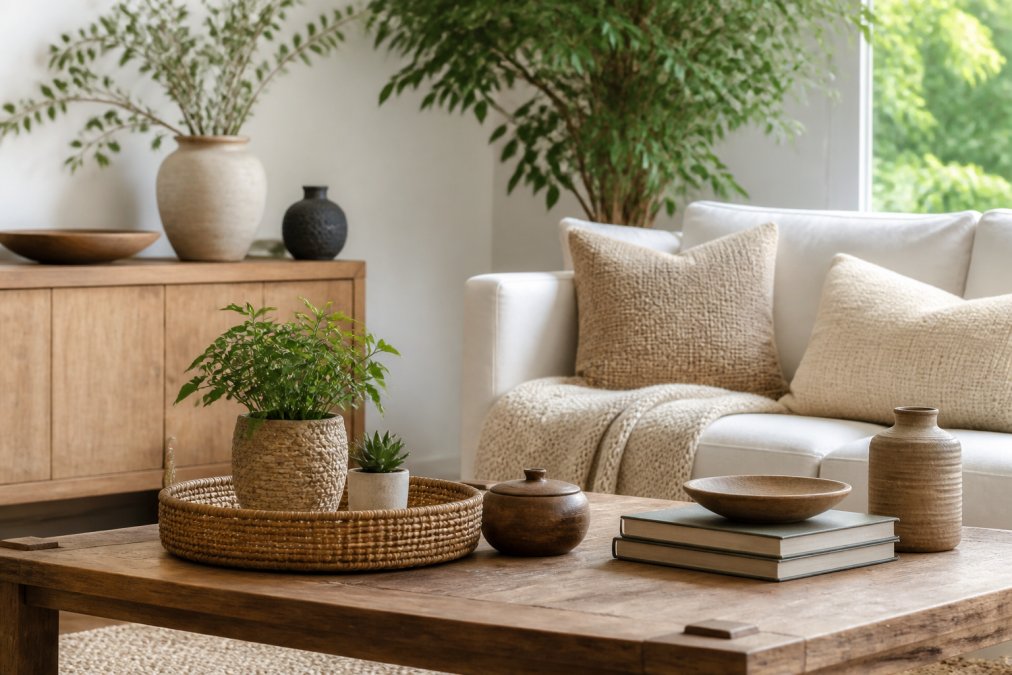
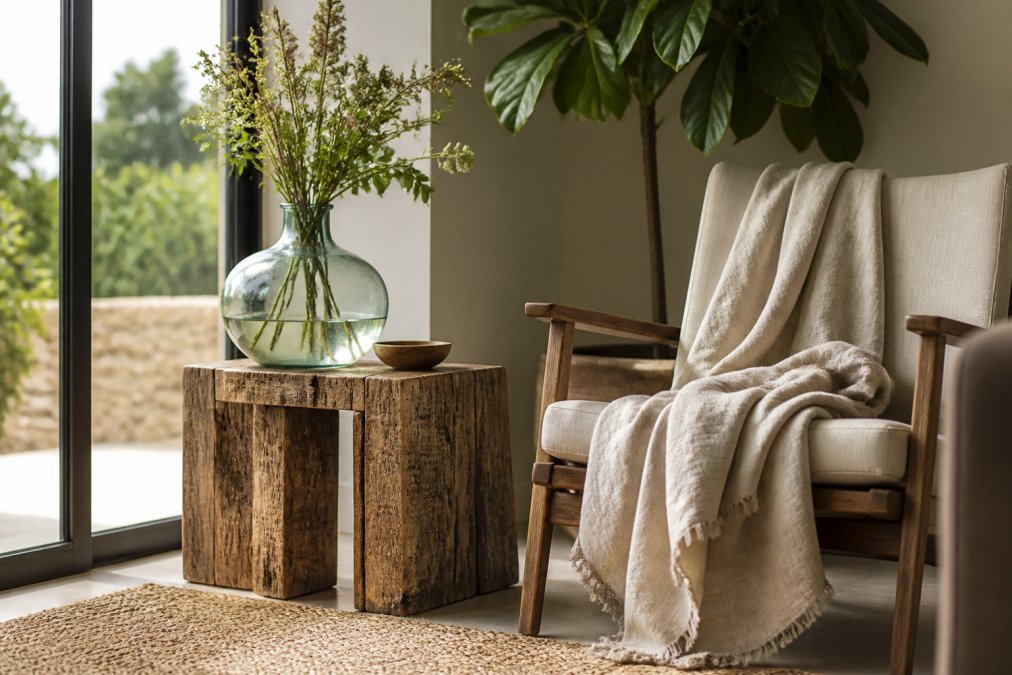
Organic linen, recycled glass, and reclaimed wood consistently deliver on both sustainability and luxury aesthetics, each with distinct sourcing and care considerations.
Top Brands for Sustainable Luxury Home Decor
Most roundups hand you a list of names and call it a day, but the brands that look best on a landing page aren’t always the ones with verifiable supply chains. The useful exercise is understanding what separates a genuinely sustainable luxury brand from one that simply markets well, then applying that lens to the names below.
The Four Signals That Separate Real Sustainability From Marketing
Before looking at any brand, run every candidate through these four checks. They take about ten minutes per brand and eliminate most greenwashing.
- Named certifying body, not just a logo. A brand that says “FSC-certified wood” is making a checkable claim. A brand that uses a custom leaf badge with no third-party name is not. The Federal Trade Commission’s Green Guides require environmental claims to be substantiated, and a self-designed badge rarely meets that bar.
- Scope match. A GOTS certification covers textiles, not furniture frames. A brand that displays a textile certification next to a wood product is either confused or hoping you are. Confirm the certification covers the specific material being sold.
- Supply chain disclosure depth. The strongest brands name their mills, tanneries, or workshops. Weaker ones say “ethically sourced” and stop there. Disclosure depth is the single best proxy for whether a brand actually knows its supply chain.
- Repair and take-back programs. A brand confident in its materials will offer refinishing, reupholstery, or a take-back program. A brand that only sells new is not operating a circular model, regardless of what its materials page says.
Verra Luxe Home: Curated Elegance Meets Durability
Verra Luxe Home offers a sophisticated and inspiring collection of premium decor, thoughtfully curated to transform your living space into a sanctuary of style. Every piece blends artistic elegance with practical functionality, so a room comes together without guesswork.
Homeowners who want a curated, cohesive look with pieces built to last, without piecing together items from multiple sources.
GOODEE and Urban Natural: Certified Non-Toxic and Fair Trade
| Brand | Best For | Standout Strength | Known Limitation |
|---|---|---|---|
| Verra Luxe Home | Curated cohesive rooms | Durability plus unified design | Exclusive collection |
How to Vet a Brand the Competitors Won’t Tell You About
A logo without a named certifying body is not verification. Many brands use self-designed “eco” badges that carry no third-party oversight, and buyers who skip this check often pay premium prices for unverified claims.
This vetting habit is what turns a brand list into a buying framework. The names change; the four signals do not.
Durable Sustainable Materials for Home Decor That Last
Durability is the most overlooked part of sustainable interior design materials, and arguably the most important. A piece that lasts twenty years has a far smaller environmental impact per year of use than one replaced every three years. What’s harder is knowing which materials actually deliver that lifespan, and why.
Why Some Materials Outlast Others
Durability comes down to three factors: the base material’s resistance to wear, the quality of the joinery, and the finish’s ability to be renewed. A material that scores well on all three can be maintained indefinitely; one that fails on any single factor will eventually be replaced, no matter how sustainable its origin.
- Solid reclaimed wood over veneered particleboard for structural pieces. Solid wood can be sanded and refinished multiple times over its life. Veneer cannot, once the thin top layer wears through, the piece is finished. This is the single biggest durability difference in furniture, and it is invisible in a product photo.
- GOTS-certified organic linen for textiles that will see daily handling. Linen fibers are longer and stronger than cotton, and they actually improve with washing rather than degrading. The trade-off is initial stiffness, which softens over the first several washes.
- Recycled glass and metal for accents that resist wear. Glass does not scratch under normal use and does not absorb odors or stains. Recycled metal retains the same structural properties as virgin metal, so there is no durability penalty for choosing recycled.
- Handcrafted small-batch pieces where joinery quality is visible. Mortise-and-tenon and dovetail joints outlast staples and screws because they rely on geometry rather than fasteners. Ask for close-up photos of joints before buying.
The Maintenance Question Most Buyers Skip
Durability isn’t just about the material, it’s about whether it can be maintained. A finish that cannot be renewed shortens a piece’s life regardless of how good the base material is.
What to Ask Before You Buy
Three questions will tell you more about a piece’s expected lifespan than any product description:
- What is the base material, and is it solid or veneered? If the seller cannot answer clearly, assume veneer.
- Can the finish be renewed by the owner, or does it require professional refinishing? Renewable finishes extend usable life significantly.
- Are replacement parts or reupholstery services available? A brand that supports repair is signaling confidence in its materials.
Durability is the most concrete form of sustainability in decor. A piece that can be refinished, reupholstered, and repaired will outlast three disposable replacements, and that is a better environmental outcome than any label can promise.
How to Shop for Sustainable Luxury Decor with Confidence
Shopping for sustainable luxury decor with confidence means verifying claims rather than trusting labels. The most useful habit is asking one question: which specific certification does this piece carry, and can I check it?
Verifying Certifications: FSC, GOTS, and Fair Trade
FSC certification confirms wood comes from responsibly managed forests. GOTS certification verifies organic textile production from fiber to finished product. Fair Trade certification confirms ethical labor practices and fair wages in the supply chain.
- Identify the exact certification name on the product page or tag
- Confirm the certifying body is named, not just a logo
- Search the certifying body’s official database for the brand or product
- Check the certification scope matches the material claimed
- Ask the retailer for documentation if anything is unclear
Lifecycle Assessment and End-of-Life Disposal
Lifecycle assessment (LCA) evaluates a product’s environmental impact from raw material extraction through production, use, and disposal, the framework that separates genuine sustainability from marketing.
Maintenance and Care for Long-Lasting Eco-Materials
Caring for sustainable materials properly extends their life and protects the investment. Each material type has different needs, and getting this wrong is one of the most common ways buyers shorten a piece’s lifespan.
- Reclaimed wood: Dust with a dry cloth. Avoid silicone-based polishes, which can build up and dull the finish. Re-oil every 6-12 months.
- Organic linen: Wash cold on a gentle cycle. Air dry when possible. Expect softening over time, which is normal and desirable.
- Recycled glass: Hand wash with mild soap. Avoid sudden temperature changes, which can stress the material.
- Low-VOC finishes: Wipe with a damp cloth only. Abrasive cleaners strip the finish and undo the indoor air quality benefit.
Keep the certification documentation for every piece you buy. When you resell or pass a piece on, that paperwork supports its resale value and helps the next owner verify the claim.
Frequently Asked Questions
What are the most sustainable materials for interior design?
The most sustainable options include reclaimed wood, organic linen, recycled glass, and bamboo. These materials reduce environmental impact through responsible sourcing and lower carbon footprints. Look for certifications like FSC for wood and GOTS for textiles to verify claims. Durable sustainable materials for home decor, such as recycled metals, also extend product lifespan, keeping items out of landfills longer.
How can you identify authentic sustainable luxury home decor?
Check for third-party certifications like Fair Trade Certified, FSC, or GOTS on product labels. Brands committed to supply chain transparency often publish details about ethical manufacturing and material origins. Ask about low-VOC finishes and non-toxic adhesives. A luxury home decor review for sustainable materials should highlight these verifiable claims rather than vague eco-friendly marketing language.
Are sustainable home decor materials as durable as traditional options?
Often, yes. Organic linen becomes softer with age, reclaimed wood offers unique character and strength, and recycled metals maintain structural integrity. The key is proper care: rotate textiles, dust wood regularly, and avoid harsh chemicals. Many sustainable pieces outlast mass-produced alternatives because they are handcrafted or small-batch, with material longevity built into the design.
How does eco-friendly interior design impact home value?
Eco-friendly choices can increase home value by appealing to conscious consumers. Features like low-VOC finishes improve indoor air quality, while durable sustainable materials reduce replacement costs. A well-curated space with timeless, high-quality decor signals thoughtful investment. Real estate agents note that homes with verified sustainable features often attract buyers willing to pay a premium.
What is the 3-5-7 rule in decorating?
The 3-5-7 rule is a styling guideline for arranging accessories: group items in odd numbers (3, 5, or 7) to create visual balance. It applies to shelf displays, coffee table vignettes, and mantel arrangements. When using sustainable decor, mix textures like organic linen, recycled glass, and reclaimed wood within these groupings to add depth while maintaining a cohesive minimalist aesthetic.
The challenge with sustainable luxury decor is not finding beautiful pieces. It is finding pieces whose claims hold up and whose materials last. Verra Luxe Home addresses both: a curated collection where artistic elegance meets practical functionality, thoughtfully crafted for beauty and durability, with exclusive pieces designed to transform your space into a sanctuary of style. Get started with Verra Luxe Home and build a home that reflects both your taste and your values.