Table of Contents
- What Functional Luxury Design Actually Means
- Modern Luxury Interior Design Elements That Do Real Work
- Why High-End Functional Home Decor Earns Its Place
- How to Style a Functional Luxury Living Room
- Smart Home Integration Without Losing the Aesthetic
- The Psychology of Living With Functional Luxury
- Budgeting for Functional Luxury Without Regret
- Conclusion
- Frequently Asked Questions
Last Updated: September 23, 2026
What Functional Luxury Design Actually Means
Functional luxury design is the practice of creating refined interiors where every beautiful element also serves a daily purpose. It rejects the idea that high-end spaces must be fragile, untouchable, or purely decorative. Instead, it prioritizes pieces that look exceptional and work hard.
The Shift From Showpiece to Livable
Interior design spent decades treating luxury as performance. Rooms were staged for admiration, not use. Today’s homeowners want something different: spaces that hold up to kids, pets, and daily routines without losing their polish.
Modern Luxury Interior Design Elements That Do Real Work
The strongest modern luxury interior design elements share one trait: they solve a problem while looking effortless. Clean lines, tactile textures, and high-end finishes all qualify, but only when they serve the room’s function.
- Bespoke craftsmanship in joinery that fits the room exactly, not approximately
- Natural materials like stone and solid wood that age with character instead of wearing thin
- Layered lighting that shifts from task to ambient without a single harsh fixture
- Thoughtful proportion so furniture scales to the space rather than overwhelming it
Why High-End Functional Home Decor Earns Its Place
High-end functional home decor justifies its cost through longevity, not logos. A well-made piece spreads its price across years of daily use. A cheap alternative often costs more over time because it gets replaced.
Materials That Age Well Instead of Wearing Out
Material choice decides whether a piece improves or deteriorates. Premium textiles, solid hardwoods, and natural stone develop a patina over time. Many homeowners find that these materials look better after years of use than they did on delivery day.
When evaluating a piece, check the underside and the joints, not just the surface. Quality construction shows in the parts you don’t see: reinforced corners, solid joinery, and hardware that feels weighted when you open it.
How to Style a Functional Luxury Living Room
Styling a functional luxury living room starts with spatial flow: arrange furniture for how you actually move through the room, then layer in the refined details. Get the layout right first. The aesthetic follows.
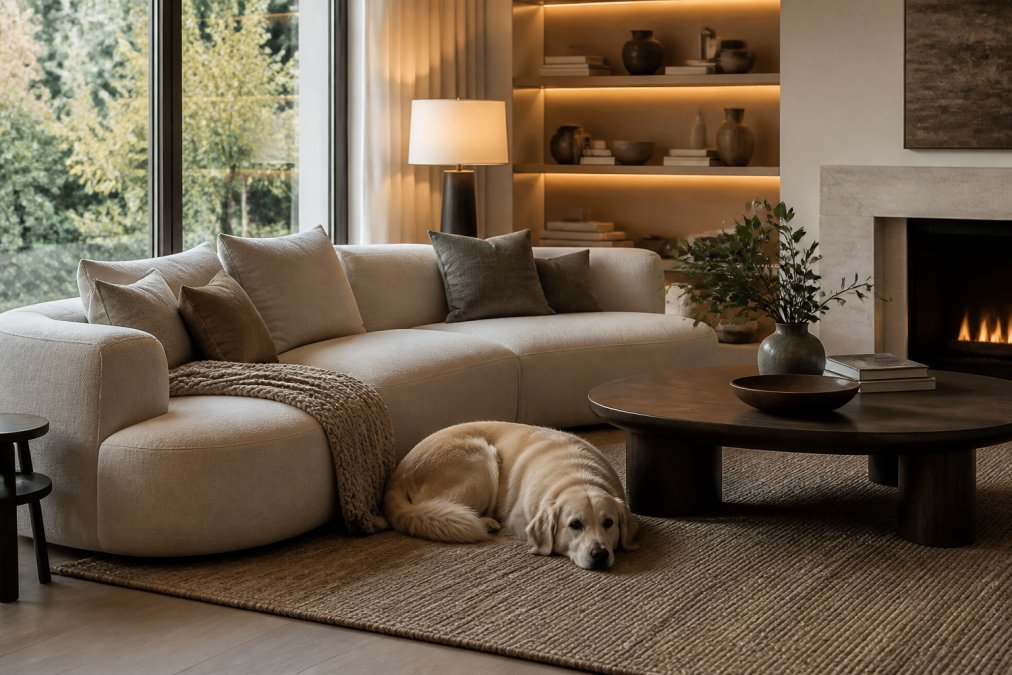
A practical sequence keeps the room from feeling cluttered:
- Map the traffic paths before placing any furniture
- Anchor the room with one sculptural piece, then build around it
- Choose premium textiles in a sophisticated palette that hides everyday wear
- Add layered lighting at three heights: overhead, mid-level, and table
- Finish with functional decor that earns its footprint, like a tray that corrals remotes or a bench that stores throws
Smart Home Integration Without Losing the Aesthetic
Smart home integration fails when the technology announces itself. Visible hubs, tangled cables, and mismatched devices undercut even a beautifully designed room. The fix is planning integration before finishes, not after.
The technology should disappear. Only the comfort should remain.
The Psychology of Living With Functional Luxury
Most guides stop at “comfort feels good.” The more useful question is why a well-designed room changes how you behave in it, and which specific design choices produce that effect. This is where functional luxury stops being decor and starts behaving like applied environmental psychology.
The Mechanisms Behind the Calm
Three well-documented principles explain most of the payoff:
- Cognitive load. Every visible object the brain has to sort, a tangle of cords, a stack of unsorted mail, a chair that’s technically decorative but unusable, draws a small amount of attention. Multiply that across a room and the space feels subtly draining. Functional luxury reduces the number of decisions a room asks you to make.
- Prospect and refuge. People tend to relax when they can see the room’s entrances (prospect) while feeling enclosed on at least one side (refuge). A sofa floating in the middle of an open-concept space rarely feels restful; the same sofa backed by a console or a half-wall usually does. This is one reason open-concept layouts need deliberate “anchors” rather than just more square footage.
- Biophilic response. Natural light, wood grain, stone, and living plants are consistently associated with lower reported stress in interior settings. A functional luxury room doesn’t just include these materials for looks, it places them where you actually sit, eat, and rest.
Ergonomic Specifics That Change How a Room Feels
Ergonomics in a luxury interior is not about office chairs. It’s about the small dimensional decisions that determine whether a room feels effortless or subtly irritating:
- Seat height and depth. Standard sofa seat height sits around 17-18 inches; deeper seats feel more loungy but can be hard to rise from for older guests. A functional luxury living room often mixes depths, a deeper sectional for lounging, a shallower pair of chairs for conversation.
- Reach zones. A side table more than about 24 inches from the arm of a chair is functionally decorative. Anything you’d want while seated, a drink, a book, a remote, should sit inside that radius.
- Sightlines. What you see from your most-used seat matters. If the view lands on a cluttered counter or a blank wall, the room will feel unfinished no matter how good the furniture is. Designers often place the most-used seat facing the best view in the room, a window, a fireplace, a piece of art.
- Acoustic softness. Hard surfaces (stone, glass, plaster) reflect sound; textiles, rugs, and upholstery absorb it. A room that echoes reads as cold even when it’s warm. Layering a wool rug, heavy curtains, or an upholstered headboard measurably changes how a space feels to be in.
Why This Matters More in Open-Concept Homes
Open-concept layouts are the default in most new construction, and they concentrate the psychological problem: one large volume has to serve cooking, dining, working, and relaxing at once. Without zoning, the brain never fully shifts modes. Functional luxury solves this with subtle cues, a change in floor material, a lower ceiling plane, a rug that defines the seating zone, lighting scenes that dim one area while brightening another.
The most luxurious room in the house is often the one you never think about, because it simply works. Functional luxury design removes friction so the beauty can do its job, and the friction it removes is measurable in seat heights, reach distances, sightlines, and sound.
Budgeting for Functional Luxury Without Regret
Budgeting for functional luxury means spending where durability and daily use justify it, and saving where they don’t. Not every piece needs to be a statement. The skill is knowing which ones do, and understanding that the purchase price is only part of the cost.
Where to Invest vs. Where to Save
| Priority | Where to Spend | Why It Pays Off |
|---|---|---|
| Seating | Frames, joinery, and upholstery | Used daily, hardest and most expensive to replace |
| Lighting | Fixtures, dimmers, and controls | Sets the mood of every room and is disruptive to retrofit |
| Surfaces | Tables, counters, and flooring | Take constant wear; refinishing is costly |
| Window treatments | Motorized shades and quality drapery | Hard to upgrade later without redoing trim and wiring |
| Accents | Art, small decor, throw pillows | Easier to refresh as taste evolves |
Start with the pieces you touch every day. Add the finishing accents last, once the foundation is set. This order keeps a renovation from blowing its budget on items that don’t carry their weight.
The Cost Competitors Don’t Mention: Maintenance
A luxury material’s true cost is its purchase price plus its lifetime care. Two pieces can cost the same on day one and diverge sharply over a decade. A few common trade-offs:
- Marble. Beautiful and cool to the touch, but it etches from acidic spills (citrus, wine, vinegar) and stains if left unsealed. Expect periodic resealing and prompt cleanup. Honed finishes hide etching better than polished ones.
- Solid hardwood. Refinishable multiple times over its life, which is a genuine long-term advantage. But it dents, and it dislikes standing water. Area rugs under high-traffic zones extend the interval between refinishes.
- Natural stone and quartzite. More stain-resistant than marble but still porous; sealing matters. Quartz (engineered) trades some of the natural variation for near-zero maintenance, a legitimate functional-luxury choice, not a compromise.
- Silk and fine wool. Silk is delicate and best reserved for low-traffic areas like a formal living room or bedroom. Wool is the workhorse: naturally stain-resistant, resilient, and it hides wear well.
- Brass and unlacquered metals. Develop a living patina that many buyers want, but they require occasional polishing if you prefer a bright finish. Lacquered brass holds its shine with almost no upkeep.
A Simple Allocation Framework
Rather than a fixed percentage, most practitioners use a tiered approach:
- Foundation tier (roughly half the budget). Seating, primary lighting, and the surfaces you use every day. These anchor the room and are the most expensive to change later.
- Function tier (roughly a third). Storage, window treatments, and any smart-home infrastructure. These determine how the room actually works.
- Finish tier (the remainder). Art, textiles, and decorative objects. These are the easiest to layer in over time and the easiest to swap.
Conclusion
Furnishing a home that looks refined and survives real life is harder than buying decor that only photographs well. Verra Luxe Home curates premium pieces built to bridge that gap, from a thoughtfully curated collection of decor to designs that blend artistic elegance with practical functionality. Every item is crafted for both beauty and durability, so your space becomes a sanctuary of style rather than a room you’re afraid to use.
Frequently Asked Questions
What is functional interior design, and how does it differ from functional luxury design?
Functional interior design prioritizes how a space works: storage, traffic flow, ergonomic design, and daily use. Functional luxury design keeps all of that but adds bespoke craftsmanship, high-end finishes, and premium textiles. A standard functional kitchen has good drawer placement. A functionally luxurious one has the same layout with bespoke joinery, tactile textures, and hardware built to last decades. The function stays constant; the materials, detailing, and longevity are what elevate it.
How do you balance aesthetics and functionality in high-end homes?
Start with how the room gets used, then choose pieces that serve that use and look intentional doing it. A coffee table with hidden storage, a bench that doubles as seating and a landing spot, layered lighting that shifts from task to ambient: each choice solves a problem while contributing to visual harmony. The test is simple. If removing a piece makes the room harder to live in, it was functional. If it also makes the room look emptier, it was luxurious too.
What makes a piece of decor functionally luxurious?
Three things: it performs a job, it is made from materials that hold up, and it looks like it belongs in a curated space. A hand-thrown ceramic vase holds flowers, resists chipping, and reads as sculptural furniture on a console. A mass-produced version may do the first job only. Verra Luxe Home curates pieces where artistic elegance and practical functionality are designed together rather than traded off against each other.
Is minimalism a requirement for functional luxury design?
No. Minimalism is one expression of it, not the definition. A maximalist room can be functionally luxurious if every object earns its place through use or meaning, with clutter-free zones and thoughtful proportion keeping it from feeling chaotic. The principle is intentional living: nothing in the room is there by accident. Some homeowners achieve that with five pieces, others with fifty. The count matters less than whether each item works and holds up.