Table of Contents
- Why Luxury Decor Works Differently in Small Spaces
- Quiet Luxury Home Decor on a Budget: What to Prioritize
- Space-Saving Luxury Furniture Ideas That Don’t Compromise Style
- How to Style a Small Room Like a Designer
- Lighting Temperature and Reflective Surfaces: The Overlooked Luxury Upgrades
- Sustainable Luxury Alternatives and Rental-Friendly Upgrades
- Common Mistakes to Avoid When Decorating Small Spaces
- Conclusion: Curating a Small Space That Feels Expansive
- Frequently Asked Questions
Last Updated: September 20, 2026
Why Luxury Decor Works Differently in Small Spaces
The best luxury home decor alternatives for small spaces solve a problem that generic budget decor ignores: in a compact room, every object carries visual weight. A heavy sofa that looks stately in a large living room can swallow a 12-foot wall whole. This guide from Verra Luxe Home breaks down what actually works, what to skip, and how to get a high-end look without a renovation budget.
The Psychology of Small Space Living
Clutter triggers a measurable stress response in most people, and small rooms accumulate visual noise faster than large ones. The fix isn’t minimalism for its own sake. It’s curated decor: fewer pieces, each one earning its place.
Quiet Luxury Home Decor on a Budget: What to Prioritize
Quiet luxury home decor on a budget comes down to three priorities: texture, proportion, and light. Get those right and the room reads expensive even when it isn’t.
Here’s how to allocate a limited budget:
- Splurge on: lighting fixtures, mirrors, and one anchor furniture piece
- Save on: throw pillows, candle holders, and seasonal accents
- Splurge on: window treatments that reach the ceiling
- Save on: wall art you can rotate or reframe
Where to Save and Where to Splurge
A common mistake is spreading a budget evenly across twenty small purchases. That produces a room full of average objects. Instead, concentrate spending on items the eye lands on first: the sofa, the light fixture, the mirror above the console.
Floor-to-ceiling curtains are the single cheapest way to make a ceiling feel taller. Mount the rod within an inch of the ceiling and let the fabric just kiss the floor. The effect costs a fraction of what structural changes would.
Space-Saving Luxury Furniture Ideas That Don’t Compromise Style
Space-saving luxury furniture ideas work best when they combine at least two functions in one footprint. Multi-functional furniture is not a compromise; it’s a design strategy that high-end manufacturers have refined for years. The difference between a piece that reads luxury and one that reads like a dorm-room hack comes down to three things: the mechanism, the material, and whether the second function is visible when it’s not in use.
Modular and Multi-Functional Pieces
Look for pieces that serve two roles without looking like they’re trying. A storage ottoman that doubles as a coffee table. A wall-mounted desk that folds flat. A sofa with a chaise that reverses to either side.
Vertical Storage and Hidden Storage Solutions
Wall space is the most underused asset in a small room. Vertical storage keeps the floor clear and draws the eye upward, which makes the ceiling feel higher. The rule of thumb most designers use: storage should reach at least two-thirds of the wall height, or it reads as furniture sitting on the floor rather than architecture built into the room.
- Floating shelves in a monochromatic finish
- Built-in cabinetry painted the same color as the wall
- A tall, narrow bookcase instead of a wide, low one
- Under-bed drawers for off-season items
- A floor-to-ceiling wardrobe with a mirrored door, which adds storage and a reflective surface in one move
Measure the diagonal, not just the width. A piece that fits against a wall may not fit through the door or around the corner into the room. This is the single most common return reason for compact furniture.
The Trade-Off Nobody Mentions
Every multi-functional piece trades something. A storage ottoman sacrifices seat height. A wall-mounted desk sacrifices the ability to reposition it. A modular sofa sacrifices the deep, plush sit of a fixed frame. The luxury move is choosing which trade-off you can live with, not pretending there isn’t one. If you entertain often, prioritize seating comfort over hidden storage. If you work from home, prioritize a real desk surface over a convertible one. Decide the priority first, then shop.
How to Style a Small Room Like a Designer
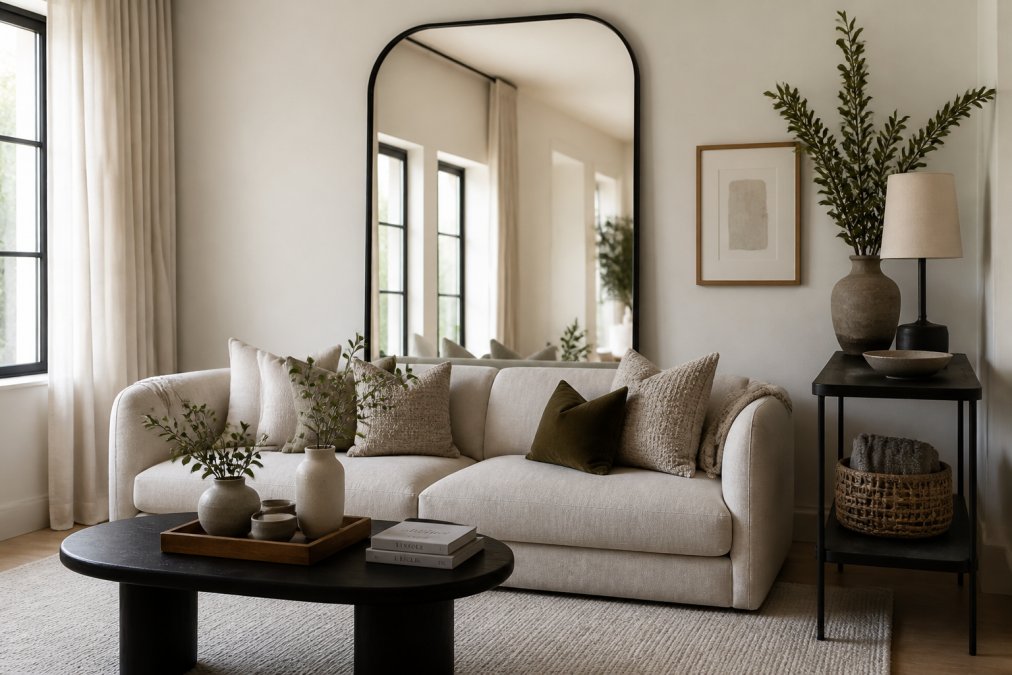
How to style a small room like a designer starts with restraint. Pick a palette, commit to it, and repeat it. Designers rarely introduce more than three dominant colors in a compact space.
Scale, Proportion, and Furniture Arrangement
Pull furniture away from the walls when the room allows it. Floating a sofa even a few inches off the wall creates room flow and makes the space feel intentional rather than shoved into place.
In small rooms, the goal is fewer, better, larger pieces. One oversized mirror beats three small ones. One substantial rug beats two small ones.
Lighting Temperature and Reflective Surfaces: The Overlooked Luxury Upgrades
Lighting temperature is the most overlooked luxury upgrade in small-space design. Warm bulbs (around 2700K) make a room feel intimate and expensive. Cool white bulbs (4000K and above) read as office lighting, even in a beautifully furnished room.
Layering three or more light sources at different heights (floor lamp, table lamp, overhead) transforms a room. Relying on a single ceiling fixture flattens the space and makes even expensive furniture look ordinary.
Sustainable Luxury Alternatives and Rental-Friendly Upgrades
Most luxury small-space advice assumes you own the walls. Moldings, built-ins, and hardwired lighting are all permanent changes, and roughly a third of American households rent. That leaves a large audience underserved by the standard playbook, and it happens to overlap almost perfectly with the audience that cares about sustainable, low-waste decor. This section is the one most competitors skip entirely.
Rental-Friendly Luxury: The Removable Upgrade Stack
Renters face a specific constraint: no permanent changes. The good news is that most of the highest-impact upgrades are removable. Peel-and-stick architectural molding, tension-rod floor-to-ceiling curtains, and freestanding built-in cabinetry alternatives all deliver the effect without touching the walls.
The stack, in order of impact per dollar:
- Tension-rod or adhesive-mount curtain rods. Floor-to-ceiling drapery is the cheapest way to add height. Tension rods work in most standard window frames; adhesive-mount brackets work on smooth painted walls and remove cleanly with a hair dryer and a plastic scraper.
- Peel-and-stick picture-frame molding. Applied in a grid pattern below a chair rail, it reads as paneling from across the room. The trade-off: it can lift paint on removal if the wall wasn’t properly primed, so test a small patch first.
- Removable wallpaper or adhesive panels. Modern versions are repositionable and designed for renters. Cost per square foot is higher than paint, but the wall returns to its original state.
- Freestanding storage that reads as built-in. A tall bookcase pushed flush to the wall and painted the same color as the wall disappears into the architecture. No nails required.
- Plug-in wall sconces and rechargeable table lamps. These deliver the layered lighting that hardwired fixtures would, without an electrician.
Adhesive products can damage paint, drywall paper, or wallpaper on removal. Always test on a hidden patch first, and keep the original paint color on file so you can touch up before move-out.
Sustainable Luxury: Vintage, Reclaimed, and Low-Impact Materials
Vintage sourcing is the sustainable luxury play. A well-made vintage piece often costs less than a new mid-tier one and carries a bespoke feel that mass-produced furniture can’t replicate. Estate sales, consignment shops, and online vintage marketplaces reward patience.
How to Vet a Vintage Piece Before You Buy
- Check the joints, not the finish. Dovetail joints and mortise-and-tenon construction signal quality; staples and glue signal disposable.
- Lift a corner. If it’s surprisingly light for its size, it’s likely veneer over particleboard.
- Smell it. A strong chemical or mildew odor is hard to remove and often signals water damage or off-gassing.
- Measure the doorway. Vintage pieces predate modern standard door widths and often won’t fit through a 30-inch opening.
Rental-friendly and sustainable luxury are the same strategy viewed from two angles: buy pieces that can move with you and that were built to last. Both reduce waste, and both make a small space feel considered rather than temporary.
Common Mistakes to Avoid When Decorating Small Spaces
The most common mistake in small-space decorating is buying furniture sized for a larger room and hoping it will fit. It won’t, and the result feels cramped rather than cozy.
Other frequent errors:
- Matching sets. A matching sofa-and-loveseat set reads as showroom, not home. Mix pieces for a collected look.
- Too many small accessories. Ten tiny objects create visual noise. Three larger ones create a composition.
- Ignoring lighting temperature. Mixing warm and cool bulbs in one room undermines everything else.
- Skipping texture. A room with no texture layering (linen, wool, wood, stone) feels flat no matter how good the color palette is.
- Fighting the architecture. Work with the room’s existing proportions instead of against them.
Conclusion: Curating a Small Space That Feels Expansive
Getting a small room to feel expansive comes down to discipline: fewer pieces, better proportions, and lighting that does the heavy lifting.
Frequently Asked Questions
What is the 3-5-7 rule in decorating?
The 3-5-7 rule is a styling guideline for arranging decor objects in odd-numbered groupings: three items on a side table, five on a console, seven on a bookshelf. Odd numbers create visual tension that feels more natural than even pairings. In small spaces, this rule helps you build curated vignettes without overcrowding surfaces. Group items of varying heights and textures, like a tall vase, a medium candle, and a small sculptural object, to add depth and a designer touch.
How can I make a small room look expensive on a budget?
Focus on quiet luxury home decor on a budget by prioritizing a few high-impact changes: swap builder-grade light fixtures for sculptural alternatives, add floor-to-ceiling curtains to draw the eye upward, and introduce reflective surfaces like a large mirror or glossy ceramic accents. Choose one or two statement pieces rather than filling every corner. Neutral palettes with texture layering, such as a wool throw over a linen sofa, read as high-end without a high-end price tag.
What are the best luxury decor alternatives for limited square footage?
The best alternatives for small spaces decor include modular sofas that reconfigure to fit changing layouts, wall-mounted desks and shelving that free up floor area, and multi-functional furniture like storage ottomans or nesting tables. Look for pieces with elevated finishes, such as solid wood, brushed brass, or marble accents, that deliver a bespoke feel at a smaller scale. These choices maximize both function and aesthetic impact in compact rooms.
How do you balance functionality and luxury in a small apartment?
Balance comes from choosing pieces that serve two purposes without looking utilitarian. A storage bench with tufted upholstery, a mirrored cabinet that hides clutter, or a coffee table with hidden storage all combine practicality with refined design. Prioritize vertical storage to keep floors clear, and use ambient lighting on dimmers to shift the mood from functional to intimate. The goal is a cohesive design where every item earns its place.
Which materials add a high-end feel to small living spaces?
Tactile materials like velvet, linen, boucle, and raw silk add immediate luxury, while glossy finishes on ceramics or lacquered surfaces bounce light around the room. Solid wood, marble, and brushed metals introduce visual weight and timeless design. Mixing two or three textures, such as a boucle chair beside a glass side table, creates depth without visual clutter. Avoid synthetic fabrics that pill or fade, as they undercut the elevated finishes you are investing in.
Small spaces demand more from every object you place in them. Verra Luxe Home offers a curated collection of premium decor built for beauty and durability, with pieces that enhance everyday living rather than crowd it. Browse the collection to personalize your space with sophisticated charm and see how the right few pieces can transform a room. Get started with Verra Luxe Home and turn your compact space into a sanctuary of style.