Table of Contents
- Gallery Wall Arrangements: Creating a Focal Point with Artistic Home Decor
- Statement Sculptures and 3D Decor: Bringing Dimension to Your Space
- How to Arrange Art in a Living Room: Balance, Scale, and Composition
- Best Practices for Mixing Textures in Decor: Creating Visual Richness
- Decor Accent Pillows: Adding Color, Comfort, and Artistic Expression
- Abstract and Nature-Inspired Art: Choosing the Right Aesthetic
- Lighting Techniques and Artistic Display: Showcasing Your Collection
- Frequently Asked Questions
Last Updated: September 1, 2026
Gallery Wall Arrangements: Creating a Focal Point with Artistic Home Decor
A gallery wall transforms a living room into a curated space reflecting your personal aesthetic. Success lies in balancing visual weight, scale, and the relationship between pieces so they function as a unified composition.
Start by selecting a focal wall, typically behind your sofa or the first wall visitors see. Lay out pieces on the floor first, experimenting with arrangements before committing to nail holes. This prevents mistakes and lets you adjust spacing until the composition feels right.
The most successful gallery walls combine pieces of varying sizes, mediums, and frame styles within a cohesive color palette. Visual balance comes from distributing weight across the wall rather than clustering large pieces in one area.
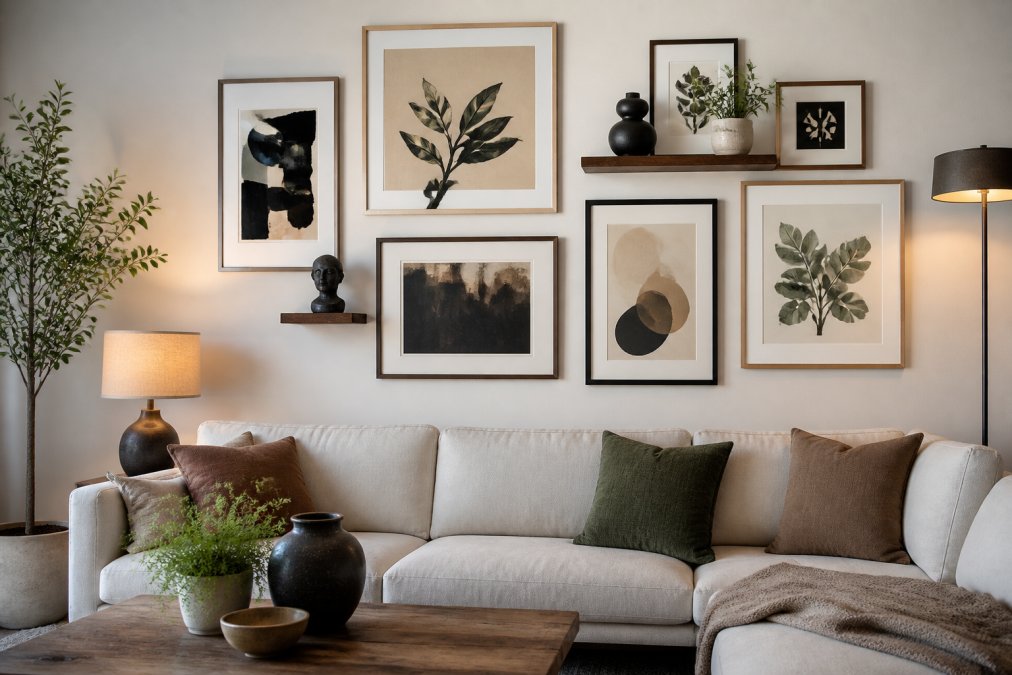
Spacing matters as much as the pieces themselves. Aim for 2-3 inches between frames for a unified gallery wall effect (the American Academy of Dermatology). Tighter spacing helps the collection read as intentional rather than random.
Consider hanging height carefully. The center of your gallery wall should sit at eye level, approximately 57-60 inches from the floor (si.edu). This ensures the work engages viewers naturally without awkward neck strain.
Use painter’s tape and kraft paper cutouts to map your exact layout on the wall before drilling. Mark nail holes on paper templates, then tape them to the wall. This eliminates guesswork and lets you visualize the final arrangement at full scale.
At Verra Luxe Home, the most impactful gallery walls balance negative space with grouped elements. Rather than filling every inch of wall, leave breathing room between clusters of artwork. This creates visual rhythm and prevents overwhelming the space.
Statement Sculptures and 3D Decor: Bringing Dimension to Your Space
Statement sculptures and three-dimensional decor pieces add depth and tactile interest that flat artwork cannot achieve. These sculptural elements serve as conversation starters and anchor points within a room’s visual hierarchy.
Scale your sculpture to surrounding furniture and wall space. A small tabletop piece works in tight spaces, while a floor-standing sculpture becomes a true focal point in larger rooms. The Abstract Girl Figure Sculpture from Verra Luxe Home exemplifies how contemporary sculptural forms complement both minimalist and eclectic interiors.
Position 3D decor where it’s visible from main seating areas and entry points. A sculpture tucked in a corner loses impact; positioned on a console table, shelf, or pedestal, it commands attention and shapes how people move through the space.
Mixed media pieces, such as resin sculptures, hand-carved wood forms, or clay figures, add warmth and handcrafted authenticity that mass-produced decor cannot replicate.
Sculptures work best with adequate surrounding space. A single statement piece on a shelf creates more impact than three smaller pieces competing for attention.
Lighting dramatically affects how sculptures read in a space. Directional light from a nearby floor lamp or pendant fixture casts shadows that reveal form and texture, making the piece more dynamic.
How to Arrange Art in a Living Room: Balance, Scale, and Composition
Arranging art effectively requires understanding three core principles: balance, scale, and composition.
Balance refers to visual weight distribution. A large, dark abstract painting has more visual weight than a small, light watercolor. Distribute heavier pieces across the wall rather than stacking them in one area. Asymmetrical balance, where different-sized pieces are arranged to feel equilibrated, often looks more sophisticated and intentional.
Scale addresses the relationship between artwork and the wall, furniture, and room dimensions. A small print on a large, empty wall looks lost; the same print as part of a gallery wall feels purposeful. Match scale to context: a single large statement piece works above a sofa, while smaller works suit tighter wall areas.
Composition is how individual pieces relate to one another and the overall room aesthetic. Strong composition feels like a curated collection rather than random selections. Achieve this by repeating design elements, consistent frame colors, recurring color palettes, or thematic connections.
| Arrangement Type | Best For | Visual Effect | Spacing |
|---|---|---|---|
| Gallery Wall | Large wall areas, focal points | Unified, curated collection | 2-3 inches between frames |
| Linear Arrangement | Long walls, hallways | Clean, organized, modern | 4-6 inches between pieces |
| Salon-Style Mix | Eclectic aesthetic, varied sizes | Artistic, collected-over-time feel | 2-4 inches, varied |
| Single Statement Piece | Above furniture, accent walls | Bold, impactful, minimalist | N/A |
The color palette sets the room’s mood. Warm tones create intimacy and sophistication; cool tones evoke calm and openness. Mixing warm and cool tones requires intentionality; let one palette dominate with accents of the other.
Consider existing room elements. If your sofa is neutral, artwork can be bold and colorful. If furniture features strong colors or patterns, choose art that complements rather than competes. Verra Luxe Home’s collection is designed to work within sophisticated interiors without clashing.
Best Practices for Mixing Textures in Decor: Creating Visual Richness
Texture transforms a room from visually flat to dimensionally rich. Mixing textures, smooth, rough, matte, glossy, soft, hard, creates visual and tactile interest that engages viewers on multiple sensory levels.
In artistic home decor, texture appears in canvas weave, frame finish, sculpture surface, and wall hanging materials. A gallery wall featuring only smooth, framed prints feels one-dimensional. Adding mixed media pieces, textured canvases, or three-dimensional elements dramatically increases visual depth.
Introduce texture through varied materials. Pair smooth, polished frames with raw wood, matte finishes with glossy surfaces, or painted pieces with natural materials like linen or canvas.
Over-texturing can overwhelm a space. If your room already features heavily textured furniture, wallpaper, or rugs, keep artwork relatively simple. Conversely, if your room has minimal texture, layered, textured pieces become more impactful.
Layering textures means considering how different materials catch light. Matte finishes absorb light quietly; glossy surfaces reflect it. A combination creates visual rhythm as light moves across the wall.
The Contemporary Rattan Wicker Floor Lamp from Verra Luxe Home demonstrates how natural texture in lighting fixtures contributes to overall composition.
When mixing textures, maintain a unifying element, typically color or style. An eclectic mix of textures in a cohesive color palette feels intentional.
Decor Accent Pillows: Adding Color, Comfort, and Artistic Expression
Accent pillows introduce color, pattern, and texture without permanent commitment. They’re easily changed seasonally or when your aesthetic evolves.
The Vera Luxe Velvet Pillow in Clove exemplifies how a single pillow anchors a room’s color story. Velvet’s soft sheen and luxurious feel add immediate sophistication. The clove tone, a warm, grounded brown, works with both warm and cool color palettes.
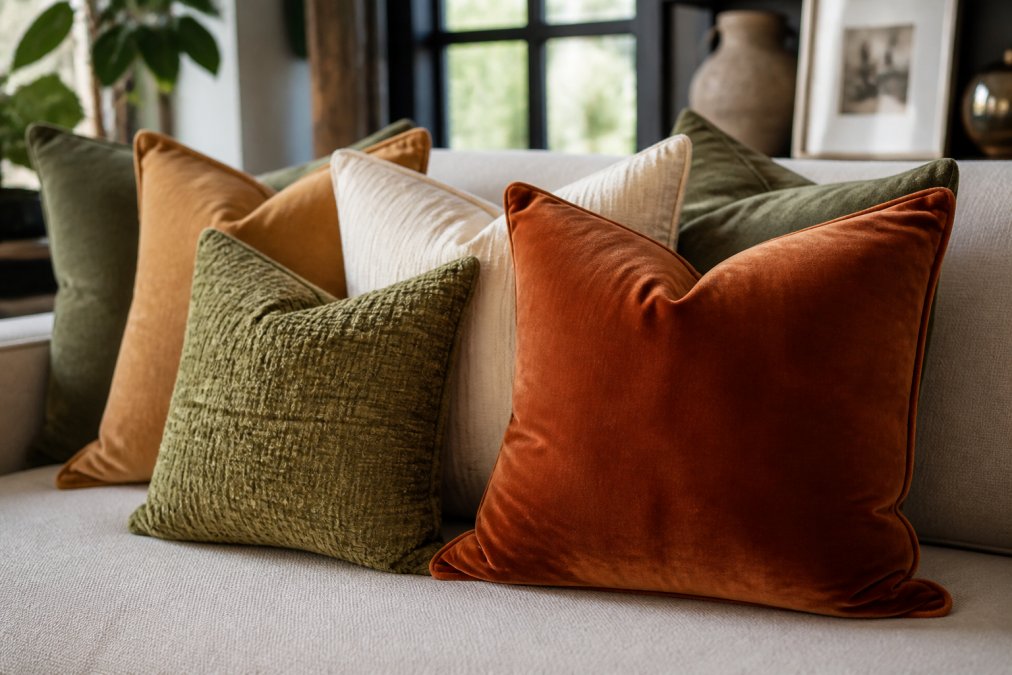
Layer pillows strategically to create visual depth. Start with a larger pillow as foundation, then add progressively smaller pillows in complementary colors and textures. Mix patterns, a solid velvet pillow with geometric print or botanical pattern, creating interest without chaos. Anchor the mix with a unifying color appearing in at least two pillows.
Consider pillow proportion to furniture. An oversized sofa handles larger pillows and more of them; a compact seating area requires restraint. Aim for three to five pillows on a standard sofa in slight asymmetrical grouping.
Texture in pillows matters as much as color. Pair smooth velvet with linen, add woven or macramé pillows, or introduce subtle sheen. This textural variety prevents flatness.
Renters and those hesitant about permanent decor changes. Pillows are the fastest, most reversible way to refresh a room’s aesthetic and test color combinations.
Casual pillow arrangement creates an inviting, lived-in aesthetic. Perfectly aligned pillows feel formal and staged. Most living rooms benefit from relaxed arrangement suggesting comfort alongside style.
Abstract and Nature-Inspired Art: Choosing the Right Aesthetic
The choice between abstract and representational art shapes a room’s mood and personality. Both work beautifully; the decision depends on your space, existing aesthetic, and personal response to imagery.
Abstract art offers freedom from literal interpretation. Viewers bring their own meaning to colors and forms, making pieces feel personal and open-ended. This versatility makes abstract art work with almost any color palette. Abstract art also feels modern and sophisticated, becoming a statement piece that elevates an entire room.
Nature-inspired art, botanical prints, landscape paintings, wildlife photography, creates immediate emotional connection. These pieces invite viewers into specific places or moments. Botanical prints particularly suit contemporary design, offering organic shapes and fresh color palettes.
Nature-inspired pieces work well in rooms feeling sterile or overly formal, softening hard edges and introducing organic visual rhythm. However, representational art can feel dated if style or subject matter trends toward the predictable.
The strongest approach combines both. A gallery wall featuring primarily abstract pieces gains warmth and narrative interest from one or two nature-inspired works. Conversely, botanical prints gain sophistication from an abstract piece echoing colors or forms within the representational work.
Consider your room’s existing elements. Minimal, geometric furniture pairs well with abstract art. Rooms featuring natural materials, plants, or organic shapes benefit from nature-inspired art creating visual continuity.
Lighting Techniques and Artistic Display: Showcasing Your Collection
Lighting is the most underestimated element in displaying art and decor. Poor lighting renders even exceptional pieces invisible or unflattering; skilled lighting transforms ordinary pieces into focal points.
Directional lighting from track lights, picture lights, or adjustable pendant fixtures highlights specific pieces or creates drama through shadow and contrast. A single piece lit from above or the side becomes a sculptural object rather than flat decoration. This works especially well for statement pieces, sculptures, or textured mixed media work.
Ambient lighting sets overall mood but shouldn’t be the primary light source for artwork. Overhead ceiling lights flatten artwork and create glare. Instead, layer lighting: ambient light for general illumination, task lighting for functional areas, and accent lighting specifically for artwork.
The Art Deco Golden & Silver Pendant Lights from Verra Luxe Home serve dual purposes, providing illumination while functioning as sculptural decor themselves.
Color temperature matters. Warm white light (2700K-3000K) complements warm color palettes and creates intimate atmospheres (ies.org). Cool white light (4000K-5000K) suits contemporary spaces. Avoid mixing color temperatures; inconsistency feels jarring.
Light angle affects display. Uplighting emphasizes form and casts interesting shadows. Side lighting reveals texture and depth. Overhead light flattens three-dimensional pieces. Experiment to discover which angle best showcases your collection.
Dimmers are essential, allowing you to adjust light intensity based on time of day, season, and mood. Avoid direct sunlight on valuable artwork; UV-protective glass or acrylic helps, but indirect natural light combined with controlled artificial lighting provides the most protection.
Transforming a living room with artistic home decor requires thoughtful curation, not impulse purchases. The pieces you choose should reflect your values, engage your eye, and work cohesively within your space. Verra Luxe Home’s collection of premium decor, from sculptural pieces to textured pillows to sophisticated lighting, is designed to help you build a living room that feels both beautiful and intentional. Each item blends artistic elegance with practical durability, ensuring your investment enhances everyday living for years to come. Shop Now and discover how curated decor transforms your sanctuary.
Frequently Asked Questions
What is the best art to put in my living room?
The best art for your living room balances your personal aesthetic with your space’s scale and color palette. Consider statement pieces that draw focus, a large abstract work or sculptural piece, paired with complementary smaller art for visual balance. Choose pieces that resonate with you emotionally and reflect your lifestyle. Abstract art works well in modern spaces, while nature-inspired prints suit eclectic or botanical themes. Quality matters: thoughtfully crafted pieces age better than mass-produced alternatives and create a more sophisticated atmosphere.
How do I choose decor accent pillows that complement my artistic home decor?
Select accent pillows that echo colors or textures already present in your gallery wall or statement pieces. If your art features warm tones, choose pillows in complementary earth tones or jewel tones. Mix textures, velvet, linen, and woven materials, to create visual richness without clashing. Aim for two to three pillow styles in a cohesive color family rather than random patterns. This creates a curated, intentional look that ties your artistic decor together and enhances the focal point of your seating arrangement.
What is the 57-inch rule for hanging art in a living room?
The 57-inch rule suggests that the center of your artwork should hang at approximately 57 inches from the floor, which is at average eye level when standing. This creates a natural, comfortable viewing experience and ensures your artistic pieces command attention without feeling too high or too low. When arranging a gallery wall, keep this height in mind for the center piece, then position surrounding art relative to it. Adjust slightly if your ceiling is exceptionally high or if the art hangs above furniture, aim for 8-10 inches above the sofa back.
How can I mix different artistic styles in one living room without creating visual chaos?
Unify mixed styles through a consistent color palette and scale. If combining abstract and representational art, use a limited color scheme, perhaps a monotone base with one accent color, to tie pieces together visually. Vary sizes and formats strategically: alternate between large statement pieces and smaller works to create rhythm. Ensure spacing between pieces feels intentional, not random. Use matching frames or consistent frame colors to create cohesion. The key is treating your collection as a curated whole rather than individual pieces, which gives eclectic arrangements a sophisticated, gallery-like appearance.
What are current trends in artistic living room decor for 2026?
Current trends emphasize curated, eclectic collections over matching sets, with a focus on handcrafted and artisanal pieces. Mixed media art, combining textures, materials, and dimensions, is gaining popularity. Botanical and nature-inspired prints remain strong, alongside abstract geometric designs. Statement lighting that doubles as sculptural art is trending, as are resin sculptures and 3D wall installations. Homeowners are investing in quality over quantity, choosing fewer but more meaningful pieces. Flexible installation methods are increasingly important, and digital art frames are emerging as a flexible way to rotate artwork.
This article was written using GrandRanker