Table of Contents
- What Is a Living Room Focal Point and Why It Matters
- Identifying Your Focal Point: Common Options and How to Choose
- How to Arrange Furniture Around a Focal Point
- Decorating Tips for Non Designers: Building Visual Hierarchy
- Living Room Layout Ideas for Multiple Focal Points
- Using Color, Texture, and Lighting to Accentuate Your Focal Point
- Creating a Focal Point in a Room Without One
- Common Mistakes to Avoid When Styling Focal Points
- Frequently Asked Questions
Last Updated: August 31, 2026
What Is a Living Room Focal Point and Why It Matters
A living room focal point is the primary visual anchor that draws the eye when you enter a space, commanding attention and organizing everything else around it. It defines spatial flow, guides furniture arrangement, and creates the visual weight that prevents a room from feeling chaotic. Without one, a living room feels scattered and purposeless, no matter how expensive the furniture is.
When you have a clear anchor, every other design decision becomes easier: where to place seating, how to balance color, what scale of artwork makes sense. The focal point is where your decorating strategy begins.
Identifying Your Focal Point: Common Options and How to Choose
Your focal point already exists in most living rooms; you just need to identify and emphasize it. The most common options fall into two categories: architectural features already built into your space, and statement pieces you introduce to create focal interest.
Fireplaces, Windows, and Architectural Features
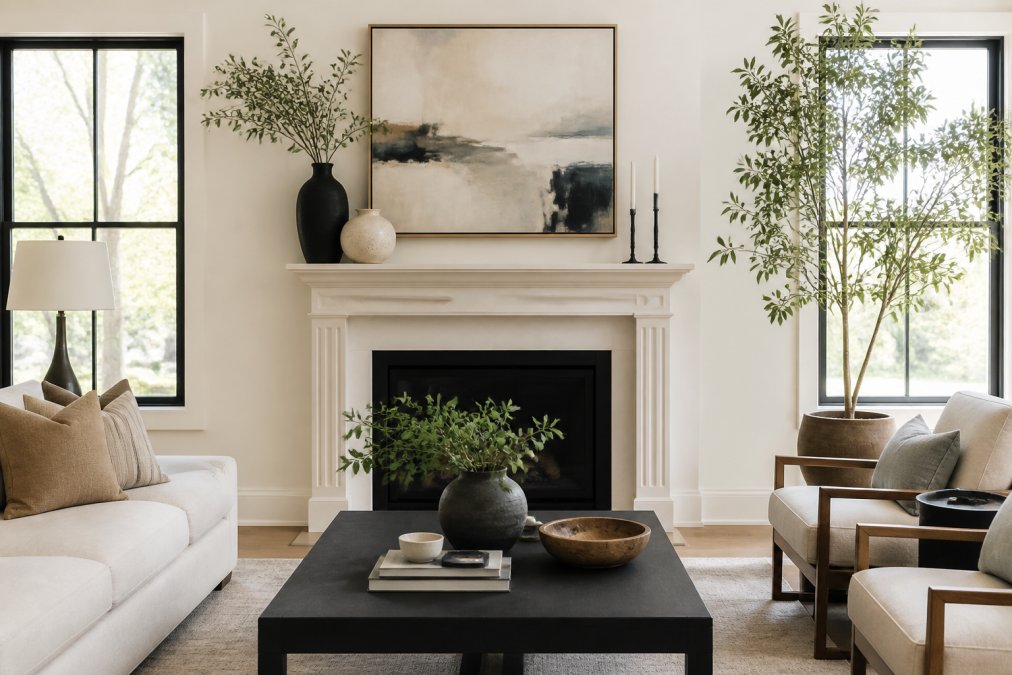
Fireplaces are the gold standard for living room focal points. They naturally command visual weight through their size, texture, and the implied warmth they project. The mantel becomes a styling opportunity that amplifies the focal point’s impact through layering and proportion.
Windows rank second among architectural focal points. Large windows or a wall of windows create natural visual interest through light and views. A window focal point works best when it frames a desirable view; without one, it may need supplemental styling through window treatments or surrounding decor.
Architectural features like exposed brick walls, vaulted ceilings, built-in bookcases, or statement stone walls automatically function as focal points because they have inherent visual weight and texture. When multiple architectural features compete for attention, establish visual hierarchy by emphasizing one and downplaying the others through color, lighting, and furniture placement.
Art, Statement Pieces, and Gallery Walls
When architectural features are minimal, create a focal point through intentional decor. Large-scale artwork positioned at eye level becomes the focal point when given space to breathe (si.edu). The key is scale: a small painting on a large wall reads as an afterthought, not an anchor.
Statement furniture pieces like a distinctive sofa, upholstered accent chair, or sculptural coffee table can function as focal points when they have visual weight and are positioned prominently. Gallery walls create focal interest through curation and arrangement; a well-executed gallery wall becomes a focal point because it occupies visual real estate and demonstrates intentionality.
The best focal point for your space depends on your room’s architecture, existing furniture, and personal aesthetic. A room with a fireplace needs styling that emphasizes what’s already there. A room with blank walls requires you to create one through art, furniture, or a combination of elements.
How to Arrange Furniture Around a Focal Point
Once you’ve identified your focal point, furniture arrangement becomes straightforward because you’re organizing everything in relation to that anchor. The most common mistake is floating furniture in the middle of the room instead of anchoring it to the focal point.
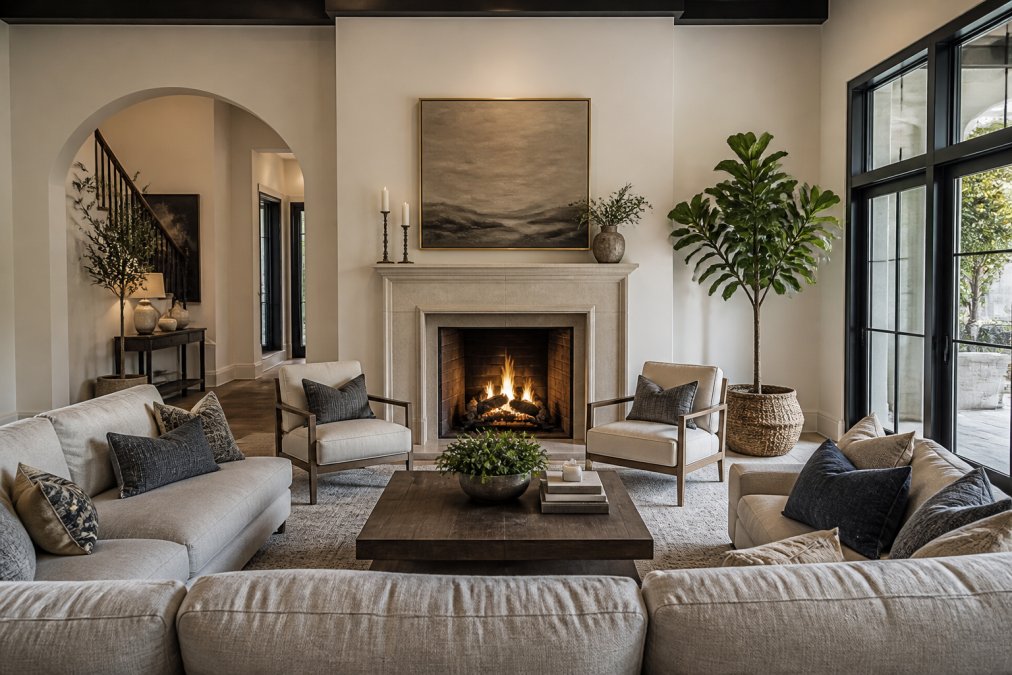
Start by positioning your largest piece, typically a sofa, to face the focal point directly. Secondary seating should follow the same orientation, creating a conversational arrangement where people naturally face the focal point. The coffee table should sit between the sofa and focal point, creating a visual bridge that strengthens the connection. A typical living room works well with 8-12 feet between the back of the sofa and the focal point, though this varies based on room size and ceiling height (asid.org).
Additional furniture, accent chairs, side tables, consoles, should relate to the focal point through either direct orientation or proximity. Negative space matters as much as furniture placement; leaving breathing room around your focal point prevents the space from feeling crowded.
Decorating Tips for Non Designers: Building Visual Hierarchy
Visual hierarchy guides viewers’ eyes in a specific order, preventing them from feeling overwhelmed. Building visual hierarchy around your focal point moves you from “nice pieces in a room” to “a designed space.”
The simplest way to establish hierarchy is through size. Your focal point should be the largest or most visually dominant element in the room. Everything else, secondary furniture, accent pieces, accessories, should be proportionally smaller or less visually demanding.
Color creates hierarchy through contrast and saturation. Your focal point should either be the most saturated color in the room or the highest contrast element. A fireplace with warm terra-cotta tones becomes more prominent when surrounding walls are neutral.
Lighting amplifies focal points dramatically. Directional lighting, picture lights above artwork, uplighting on a fireplace, or accent lighting on architectural details draws the eye and creates depth. Strategic lighting is one of the most underutilized tools in residential design.
Repetition and rhythm create visual coherence without competing with the focal point. If your focal point features a specific texture, echo that texture in smaller doses elsewhere in the room. If your focal point is a cool-toned artwork, repeat cool tones in throw pillows or accent pieces.
Living Room Layout Ideas for Multiple Focal Points
Some rooms have competing focal points, a fireplace and a large window, or a fireplace and an architectural feature. The solution is to establish clear hierarchy so one dominates and the others support.
Choose your primary focal point based on what you use most. Your primary focal point should receive the most styling attention, the best furniture orientation, and the strongest lighting emphasis.
Secondary focal points should be styled with restraint. A window that’s not your primary focal point can have simple, elegant window treatments that frame the view without drawing attention away from your primary anchor. Furniture arrangement becomes more complex with multiple focal points, but the principle remains: primary seating faces the primary focal point.
Color and texture distribution prevents multiple focal points from creating visual chaos. If your primary focal point is warm-toned, secondary focal points should be cooler or more neutral to create visual separation.
Using Color, Texture, and Lighting to Accentuate Your Focal Point
Color is the fastest way to emphasize a focal point. You can paint a wall behind a fireplace, add colored artwork, or use a bold accent color that draws attention to your chosen anchor. The key is intentionality.
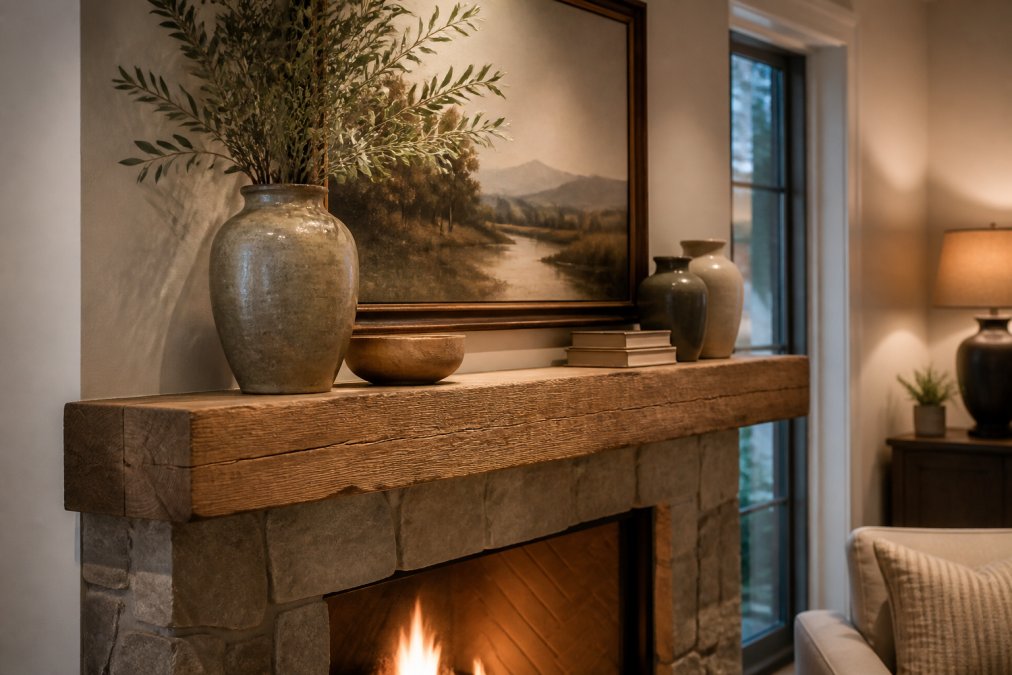
Texture layering creates visual interest that prevents focal points from feeling flat. A fireplace with smooth stone benefits from textured accessories, woven baskets, soft throws, and natural wood elements. Texture creates depth that makes spaces feel intentional and sophisticated.
The relationship between focal point and surrounding colors determines how effectively it commands attention. A warm-colored focal point stands out more against cool or neutral surroundings. A cool-toned focal point needs warm or neutral context to shine. Monochromatic schemes work when the focal point is the darkest or lightest value in the room.
Lighting transforms focal points from daytime features into dramatic evening anchors. Picture lights above artwork, uplighting on architectural features, and accent lighting create visual emphasis and emotional impact. Dimmers allow you to adjust the focal point’s prominence based on time of day and mood.
Layered lighting, combining ambient, task, and accent lighting, creates the most sophisticated effect. Ambient lighting provides overall illumination, task lighting supports function, and accent lighting emphasizes your focal point.
Creating a Focal Point in a Room Without One
Rooms without natural focal points require intentional creation. The good news is that creating a focal point is often more affordable than emphasizing an existing one because you have complete creative control.
Large-scale artwork is the most straightforward solution. A single substantial piece, triptych, or gallery wall positioned prominently becomes an instant focal point. Artwork should occupy about 50-75% of the wall space above a console or sofa to function as a true focal point (aiga.org).
An accent wall creates focal interest through color or texture. A bold paint color, wallpaper, or textured finish on a single wall establishes a focal point, especially when combined with complementary furniture placement.
A statement furniture arrangement can function as a focal point when individual pieces are substantial and positioned deliberately. A distinctive sectional sofa, bold upholstered chair, or sculptural console table becomes a focal point through scale and positioning.
Built-in styling creates permanent focal points. A styled bookshelf, floating shelf arrangement with curated objects, or console table with layered accessories becomes a focal point through curation and visual weight. Your eye naturally goes to the largest, brightest, most textured, or most colorful element in a space.
Common Mistakes to Avoid When Styling Focal Points
The most frequent error is undersizing the focal point. A small piece of artwork on a large wall or sparse mantel styling creates visual weakness. Your focal point should be visually substantial enough to anchor the entire room.
Competing focal points create visual confusion. Every element in the room should support your primary focal point, not vie for attention.
Over-styling dilutes impact. A fireplace mantel crowded with objects or artwork surrounded by competing decorative elements loses its focal power. Negative space is as important as the focal point itself.
Ignoring proportion and scale creates awkward results. Your focal point’s scale should relate to your room’s size, ceiling height, and furniture scale.
Neglecting lighting makes focal points disappear. A beautifully styled fireplace or gallery wall loses impact in dim lighting. Strategic accent lighting is often the difference between a focal point that commands attention and one that blends into the background.
Inconsistent styling creates visual noise. A fireplace mantel with mismatched object heights or a gallery wall with wildly different frame styles makes the space feel disjointed. Consistency means intentional curation that feels cohesive.
Remember that your focal point should reflect your personal aesthetic and lifestyle. The most successful focal points are the ones that genuinely excite you and reflect how you actually live in your space.
Creating a strong focal point transforms how your living room functions and feels. The most sophisticated spaces aren’t filled with more stuff; they’re organized around a clear visual anchor that gives the room purpose and direction. Whether you’re emphasizing an existing architectural feature or creating one from scratch, the principles remain constant: scale, lighting, color hierarchy, and intentional restraint.
At Verra Luxe Home, we understand that the right focal point pieces, curated artwork, statement accessories, and premium decor elements are investments in how your space feels every single day. When you choose pieces thoughtfully and position them with intention, your living room becomes a sanctuary rather than just a room filled with furniture. Start with your focal point, and let everything else follow.
Frequently Asked Questions
What are some good focal point ideas for a living room?
The best focal points leverage your room’s existing architectural features. Fireplaces are classic anchors that naturally draw the eye. Large windows with views, built-in shelving, or accent walls work equally well. If your room lacks these, create a focal point with a gallery wall of art, a statement piece of furniture, or a bold accent wall using color or texture. Choose what aligns with your room’s layout and your personal style.
How do you balance two focal points in one living room?
When multiple focal points exist, establish visual hierarchy by emphasizing one as primary and downplaying the other. Use lighting to draw attention to your chosen focal point, brighter, warmer light naturally guides the eye there. Arrange furniture to face your primary focal point, and use the secondary one as a supporting design element. Color and texture can also help: make your primary focal point more visually dominant through accent colors or statement pieces while keeping the secondary focal point subtle and complementary.
How do you use lighting to highlight a living room focal point?
Lighting creates visual weight and directs attention. Install overhead fixtures or spotlights that illuminate your focal point more brightly than surrounding areas. Wall sconces flanking a fireplace or artwork add depth and drama. Layered lighting, combining ambient, task, and accent lighting, creates visual interest while emphasizing your focal point. Warm light (2700K-3000K) feels inviting, while brighter light makes focal points feel more prominent and eye-catching.
What should I do if my living room doesn’t have a natural focal point?
Build one intentionally. Create an accent wall using bold color, wallpaper, or textured materials. Arrange a gallery wall or install floating shelves to display curated art and objects. Position a statement piece of furniture, an oversized chair, console table, or entertainment unit, to anchor the space. Alternatively, use a large mirror with an attractive frame to reflect light and create visual interest. The key is selecting something that commands attention and organizes the room’s spatial flow around it.
This article was written using GrandRanker