Table of Contents
- What Curated Decor Actually Means
- The Psychology Behind Why Curated Spaces Feel Better
- Core Intentional Interior Design Principles That Matter
- How to Style a Curated Home: An Editing Framework
- The Role of Decor Accent Pillows in Creating Cohesion
- Common Curation Mistakes That Undermine Your Space
- Quality, Authenticity, and Longevity: Why It Matters
- Conclusion
Last Updated: August 20, 2026
What Curated Decor Actually Means
Curated decor refers to a thoughtfully selected collection of pieces chosen for how they work together, rather than purchased as matching sets or impulse buys. A curated room feels intentional, every object has a reason for being there. This doesn’t require sparseness; a curated space can be maximalist and layered, as long as the layering serves a purpose.
Curated decor combines vintage finds with modern pieces, heirlooms with artisan-made items, and statement pieces with functional objects. The goal is cohesion through intentional design, not uniformity through matching. When your environment reflects deliberate choices, your brain registers the space as intentional, controlled, and personally meaningful, changing how you feel in the room.
The Psychology Behind Why Curated Spaces Feel Better
Humans respond powerfully to spaces that feel intentional. When you enter a room where every element serves a purpose, your nervous system recognizes order and coherence, triggering calm and control.
Curation taps into core human needs: personal expression (a curated space says something about who you are) and cognitive ease (when elements relate visually and conceptually, your brain processes the space more efficiently). There’s also narrative coherence, humans want their environments to tell a coherent story about their values and identity. A vintage mirror from your grandmother, a modern chair reflecting current taste, and an artisan ceramic piece from a meaningful trip together create an authentic narrative.
Research in environmental psychology shows that personalized, intentionally designed spaces reduce stress and increase satisfaction. When your surroundings reflect your choices rather than defaults, you experience greater psychological ownership and measurable improvements in daily well-being.
The most satisfying curated spaces aren’t the most expensive ones, they’re the ones that reflect genuine personal choices. Authenticity matters more than price tag.
Core Intentional Interior Design Principles That Matter
Negative Space and Breathing Room
Negative space is the emptiness between and around objects. A room crammed with items, no matter how beautiful individually, feels chaotic. Negative space allows each piece to be seen clearly and appreciated. A wall with three carefully spaced pieces of art creates more impact than one covered edge to edge. The empty areas direct attention and create rhythm.
Contrast and Visual Interest
Visual interest comes from contrast through color, texture, scale, or style mixing. The most effective curated spaces layer multiple types of contrast: a sleek modern sofa paired with a vintage wooden side table, minimalist walls with maximalist artwork, smooth surfaces alongside rough textures. The key is intentional contrast, the pieces need a connecting thread, shared color palette, consistent era, or unified design philosophy that makes contrasts feel deliberate rather than accidental.
Intentional Design vs. Matching Sets
Matching sets create uniformity; intentional design creates cohesion. When you buy a bedroom set, all pieces match by default but don’t reflect personal aesthetic choice. Intentional design means selecting each piece for how it contributes to your overall vision. Two nightstands don’t need to match; they need to work together through proportion, material quality, or design sensibility.
Matching sets are efficient. Intentional design is memorable. One fills a room; the other transforms it.
How to Style a Curated Home: An Editing Framework
Step 1: Edit First, Add Second
Most people approach decorating by adding. Reverse this: start by editing what you already have. Identify pieces that genuinely serve you functionally or emotionally. Remove what doesn’t work. This creates clarity about what you like and opens negative space. Only after editing should you add, now each new piece has a specific role.
Step 2: Develop Your Color Palette
A consistent color palette ties a curated space together without requiring monochromatic design. Start with two to three base colors (typically neutrals), then add two to three accent colors in smaller quantities. The palette should feel cohesive as a whole. Use it as a filter for every purchase, if a piece doesn’t fit, don’t buy it, no matter how beautiful individually.
Step 3: Layer Texture and Proportion
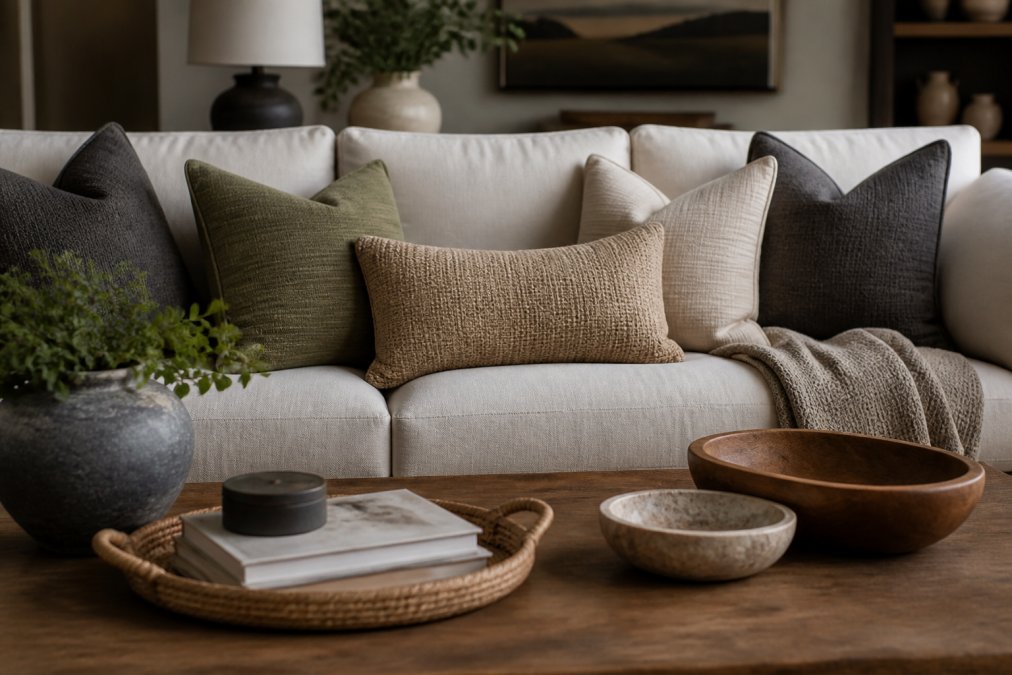
Texture prevents flatness through intentional material combinations: smooth velvet next to rough linen, polished wood next to matte ceramic, metal accents alongside natural fibers. Proportion is about scale relationships, a tiny accent chair next to an oversized sofa looks awkward. In curated spaces, proportions relate logically. One large statement piece can anchor a room; five medium pieces create clutter.
The Role of Decor Accent Pillows in Creating Cohesion
Accent pillows are active players in your room’s visual language, not filler. They introduce color, texture, and pattern flexibly, unlike a sofa, pillows can be changed seasonally or as your aesthetic evolves. More importantly, pillows create visual connections across a room. A pillow on the sofa echoes colors from artwork or a rug, creating rhythm and cohesion.
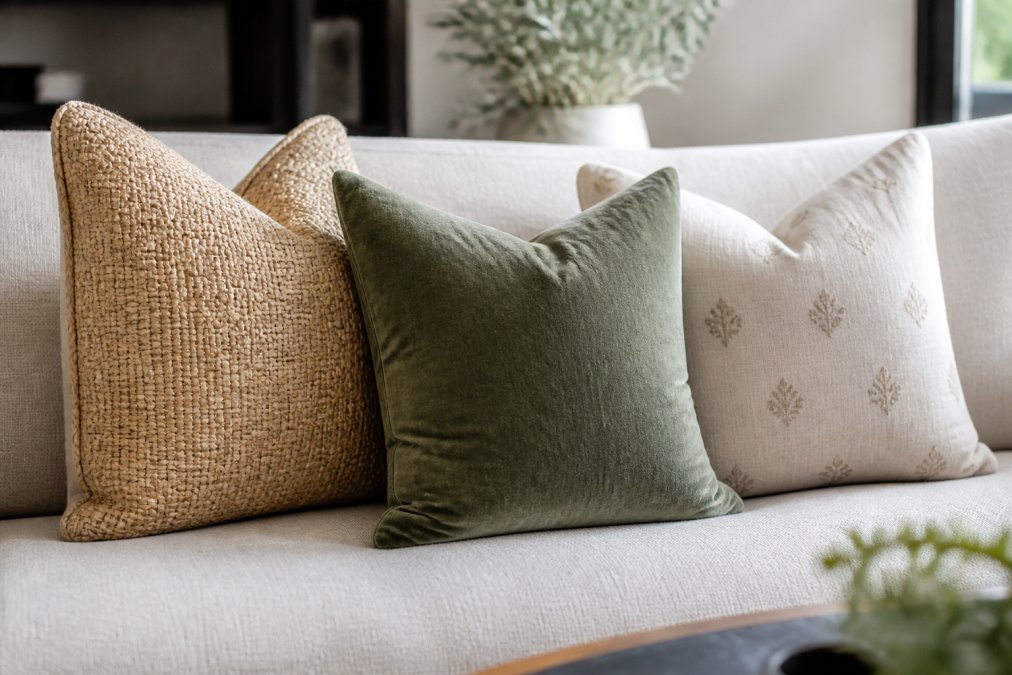
The most effective pillow styling follows the rule of odd numbers and intentional grouping. Three pillows on a sofa feel more curated than two or four, varying in texture and possibly color while maintaining visual harmony. Quality matters, cheap pillows cheapen the entire sofa, while high-quality pillows with substantial fabric feel intentional.
Common Curation Mistakes That Undermine Your Space
The first mistake is over-decorating. More objects don’t equal more beauty; they equal visual noise. Empty surfaces create breathing room and allow displayed items to shine.
The second mistake is mixing aesthetics without intention. Bohemian next to industrial next to mid-century modern, with no connecting thread, creates confusion. Intentional mixing requires a unifying element, shared color palette, consistent material quality, or unified design philosophy.
The third mistake is choosing style over function. A beautiful but uncomfortable chair is decoration, not furniture. Curated spaces balance beauty and usability.
The fourth mistake is neglecting scale and proportion. A petite console table next to an oversized sectional looks wrong, regardless of individual beauty.
The fifth mistake is ignoring your actual lifestyle. A white sofa looks stunning in magazines but impractical with kids and pets. Curated means making choices that work for your real life while maintaining aesthetic intention.
The biggest curation mistake is treating your home like a showroom instead of a living space. If you can’t relax in it, it’s not curated, it’s staged.
Quality, Authenticity, and Longevity: Why It Matters
Quality isn’t just about appearance today; it’s about performance over years and decades. A well-made piece outlasts trends and develops character through use. Solid wood with real joinery lasts generations; particle-board with veneer shows wear within years.
Authenticity is visible, genuine leather, real wood, quality upholstery age beautifully and develop patina. When you invest in quality pieces, you can keep them for years, let them develop meaning, and incorporate them into evolving design schemes. With disposable decor, you’re constantly replacing, never building.
The sustainability angle matters too. Buying fewer, better pieces means less waste and more meaningful choices. Verra Luxe Home’s approach reflects this principle, each item is selected for longevity and intentional living, designed to work in your space for years to come.
Creating a home that feels curated requires stepping back from impulse and embracing intention. Beauty comes from thoughtful choices, not expensive purchases. When you approach decorating as curation, selecting pieces that work together, reflect your values, and enhance daily life, your space transforms into a sanctuary that feels authentically yours. Explore Verra Luxe Home’s curated collection to discover pieces designed for this intentional approach. Each item is selected for quality, longevity, and how it contributes to a cohesive, beautiful home. Shop Now to begin building your curated space.
| Curation Principle | What It Means | How It Changes Your Space |
|---|---|---|
| Intentional selection | Choosing pieces for purpose, not filling voids | Eliminates clutter and creates meaning |
| Negative space | Allowing emptiness between objects | Reduces visual overwhelm and adds breathing room |
| Color cohesion | Using a consistent palette throughout | Creates visual harmony and flow |
| Textural layering | Mixing materials and finishes | Adds depth and prevents flatness |
| Proportion balance | Relating object sizes logically | Feels organized and visually balanced |
| Quality focus | Investing in pieces that last | Enables long-term curation and authenticity |
Frequently Asked Questions
What does curated decor actually mean in interior design?
Curated decor means intentionally selecting pieces that reflect your personal aesthetic and work together cohesively, rather than buying matching sets or random items. It's about creating a space with narrative and authenticity, where each piece serves a purpose, whether functional or emotional. This approach prioritizes quality over quantity and creates rooms that feel lived-in and soulful rather than sterile or overly decorated.
How can decor accent pillows change the feel of a room?
Accent pillows are one of the most powerful tools for tying together a curated home's color palette and adding texture. They can introduce contrast, soften hard lines, and create visual rhythm across a seating area. By layering pillows in complementary colors and varied textures, you add depth and personality without committing to major furniture changes. They also signal intentional design choices rather than default decorating.
What are the core principles of intentional interior design?
Intentional interior design rests on negative space, contrast, color harmony, and proportion. It means avoiding clutter, mixing old and new elements deliberately, and choosing pieces that reflect your personal history and values. Rather than filling every surface, you create focal points, balance textures, and ensure each item contributes to the overall narrative. This approach makes spaces feel larger, calmer, and more authentically yours.
Why does a curated home look more expensive than a decorated one?
Curated spaces appear more sophisticated because they demonstrate restraint, intentionality, and quality over quantity. They avoid the visual noise of too many unrelated pieces, which can read as cluttered or trendy. Intentional design choices, consistent color palettes, and layered textures create harmony and balance that mass-produced, matching-set decorating cannot achieve. The result feels curated and timeless rather than hastily assembled.
This article was written using GrandRanker

Leave a Reply