
Table of Contents
- Jonathan Adler vs Competitors: What Sets Them Apart
- Quick Comparison Table
- Design Aesthetic and Philosophy
- Durable Decor for Family Homes: Quality and Craftsmanship
- Luxury Home Decor Brands: Price Point and Market Position
- How to Choose Luxury Decor That Lasts
- Styling Guides and Interior Design Compatibility
- Sustainability, Resale Value, and Long-Term Investment
- Frequently Asked Questions
Last Updated: September 3, 2026
Jonathan Adler vs Competitors: What Sets Them Apart
When you’re shopping for luxury home decor, the choice between Jonathan Adler and alternatives like West Elm, CB2, Arteriors, or Made Goods comes down to more than just aesthetics. It’s about what you’re paying for and whether the pieces will actually work in your home long-term.
Jonathan Adler built its reputation on bold, sculptural designs with a playful edge. The brand leans into maximalist, eclectic style with signature motifs like the “Muse” face and geometric patterns. But here’s what many shoppers discover: that distinctive aesthetic doesn’t always translate into durability, and the price point doesn’t always reflect the craftsmanship you’d expect at the luxury level.
At Verra Luxe Home, we empower discerning homeowners to personalize their environment with exclusive pieces that beautifully blend artistic elegance with practical functionality, enhancing everyday living. The brands you’re comparing each solve different problems. Jonathan Adler excels at statement pieces and bold visual impact. But if you’re building a cohesive, long-lasting collection that blends artistic elegance with practical functionality, the comparison reveals clear winners and clear trade-offs.
Below, we’ll show you exactly how Jonathan Adler stacks up against its competitors across design philosophy, durability, price, and real-world usability. By the end, you’ll know which brand actually delivers on its promises.
Quick Comparison Table
| Brand | Design Philosophy | Price Range | Best For | Durability Focus |
|---|---|---|---|---|
| Verra Luxe Home | Curated, artistic elegance + functionality | Premium | Discerning homeowners seeking cohesive, lasting collections | High emphasis on quality materials |
| Jonathan Adler | Bold, playful, maximalist | Mid-to-premium | Statement-piece lovers who prioritize visual impact | Mixed, strong on ceramics, weaker on textiles |
| West Elm | Modern, sustainable, minimalist | Mid-range | Design-conscious buyers seeking eco-conscious options | Solid; some durability concerns noted |
| CB2 | Urban, edgy, minimalist | Mid-range | Those wanting high-impact contemporary style | Good for statement pieces; less tested over time |
| Arteriors | Sculptural, artisanal, glamorous | High luxury | Interior designers and maximalists | Excellent, handcrafted emphasis |
| Made Goods | Handcrafted, unique, sophisticated | High luxury | Buyers seeking one-of-a-kind artisan pieces | Exceptional, each piece is unique |
Design Aesthetic and Philosophy
Jonathan Adler’s design language is unmistakable: bold color, playful geometry, and a touch of wit. The brand doesn’t whisper. It speaks in bright pinks, geometric faces, and statement lighting that announces itself the moment you walk into a room. This works beautifully if your home aesthetic leans maximalist and eclectic.
The problem emerges when you step back and ask whether those pieces actually work together. Jonathan Adler’s strength is the individual statement piece. String five of them together in one room, and you risk visual chaos rather than curated sophistication.
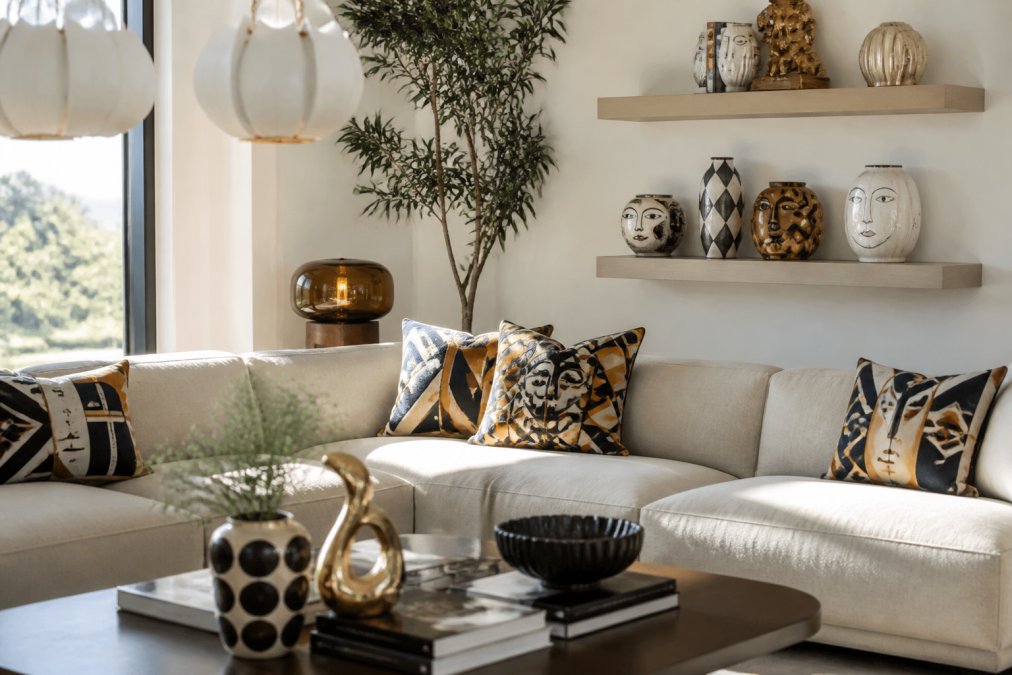
Verra Luxe Home takes a different approach. We curate collections where each piece complements the others, creating a cohesive visual story rather than competing statements. The aesthetic blends artistic elegance with practical functionality. You get the visual interest of unique, thoughtful pieces without the risk of clashing when you put them together.
West Elm and CB2 occupy the middle ground, modern and contemporary, but with less personality than Jonathan Adler and less premium positioning than Arteriors. West Elm emphasizes sustainability; CB2 emphasizes urban edge. Both are accessible, but neither has the distinctive design language that makes a room feel intentional rather than assembled.
Arteriors and Made Goods sit at the luxury end, where design philosophy becomes almost secondary to craftsmanship. Arteriors creates bold, sculptural pieces that designers specify for high-end projects. Made Goods emphasizes the artisan story, each piece is handcrafted globally, ensuring uniqueness. If your priority is owning something truly one-of-a-kind, Made Goods delivers that promise better than any competitor.
Durable Decor for Family Homes: Quality and Craftsmanship
Here’s where Jonathan Adler’s aesthetic appeal diverges sharply from its practical performance. The brand excels with ceramics and sculptural pieces. Their pottery is genuinely well-made, and a Jonathan Adler vase can last decades. But venture into textiles, throw pillows, upholstered furniture, area rugs, and durability becomes questionable.
Many homeowners report that Jonathan Adler textiles show wear faster than expected for the price point. Fabrics pill, seams fray, and colors fade. For a home with kids and pets, this creates real frustration: you’ve paid premium prices for pieces that don’t hold up to everyday life.
Verra Luxe Home was built specifically to solve this problem. We source pieces that balance beauty with durability. Our commitment to high-quality, durable decor means you’re investing in items that genuinely last. We don’t just curate for visual impact; we verify that pieces can withstand real homes with real families.
West Elm has made sustainability commitments, which sometimes correlate with durability, but not always. Their customer feedback is mixed: some pieces age beautifully, others disappoint. CB2 is similar; the modern designs are striking, but longevity varies significantly by product category.
Arteriors and Made Goods both emphasize craftsmanship as a core value. Arteriors uses premium metals and natural materials with meticulous attention to detail. Made Goods’ handcrafted approach means each piece is built with artisan care. If durability is your primary concern, these two brands deliver more consistently than Jonathan Adler.
For families with active households, durability matters more than design trends. Jonathan Adler’s ceramics age well; its textiles do not. Verra Luxe Home, Arteriors, and Made Goods all prioritize longevity as a core value.
Luxury Home Decor Brands: Price Point and Market Position
Jonathan Adler occupies an interesting position: premium pricing without consistently premium craftsmanship. A Jonathan Adler sofa can run $2,000 to $4,000. A single throw pillow costs $150 to $250. For that investment, you’re paying primarily for design recognition and visual distinctiveness, not necessarily superior materials or construction.
West Elm’s pricing is more transparent. Lighting fixtures start around $100; sofas range from $1,000 upward (westelm.com). You’re paying for modern design and sustainable sourcing, which justifies the mid-range positioning.
CB2 undercuts both with sofas starting around $800 to $2,000 and decor items as low as $20 (cb2.com). The trade-off is clear: you get contemporary style at accessible prices, but the premium positioning is lower.
Arteriors operates in true luxury territory. Designer-favorite pieces regularly exceed $10,000 (arteriorshome.com). A single sculptural light fixture can cost more than a Jonathan Adler sectional. You’re paying for artisanal craftsmanship, designer prestige, and the understanding that these pieces will appreciate or at least hold their value over time.
Made Goods similarly positions at the luxury end, with accessories often starting above $500. The premium reflects the handcrafted, one-of-a-kind nature of each piece.
Verra Luxe Home prices reflect our commitment to quality and curation. We don’t compete on being the cheapest. We compete on delivering pieces that actually work together, that last, and that reflect your unique values. Our pricing reflects that promise.
The real question isn’t which brand is cheapest, it’s which delivers the best value per dollar spent. Jonathan Adler offers strong value if you prioritize bold design and don’t mind replacing textiles every few years. Arteriors and Made Goods offer strong value if you’re building a lasting collection and view decor as an investment. Verra Luxe Home offers strong value if you want pieces that work together cohesively and hold up over time.
Beware of assuming that higher price always means higher quality. Jonathan Adler’s premium pricing reflects brand recognition and design distinctiveness, not necessarily superior durability compared to mid-range alternatives like West Elm or CB2.
How to Choose Luxury Decor That Lasts
The decision between Jonathan Adler and competitors should start with a clear assessment of what matters most to you: visual impact, durability, uniqueness, sustainability, or cohesion.
Start by defining your home’s design language. Are you a maximalist who loves bold statements, or do you prefer curated, intentional spaces? Jonathan Adler thrives in maximalist homes where each piece can stand alone. Verra Luxe Home and Made Goods thrive when you’re building a cohesive collection. West Elm and CB2 work best in modern, contemporary spaces where you want strong design without overwhelming visual competition.
Next, assess your household reality. Do you have kids, pets, or a lifestyle that demands durability? If yes, prioritize brands that emphasize craftsmanship and material quality. Jonathan Adler’s ceramics pass this test; its textiles do not. Arteriors, Made Goods, and Verra Luxe Home all pass consistently.
Then consider your budget and timeline. Are you furnishing a room immediately, or building a collection over time? Jonathan Adler’s statement pieces work well for quick impact. Verra Luxe Home’s curated approach works better if you’re building intentionally over months or years. Arteriors and Made Goods require patience and budget, but each piece is an investment.
Finally, think about resale value and longevity. Jonathan Adler pieces rarely appreciate; they’re trend-dependent. Arteriors and Made Goods pieces often hold or gain value over time because they’re recognized by designers and collectors. Verra Luxe Home pieces hold value because they’re built to last and chosen for timelessness, not trend.
Before purchasing any luxury decor piece, ask yourself: Will this still feel right in my space in five years? If the answer is “probably not,” it’s a trend piece, not an investment. Jonathan Adler excels at trend pieces; Verra Luxe Home, Arteriors, and Made Goods excel at pieces that age beautifully.
Styling Guides and Interior Design Compatibility
This is where Verra Luxe Home’s curation advantage becomes tangible. We don’t just sell individual pieces; we help you understand how pieces work together. Our commitment to blending artistic elegance with practical functionality means every item in our collection has been evaluated not just for its own beauty, but for how it integrates with other pieces.
Jonathan Adler’s pieces are designed to be bold and individual. The brand assumes you’ll style around them, not that they’ll integrate seamlessly with other high-end decor. This creates a real problem for homeowners who aren’t professional designers: you can end up with beautiful pieces that visually clash.
West Elm provides some styling guidance through their website and social media, but it’s general. CB2 similarly offers inspiration, but assumes you’re comfortable with contemporary minimalism.
Arteriors and Made Goods assume you’re working with an interior designer or have strong design instincts. The pieces are so distinctive that styling guidance becomes almost irrelevant, the piece itself dictates how you’ll use it.
The practical difference: if you buy a Jonathan Adler pillow and it doesn’t work in your space, you own the problem. If you buy from Verra Luxe Home, our curation means the piece was chosen to work within a cohesive aesthetic. You’re not just buying a beautiful object; you’re buying confidence that it will work in your home.
For families and homeowners without design training, this distinction matters enormously. It’s the difference between a room that looks assembled and a room that looks intentional.
Sustainability, Resale Value, and Long-Term Investment
Jonathan Adler doesn’t market itself as a sustainability leader. The brand focuses on design and visual impact. If environmental responsibility is important to you, West Elm explicitly prioritizes sustainable materials and ethical sourcing. That commitment is documented and verifiable.
Arteriors and Made Goods emphasize craftsmanship and longevity, which implicitly support sustainability: pieces that last decades generate less waste than pieces replaced every few years. Made Goods’ global artisan network also supports fair-trade principles, though the brand doesn’t emphasize this as heavily as West Elm does.
Verra Luxe Home’s approach to sustainability is practical: we curate pieces built to last, which means fewer replacements over time. Durability is the strongest form of sustainability. We also prioritize working with artisans and makers who share our values around quality and intentionality.
On resale value, the data is clear. Jonathan Adler pieces rarely command resale premiums. They’re trend-dependent, and trends shift. A Jonathan Adler sofa from 2020 feels dated by 2026. You’ll recover maybe 30-40% of your original investment.
Arteriors and Made Goods pieces often hold or appreciate in value. Designers and collectors actively seek these brands in the secondhand market. A Made Goods piece from 2020 is more desirable now than it was then, partly because true handcrafted items become rarer as time passes.
Verra Luxe Home pieces hold value because they’re timeless, not trendy. We choose pieces for longevity and aesthetic endurance, not for moment-specific appeal. That means your investment doesn’t depreciate the way Jonathan Adler pieces do.
If you view home decor as a long-term investment, which discerning homeowners increasingly do, this distinction is significant. You’re not just buying something beautiful; you’re buying something that will still feel beautiful and valuable in a decade.
The choice between Jonathan Adler and its competitors ultimately reflects your priorities. If you want bold, playful statement pieces and don’t mind replacing textiles periodically, Jonathan Adler delivers. If you want pieces that work together cohesively, last through real life, and hold their value, Verra Luxe Home offers a more thoughtful alternative. Explore our curated collection of premium decor and discover pieces that transform your home into a sanctuary of style while standing the test of time.
Frequently Asked Questions
What makes Jonathan Adler different from other luxury home decor brands?
Jonathan Adler is known for bold, colorful, mid-century modern-inspired designs with a playful yet sophisticated approach. The brand emphasizes artistic vision and iconic motifs across furniture, lighting, and accessories. While competitors like West Elm focus on minimalism and sustainability, and Arteriors emphasize sculptural artisanal pieces, Jonathan Adler combines contemporary style with distinctive visual identity and lifestyle branding that appeals to design-conscious homeowners seeking personality-driven decor.
How do I choose durable decor for family homes when comparing these brands?
Evaluate material quality, construction methods, and warranty coverage. Made Goods and Arteriors prioritize handcrafted durability with premium materials. West Elm offers mid-range options with sustainable focus. CB2 uses innovative materials for contemporary style. Jonathan Adler balances artistic design with functional quality. Ask about fabric treatments, frame construction, and finish durability. Read customer reviews specifically about longevity. Request product care guides and test return policies before committing to high-value pieces.
Is Jonathan Adler considered high-end luxury decor?
Jonathan Adler sits in the upper-mid to premium tier. It’s less expensive than Arteriors and Made Goods, which cater to designer and ultra-luxury markets, but higher than mass-market retailers. The brand positions itself as accessible luxury with distinctive design rather than ultra-exclusive artisanal craftsmanship. Pricing reflects the curated aesthetic and design philosophy rather than handmade production. For budget-conscious shoppers seeking luxury feel, West Elm and CB2 offer lower entry points; for pure luxury investment pieces, Arteriors and Made Goods command higher prices.
Can I mix Jonathan Adler pieces with other luxury home decor brands?
Yes, but intentionally. Jonathan Adler’s bold, colorful aesthetic works best when paired with neutral or complementary pieces from West Elm or CB2. Mixing with Arteriors’ sculptural elements can create striking focal points if you embrace eclectic style. Made Goods’ artisan pieces pair well if you share a design philosophy. The key is establishing a cohesive color palette and design language across brands. Start with one statement piece from Jonathan Adler, then build around it using supporting accessories and furniture from complementary brands that share similar material quality and design sensibility.
This article was written using GrandRanker