Table of Contents
- Why Curated Bundles Beat Buying Decor Piece by Piece
- What Every Minimalist Decor Bundle Should Include
- Bundle 1: The Neutral Living Room Set
- Bundle 2: The Soft Neutrals Bedroom Set
- Bundle 3: The Sculptural Shelf and Surface Set
- Bundle 4: The Small-Space and Renter-Friendly Set
- Bundle 5: The Layered Textures Set With Decor Accent Pillows
- How to Mix, Match, and Customize Your Bundles
- Frequently Asked Questions
Last Updated: October 14, 2026
Why Curated Bundles Beat Buying Decor Piece by Piece
Minimalist decor bundles are pre-styled groups of complementary pieces, chosen to work together as one cohesive look rather than as isolated accents.
Most people assemble a room the slow way: one vase here, a lamp there, a throw blanket bought on impulse.
There is a second problem bundles fix: restraint.
Below, we walk through five curated decor bundles for a minimalist aesthetic, what each includes, who it suits, and how to mix pieces between them.
The value of a bundle is not the discount. It is the coordination: a palette, a texture story, and a fixed number of pieces that keeps a room from tipping into clutter.
What Every Minimalist Decor Bundle Should Include
Every strong minimalist decor bundle covers five categories: a textile layer, a lighting source, one sculptural form, a natural accent, and a functional object. Skip any of these and the room feels either cold or unfinished.
Here is the checklist we use when we curate a set:
- A textile layer, an area rug, a neutral throw, or faux sheepskin to soften hard surfaces
- A lighting source, a table lamp or floor lamp with a warm, diffused glow
- One sculptural form, a ceramic vase, a decorative bowl, or a curved object that draws the eye
That is five to seven pieces. More than that and you are decorating, not curating. Fewer and the room reads as empty rather than intentional.
Materials That Age Well in Busy Homes
Durability decides whether a minimalist room still looks composed after two years of daily life. Look for materials that hide wear instead of advertising it.
Wool and wool-blend rugs hold their shape and mask footprints better than flat synthetic weaves. Linen and cotton throws soften with washing rather than pilling. Stoneware and matte ceramic resist visible fingerprints where glossy finishes show every touch.
Buying a bundle in a single flat texture is the most common styling mistake. An all-smooth, all-matte room reads as a showroom, not a home. Make sure at least two pieces in any set carry visible texture.
Bundle 1: The Neutral Living Room Set
This is the anchor bundle, built around a linen sofa and a soft neutral palette. It suits open-plan living rooms where the furniture stays put and the decor does the seasonal work.
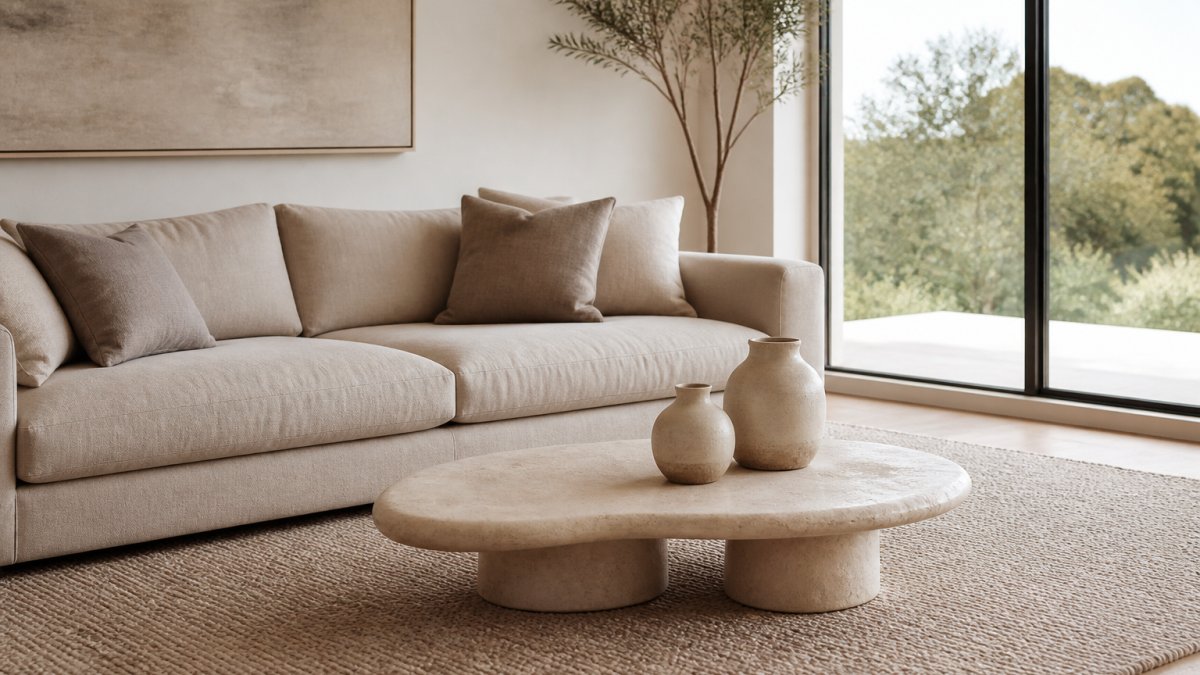
What makes it work is visual balance: one large piece (the rug), one heavy piece (the table), and three small accents. That ratio keeps the floor from feeling sparse and the surfaces from feeling busy.
Bundle 2: The Soft Neutrals Bedroom Set
Bedrooms need fewer objects and softer light. This bundle keeps the palette tight and pushes texture to the front.
The core is a linen duvet and two decor accent pillows in contrasting weaves, one smooth and one nubby, so the bed reads as layered rather than flat. Add a small ceramic dish on the nightstand, a table lamp with a fabric shade for soft lighting, and a single framed textured wall art piece above the bed.
In a bedroom, choose a lamp with a fabric shade rather than a bare bulb or metal cone. Diffused light flatters textiles and makes the whole room feel calmer at night.
Bundle 3: The Sculptural Shelf and Surface Set
Shelves are where minimalist rooms usually fall apart. This bundle treats a shelf as a composition, not a storage unit.
Start with floating shelves in a single finish. Then style in threes: one tall object, one low object, one organic form.
For minimalist shelf styling, the rule is simple: leave more empty space than filled space. Two-thirds of each shelf should stay bare.
Bundle 4: The Small-Space and Renter-Friendly Set
Renters and small apartments need bundles that do not require a single hole in the wall. This set leans on freestanding and layered pieces, and every item moves with you when the lease ends.
A leaning ladder shelf replaces wall-mounted storage. A layered rug setup, a smaller area rug over a larger neutral base, defines a zone without any renovation.
What It Costs
| Item | Typical Price Range | Notes |
|---|---|---|
| Leaning ladder shelf | $80-$220 | Solid wood or powder-coated metal outlasts thin veneer |
| Larger base rug (5×8, flatweave) | $90-$250 | Neutral mid-tone hides wear |
| Smaller accent rug (3×5, textured) | $40-$120 | Defines the zone |
| Folding upholstered bench | $70-$200 | Folds flat for storage |
| Wire basket | $20-$50 | Holds throws and pillows |
| Glass vase | $15-$45 | Single stem, no arrangement needed |
| Bundle total | $315-$885 | Midpoint around $600 |
Damage-Free Styling Rules for Rentals
- Use removable adhesive strips rated for the weight of anything you hang, and test on an inconspicuous spot first. Standard damage-free strips are typically rated in 1-pound, 3-pound, and 5-pound increments.
- Choose a leaning shelf or a freestanding bookcase instead of wall-mounted floating shelves. Leaning pieces need about 12 to 18 inches of clearance from the wall at the base.
- Layer rugs rather than installing carpet. A rug pad under the base rug keeps both layers from sliding and protects the floor beneath (How to choose the right rug pad for your area rugs).
When to Choose This Bundle Over the Others
Pick this set if you rent, move every year or two, or live in a studio or one-bedroom under 700 square feet. If you own your home and plan to stay, the Neutral Living Room Set gives you more visual weight for the same budget because it can include wall-mounted pieces and a heavier coffee table.
Avoid leaning shelves in homes with toddlers or large dogs. A freestanding ladder shelf can tip if it is climbed or bumped hard, so anchor it to the wall with the included hardware when safety matters more than damage-free removal.
| Bundle | Core Pieces | Best For | Renter-Friendly |
|---|---|---|---|
| Neutral Living Room | Rug, coffee table, 2 vases, throw, lamp | Open-plan living rooms | Partly |
| Soft Neutrals Bedroom | Duvet, 2 accent pillows, dish, lamp, wall art | Primary bedrooms | Partly |
| Sculptural Shelf | Floating shelves, vase, bowl, stone object | Display walls | No |
| Small-Space | Ladder shelf, layered rugs, bench, basket, vase | Apartments and rentals | Yes |
| Layered Textures | Area rug, faux sheepskin, throws, accent pillows | Any room needing warmth | Yes |
Bundle 5: The Layered Textures Set With Decor Accent Pillows
If a minimalist room feels cold, texture is the fix, not more color. This bundle layers soft materials until the room feels warm while staying neutral.
The base is an area rug in a mid-tone neutral.
This is the bundle to reach for during a seasonal styling refresh. Swap the faux sheepskin for a lighter cotton throw in spring, and the set carries you through the year.
How to Mix, Match, and Customize Your Bundles
Bundles are a starting point, not a rulebook. The best minimalist rooms pull one or two pieces from several sets and repeat a single palette throughout. What follows is the actual mechanics of doing that, including how to size a bundle to a room and how to bend it toward your own version of minimalism.
Start With the Palette, Then the Pieces
Pick three neutrals and write them down before you buy anything: a base (the dominant wall and floor tone), a mid-tone (textiles and larger furniture), and an accent (small objects and hardware).
If you already own furniture, sample the palette against it rather than against a screen. Fabric and paint shift under different lighting, so hold a swatch or a throw against your sofa in daylight and again at night before committing.
Size the Bundle to the Room
A bundle that looks right in a 400-square-foot apartment can look sparse in an open-plan living room. Two rules keep proportions honest:
- Rug: the front legs of your main seating piece should sit on the rug, and the rug should extend at least 6 to 8 inches beyond each side of the sofa. In a living room, an 8×10 rug is the common default; a 5×8 suits a smaller seating zone.
- Shelf styling: leave roughly two-thirds of each shelf bare. If a shelf is 36 inches wide, that means objects occupy about 12 inches and the rest stays empty.
For a room under 150 square feet, drop one large piece from any bundle and keep the small accents. For a room over 400 square feet, add a second textile layer (a runner or a second throw) rather than a second sculptural object, so the room gains softness without gaining clutter.
Adapt to Your Version of Minimalism
Minimalism is not one look. Three common interpretations, and how to bend a bundle toward each:
- Warm minimalism: lean on wood, linen, and stoneware; keep the palette in creams, oatmeals, and warm grays. This is the default the bundles above are built for.
- Scandinavian minimalism: push toward lighter woods, white walls, and a single black accent. Swap a stoneware vase for a matte white ceramic one and a woven throw for a chunky knit.
- Japandi: mix Japanese restraint with Scandinavian warmth. Favor low, horizontal forms, natural fibers, and one deliberate imperfect object such as a hand-thrown bowl.
Mixing Across Bundles Without Breaking Cohesion
Three rules keep mixing safe. First, hold the palette: never introduce a fourth neutral. Second, vary texture, not color, when you want visual interest.
A simple test: pull one piece from a bundle, set it in the room, and look at the space for a full day before adding anything else. If the room still feels resolved, the piece belongs.
When in doubt, remove a piece rather than add one. Minimalism rewards subtraction, and most rooms improve when the smallest object on a surface comes off.
Our approach at Verra Luxe Home is to curate sets that already respect these rules, so you can start with a complete bundle and adjust from there.
Frequently Asked Questions
What decor looks best in a minimalist home?
Minimalist rooms work best with a small number of intentional pieces: a linen or upholstered sofa, one area rug, a sculptural table lamp, a glass vase or ceramic vessel, and one piece of textured wall art. The goal is visual balance, not emptiness. Negative space lets each item read clearly, so a curated bowl or wire basket earns attention instead of competing with clutter. Start with the largest piece in the room, then add two or three accents that share a neutral palette and clean lines.
How do you make a minimalist room feel warm and inviting?
Texture does the work that pattern usually does. Layer a neutral throw over a linen sofa, add a faux sheepskin on an upholstered bench, and place a wool or jute area rug underfoot. Soft lighting from a table lamp on a dimmer also warms a room quickly. Grouping two or three textured pieces together, such as a ceramic vase beside a wood serving tray, creates a focal point without adding visual noise. Swap heavier textiles in winter and lighter ones in summer for a seasonal refresh.
How do you style accent pillows in a minimalist living room?
Stick to two or three pillows per seating piece and keep the palette within two or three tones. A common approach is one large neutral pillow in linen or cotton, one smaller pillow in a slightly darker earthy tone, and one textured pillow such as boucle or faux sheepskin. Vary the sizes so the arrangement looks layered rather than uniform. If your sofa is already a strong color, choose pillows in soft neutrals so the decor accent pillows support the room instead of fighting it.
How many decorative items should you put on a shelf?
Three to five objects per shelf is a reliable starting point. Odd numbers tend to look more natural, so try a tall vase, a stack of two books, and a small ceramic bowl. Leave at least a third of the shelf empty so negative space stays visible. Group items by height and material rather than spreading them evenly. If a shelf starts to feel busy, remove one item and see whether the arrangement reads more calmly. Minimalist shelf styling rewards restraint.
How do you choose art for a minimalist space?
Choose one or two larger pieces instead of a gallery wall of small frames. Textured wall art in a single neutral tone, or a set of two decorative panels in matching frames, adds depth without introducing many colors. Keep the frame finish consistent with your other metals and woods. Hang the art so its center sits at eye level, roughly 57 to 60 inches from the floor, and leave generous wall space around it. The art should anchor the wall, not fill it.
Building a calm, cohesive home takes more than one good purchase. It takes pieces chosen to work together, made to last, and styled with restraint. Verra Luxe Home curates premium decor with that discipline in mind: a thoughtfully curated collection, a blend of artistic elegance and practical functionality, and pieces crafted for beauty and durability. Shop Now and start with a bundle, then make it yours.