
Table of Contents
- Best Curated Home Decor Stores: Quick Comparison
- Verra Luxe Home: Exclusive Pieces for the Discerning Eye
- 1stDibs: Vintage Treasures and Antique Finds
- Serena & Lily: Coastal Elegance and Performance Fabrics
- RH (Restoration Hardware): Timeless Design and Artisan Collections
- Uncommon Goods: Unique Home Accessories for Living Rooms
- GOODEE: Sustainable and Artisan-Made Decor
- West Elm: Modern Aesthetic and Ethical Sourcing
- Frequently Asked Questions
Last Updated: September 11, 2026
Best Curated Home Decor Stores: Quick Comparison
The best curated home decor stores solve a specific problem: too much choice, not enough point of view. According to Statista’s home decor market outlook, the U.S. home furnishings sector remains one of the most fragmented retail categories, which is exactly why curation matters more than inventory size. This guide filters the market down to eight retailers worth your time, from exclusive art pieces to sustainable artisan goods.
Quick Picks:
- Best Overall: Verra Luxe Home, for exclusive pieces that balance artistic elegance with daily durability
- Best for Vintage: 1stDibs, for one-of-a-kind antique and vintage treasures
- Best for Coastal Style: Serena & Lily, for performance fabrics and relaxed elegance
- Best Budget-Conscious: West Elm, for modern aesthetic at accessible price points
Below, we break down what each store does well, where it falls short, and who it actually suits.
| Store | Best For | Price Positioning | Standout Strength |
|---|---|---|---|
| Verra Luxe Home | Exclusive curated pieces | Premium | Durability plus artistic cohesion |
| 1stDibs | Vintage and antique finds | Luxury | Vetted dealer network |
| Serena & Lily | Coastal and transitional rooms | Upper-mid to premium | Performance fabrics |
| RH | Timeless large-scale design | Luxury | Artisan collections |
| Uncommon Goods | Conversation-starting accents | Mid-range | Independent makers |
| GOODEE | Sustainable artisan decor | Mid to premium | Supply chain transparency |
| West Elm | Modern, ethical basics | Accessible | Fair Trade Certified programs |
Verra Luxe Home: Exclusive Pieces for the Discerning Eye
Verra Luxe Home is a curated home decor retailer built around a single idea: a room should feel like a sanctuary, not a showroom. The collection blends artistic elegance with practical functionality, so statement pieces hold up to real life with kids and pets rather than just photographs.
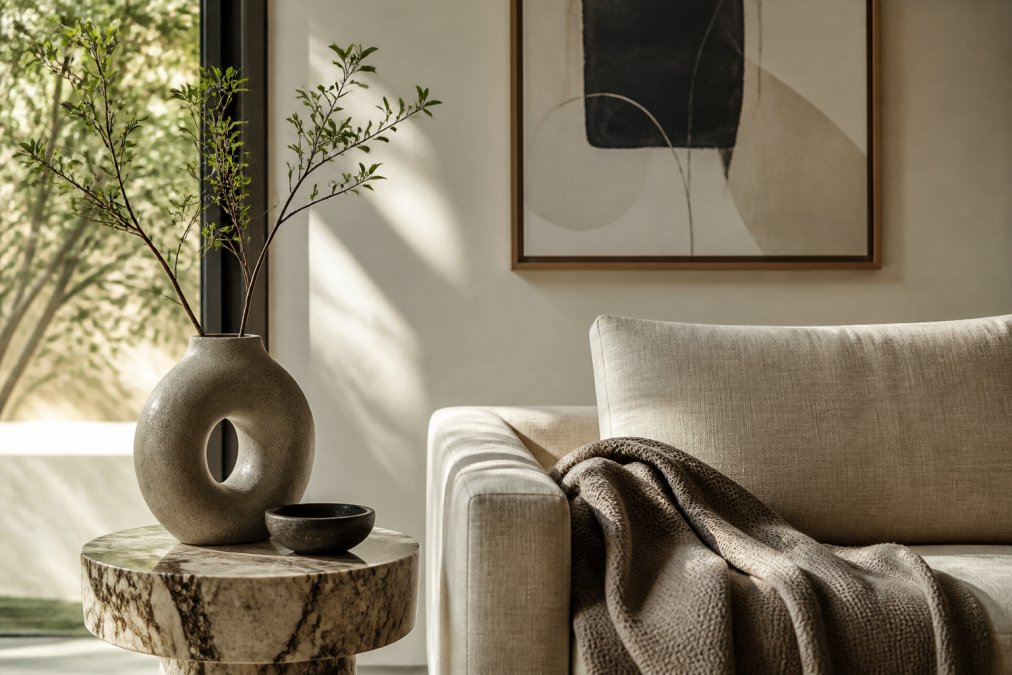
What most multi-brand retailers miss is cohesion. Buying beautiful pieces individually often produces a room that clashes. Verra Luxe Home addresses that by curating pieces that work together, which is the core of interior curation rather than mere shopping.
- Exclusive decor pieces you won’t find in mass-market catalogs
- Thoughtfully crafted for both beauty and durability
- A cohesive design language across the collection
The honest limitation: pricing sits above some mass-market retailers, and the collection is intentionally smaller than a marketplace. You’re paying for curation and craftsmanship, not endless SKUs.
The real difference between a curated retailer and a marketplace is editorial judgment. A curated collection removes the guesswork of matching pieces that were never designed to sit in the same room.
1stDibs: Vintage Treasures and Antique Finds
1stDibs is a premier online marketplace connecting collectors and interior designers with high-end antique, vintage, and contemporary furniture. Its rigorous seller vetting process ensures authenticity, which matters enormously when you’re buying a piece that may be decades old.

The platform’s search filters let you narrow by period, style, and material, so sourcing a specific era is genuinely practical. Where it falls short is price and pace: high price points reflect the rarity of the goods, and inventory shifts constantly.
Collectors and design professionals hunting one-of-a-kind vintage treasures where authenticity is non-negotiable.
Serena & Lily: Coastal Elegance and Performance Fabrics
Serena & Lily is the strongest single-brand answer for readers building a coastal, transitional, or California-casual room, and the reason is narrower than the brand’s marketing suggests: it is one of the few curated retailers that treats performance textiles as a default rather than an upgrade. That matters because coastal aesthetics depend on light-toned upholstery and natural fibers, which are exactly the materials that stain, fade, and pill fastest in real households.
What the performance fabric line actually means. The brand’s indoor-outdoor and performance upholstery is typically solution-dyed acrylic or a polyester-cotton blend engineered to resist fading, mildew, and spills (sunbrella.com). In practice, that means a white slipcover can survive common household accidents, which is not true of standard linen or cotton (peer-reviewed research). For households with kids or pets, this is the single most consequential spec on the product page.
Where it fits in an aesthetic-first shortlist. If you are filtering stores by style rather than geography, Serena & Lily occupies a specific lane:
- Coastal and Hamptons, the core identity; rattan, cane, and blue-and-white ceramics.
- Transitional, clean silhouettes that bridge traditional and modern without leaning either way hard.
- California casual, relaxed linen looks, low-contrast palettes, natural textures.
It is a poor fit for Japandi (too warm and pattern-forward), maximalism (too restrained), or industrial (too soft).
The honest trade-offs. Pricing sits in the upper-mid to premium band, above West Elm, below RH for comparable square footage. Lead times on upholstery can run several weeks because much of it is made to order, so measure your space before ordering rather than after. And the palette is deliberately narrow: if you want a saturated color story, you will need to layer in accents from elsewhere.
When comparing performance fabrics across retailers, ask whether the fabric is solution-dyed (color goes into the fiber) or piece-dyed (color sits on top). Solution-dyed holds up dramatically better to sun and chlorine, a real consideration for sunrooms and covered porches.
Homeowners furnishing a coastal, transitional, or family-heavy room who need light-toned upholstery that survives real life, and who are willing to pay a premium for fabric engineering rather than brand name alone.
How to vet quality before you buy. Two checks separate a genuinely well-made piece from a lookalike: (1) ask for the fabric’s double-rub count, residential upholstery generally performs well above 15,000 double rubs, and contract-grade sits at 30,000 or higher; (2) confirm whether the frame is kiln-dried hardwood or engineered wood, since kiln-dried hardwood resists warping in humid coastal climates. Both details are usually available from customer service even when they are not on the product page.
RH (Restoration Hardware): Timeless Design and Artisan Collections
RH offers large-scale, architectural furniture developed with renowned artisans, and its showrooms remain a benchmark for retail experience. The membership program delivers long-term value if you’re furnishing an entire home rather than buying a single accent.
Long lead times on certain furniture items are the recurring frustration. Plan renovation timelines around them. For a monochromatic, high-end interior, few retailers match the consistency of the RH look.
Uncommon Goods: Unique Home Accessories for Living Rooms
Uncommon Goods is a marketplace for unique home accessories for living rooms and beyond, sourced from independent artists and makers. Every product page tells you who made the piece, which turns decor into a conversation starter.
- Personalized and giftable home accents
- Transparent artist information
- Focus on sustainable, socially responsible products
The catch: inventory fluctuates based on artist availability. If you see something you love, don’t wait.
When buying from maker marketplaces, check whether the item is made to order. Made-to-order pieces often take longer to ship but arrive without the wear that comes from sitting in a warehouse.
GOODEE: Sustainable and Artisan-Made Decor
GOODEE is a curated marketplace built around a single filter most retailers treat as an afterthought: every product must meet a documented environmental or social standard. That is a meaningfully different proposition from a general marketplace that happens to carry a ‘sustainable’ category, and it is the reason this section earns its place on a curated-decor shortlist.
What ‘vetted’ actually means here. GOODEE organizes its catalog around third-party certifications rather than self-reported claims. The labels you will see most often on product pages include:
- B Corp, verified social and environmental performance, accountability, and transparency.
- Fair Trade Certified, audited labor standards and a premium paid back to producer communities.
- Global Organic Textile Standard (GOTS), organic fiber and restricted-input processing for textiles.
- Forest Stewardship Council (FSC), responsibly managed wood and paper supply chains.
- Upcycled and recycled-content certifications, for pieces made from reclaimed or post-consumer material.
When a product page lists one of these, you are looking at a claim someone else audited. When it lists only ‘eco-friendly’ or ‘natural,’ you are looking at marketing. That distinction is the entire value of shopping here.
The aesthetic lane. GOODEE skews warm, textural, and handmade, think hand-thrown ceramics, woven baskets, block-printed textiles, and small-batch glass. It fits well with:
- Japandi and wabi-sabi, imperfect, natural, low-saturation pieces.
- Global and eclectic, artisan objects with visible provenance.
- Earthy organic modern, clay, jute, undyed wool, and raw wood tones.
It is a weak fit for maximalism (too quiet), mid-century modern (too handmade), or anything requiring matched sets, since small-batch production means slight variation piece to piece.
The logistics reality, the part most guides skip. Fragile, handmade decor is the hardest category to buy online, and GOODEE’s artisan model amplifies the usual risks:
- Shipping cost and speed. Small-batch and made-to-order items often ship from the maker rather than a central warehouse, which can mean longer transit and higher per-item shipping than a mass retailer charges. Budget for it before checkout, not after.
- Breakage. Ceramics and glass are the highest-claim categories in home decor shipping. Confirm the retailer’s policy on items that arrive damaged, most reputable marketplaces cover breakage in transit, but you usually need to photograph the packaging and report within a short window (often 48-72 hours).
- Returns. Handmade and made-to-order pieces are frequently final sale or subject to restocking fees, because the maker cannot resell a one-off. Read the return policy on the specific product page, not the site-wide policy.
- Insurance. For pieces above a few hundred dollars, ask whether the shipment is insured and who files the claim, the retailer or you.
Before ordering any fragile artisan piece, screenshot the product page and the return policy. If a piece arrives broken and the listing has since changed, your screenshot is your evidence.
How to judge craftsmanship at a distance. Three signals separate a genuinely handmade piece from a mass-produced one dressed up as artisan:
- Weight and material disclosure. Solid wood, stoneware, and hand-blown glass are heavier and more expensive to ship, a listing that hides material and weight is usually hiding something.
- Variation language. Real handmade goods vary in glaze, grain, and dimension. A listing that promises identical units is likely machine-made.
- Maker attribution. A named maker with a story is harder to fake than a generic ‘artisan-crafted’ label.
The sustainable-decor premium is only worth paying when the certification is third-party and the logistics are transparent. GOODEE clears the first bar; the second is on you to verify at checkout.
The honest trade-offs. Selection is smaller than a general marketplace, prices sit in the mid to premium band, and the artisan model means restocks are unpredictable, if a piece sells out, it may not return. For readers who want a curated, defensible answer to ‘where do I buy decor I can feel good about,’ that is a fair trade.
West Elm: Modern Aesthetic and Ethical Sourcing
West Elm pairs a mid-century modern aesthetic with Fair Trade Certified manufacturing and designer collaborations. Frequent sales and accessible price points make it the easiest entry point into design-forward decor.
The downside is ubiquity. Mass-market availability means your living room may echo your neighbor’s. Use West Elm for foundational pieces, then layer in unique accents to avoid a catalog look.
Frequently Asked Questions
What defines a curated home decor store?
A curated home decor store carefully selects each piece for its design quality, craftsmanship, and cohesive aesthetic. Unlike mass-market retailers, these stores limit inventory to items that meet strict standards for materials and style. This means you’ll find fewer mass-produced items and more one-of-a-kind or small-batch pieces. Stores like Verra Luxe Home, 1stDibs, and GOODEE exemplify this approach, offering collections that feel intentional and elevated rather than overwhelming.
How do I choose home decor that fits my personal style?
Start by identifying your core aesthetic using inspiration images or a mood board. Then, look for stores that align with that vision, whether it’s coastal, modern, or vintage. Pay attention to materials, color palettes, and scale. For example, if you love a relaxed coastal look, Serena & Lily’s performance fabrics and breezy silhouettes will fit naturally. If you prefer bold, artistic statements, Verra Luxe Home’s exclusive pieces can anchor your space without clashing.
Are online curated decor shops worth the price?
Online curated decor shops often justify higher prices through superior materials, artisan craftsmanship, and exclusive designs. For instance, 1stDibs offers rigorously vetted antiques, while GOODEE ensures ethical production. These factors contribute to durability and uniqueness that mass-market pieces rarely match. If you value longevity and a distinctive look, the investment can be worthwhile. However, always review return policies and shipping details for fragile items before purchasing.
What are the benefits of buying from independent home decor boutiques?
Independent boutiques often provide access to handcrafted, small-batch items you won’t find in big-box stores. They also tend to offer personalized service and unique pieces that reflect authentic craftsmanship. Shopping independent supports artisans and often results in a more distinctive home aesthetic. Stores like Uncommon Goods and Etsy connect you directly with makers, so you can ask questions about materials and care, ensuring your decor investment lasts.
How can I mix and match decor styles effectively?
Mixing styles works best when you anchor the room with a common element, such as a neutral color palette or a consistent material like wood or metal. Choose one statement piece, like a vintage rug from 1stDibs, and build around it with simpler items from West Elm or Quince. Keep proportions balanced and repeat textures or colors to create cohesion. Don’t be afraid to blend eras, but limit yourself to two or three distinct styles to avoid a chaotic look.
Choosing the best curated home decor stores comes down to matching a retailer’s point of view with your own. Verra Luxe Home is built for homeowners who want exclusive pieces that hold up to daily life, with a curated collection that blends artistic elegance and practical functionality. Explore the collection and transform your space into a sanctuary of style.