
Table of Contents
- Quick Comparison: 5 Minimalist Furniture Alternatives
- 1. Lounge Chairs: Flexible Seating Without the Bulk
- 2. Floor Cushions and Floor Seating for a Pared-Down Look
- 3. Built-In and Platform Seating: Permanent Minimalist Solutions
- 4. Living Room Ideas Without a Sofa: Rethinking the Main Seating Area
- 5. Multifunctional Furniture for Small Spaces: Storage, Seating, and Style in One
- Alternatives to a Traditional Coffee Table: Ottomans, Trays, and Nesting Tables
- Minimalist Home Decorating Tips for a Cozy, Functional Space
- Frequently Asked Questions
Last Updated: October 4, 2026
Quick Comparison: 5 Minimalist Furniture Alternatives
Minimalist decor is the practice of paring a room down to the pieces that earn their place, then letting clean lines, neutral color, and open floor space do the rest. The five best minimalist decor alternatives to traditional furniture, ranked for how well they deliver comfort without bulk, are lounge chairs, floor cushions, built-in and platform seating, sofa-free living room layouts, and multifunctional pieces that store as they seat.
This guide from Verra Luxe Home covers what each option actually costs you in space, comfort, and upkeep. Below, we rank all five and show you exactly where each one works best.
| Rank | Alternative | Best For | Comfort Level | Storage | Mobility |
|---|---|---|---|---|---|
| 1 | Lounge chairs | Flexible living rooms | High | None | High |
| 2 | Floor cushions | Low, relaxed seating | Medium | Low | High |
| 3 | Built-in / platform seating | Permanent layouts | High | Built-in | None |
| 4 | Sofa-free layouts | Small living rooms | Varies | Varies | Varies |
| 5 | Multifunctional furniture | Small spaces | Medium | High | Medium |
1. Lounge Chairs: Flexible Seating Without the Bulk
A pair of lounge chairs gives you the seating of a small sofa with none of the visual weight. Two chairs facing a low table create conversation seating that rearranges in seconds, which matters in rooms that double as offices or guest space.
The trade-off is honest: two quality lounge chairs usually cost more than one mid-range sofa, and they seat fewer people. For a household of two, that rarely matters. For a family of five, it does.
- Pros: Easy to rearrange, easier to move through doorways, individual comfort settings
- Cons: Higher cost per seat, no shared lounging surface
Angle lounge chairs toward each other at roughly 90 degrees rather than side by side. The arrangement reads as intentional conversation seating instead of two orphaned chairs.
2. Floor Cushions and Floor Seating for a Pared-Down Look
Floor cushions are the lowest-cost way to add seating without adding furniture. A set of floor cushions in beige, taupe, or clay tones sits flat against the floor, stores in a closet, and disappears visually when not in use.
Comfort is the catch, and it is worth being specific about why. Floor seating works for reading, conversation, and low tables, but most adults find it uncomfortable for more than an hour without a backrest against a wall. The reason is mechanical: sitting on the floor with legs crossed or extended puts the hips below the knees, which tilts the pelvis back and flattens the lumbar curve. That is fine for short, relaxed sessions and hard on the lower back over a long evening.
Ergonomics and accessibility. Floor seating is not for everyone, and a good guide says so. Readers with knee, hip, or balance issues, readers who are pregnant, and older guests may struggle to get down and back up. A few adaptations help:
- Pair cushions with a low bench or a wall so there is something to push against when standing.
- Choose a cushion at least 3 to 4 inches thick; thin cushions bottom out and put pressure on the sit bones.
- Add a backrest wedge or a floor chair with an adjustable back for longer sitting.
- Keep a lightweight folding stool nearby for guests who need a higher seat.
Durability and care. Look for a removable, washable cover, cotton canvas, linen blends, and performance weaves hold up best. Foam cores flatten over time; a shredded-foam or buckwheat fill can be topped up, while a solid block usually cannot. Spot-clean weekly and wash covers monthly in a household with pets or kids.
Where it works best. Floor cushions shine in bedrooms used as reading nooks, in rentals where you cannot mount anything, and in multipurpose rooms that need to convert from lounge to play space. They are a poor fit for a household that regularly seats older guests or anyone who needs back support for long stretches.
- Pros: Lowest cost per seat, storable, ideal for small-space design, easy to replace one at a time
- Cons: Limited back support, not suitable for every guest, foam flattens with use
If you want the look of floor seating without the ergonomic trade-off, set cushions on a low platform or tatami base. Raising the seat 6 to 8 inches keeps the minimalist profile while making it far easier to stand up.
3. Built-In and Platform Seating: Permanent Minimalist Solutions
Built-in seating is the most permanent alternative and the one that looks most intentional. A window bench or platform bench extends along a wall, adds storage underneath, and removes the visual noise of a freestanding sofa.
This is a renovation decision, not a purchase. You need a carpenter, a floor plan, and a willingness to commit. The payoff is a room that reads clean and architectural, with seating that never drifts out of place.
Skip the storage drawers under a built-in bench unless you will actually open them. Deep drawers behind a fixed bench become a graveyard for items you never retrieve, and they add cost for nothing.
4. Living Room Ideas Without a Sofa: Rethinking the Main Seating Area
A living room without a sofa is not an empty room. It is a room organized around a different center: a pair of lounge chairs, a window bench, floor cushions, and layered rugs that define the seating zone.
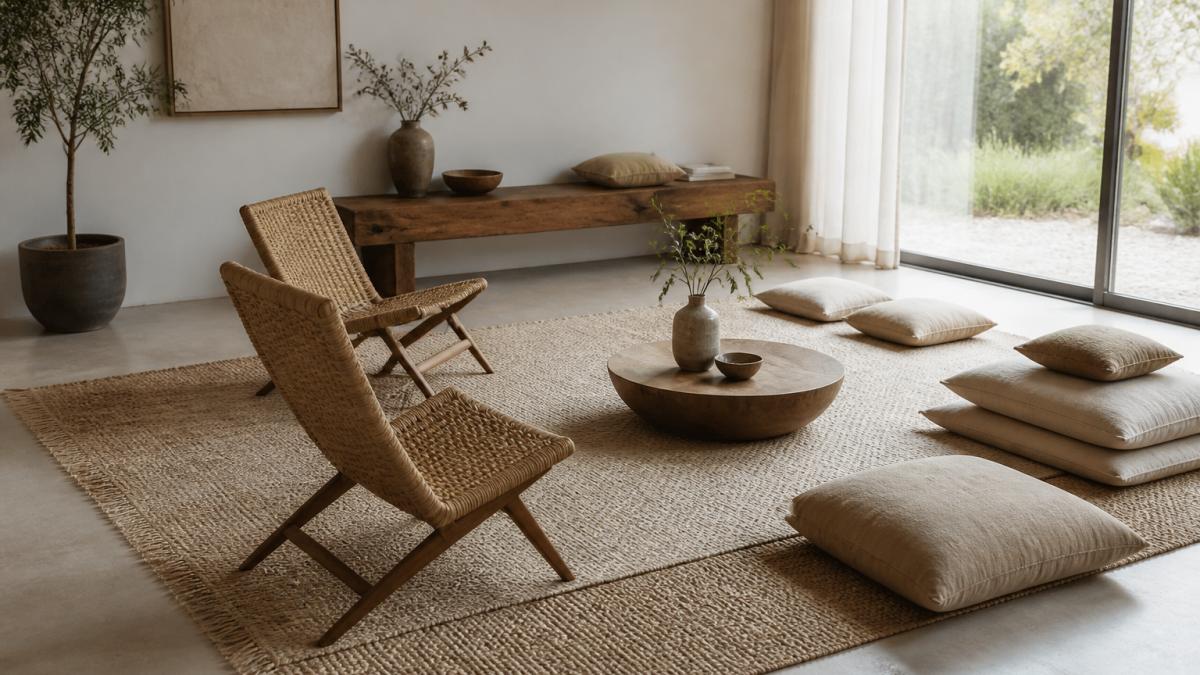
Start with a floor plan before you buy anything. Mark where people will sit, where they will walk, and where the rug edge should fall. A 3D rendering or even a paper sketch saves you from a room that looks sparse in the wrong places and crowded in others.
5. Multifunctional Furniture for Small Spaces: Storage, Seating, and Style in One
Multifunctional furniture for small spaces solves two problems with one footprint. An ottoman with a lift-off lid seats a guest and stores blankets. A nesting table set pulls apart for company and stacks flat the rest of the week. A storage bench along a wall seats two and hides shoes, books, or linens.
The failure mode is buying multifunction for its own sake. A piece that does three jobs badly takes more space than three pieces that each do one job well. Buy multifunction only when you genuinely need both functions, and only when the second function gets used at least weekly.
What it costs. A storage ottoman generally runs from about $80 to $300 depending on size and upholstery. A storage bench ranges from roughly $150 to $600. A wall bed or Murphy bed, the most ambitious option, typically starts around $1,500 for a basic kit and climbs past $4,000 installed. Convertible sleeper sofas sit in the middle, from about $700 to $2,500.
Durability and maintenance. Hinges, gas lifts, and folding mechanisms are the parts that fail first. Look for metal hardware rather than plastic, and check the weight rating before you buy, a storage ottoman rated for 200 pounds is not a bench for two adults. Wipe upholstery weekly, vacuum under lift-lids monthly, and lubricate folding hardware once a year. A well-built piece lasts a decade or more; a cheap one often fails at the hinge within two or three years.
Where it works best, room by room.
- Studio and small living rooms: a storage ottoman as coffee table, footrest, and guest seat.
- Bedrooms: a storage bench at the foot of the bed for linens and off-season clothing.
- Entryways: a bench with shoe storage that also gives a place to sit while tying laces.
- Home offices and multipurpose rooms: a wall bed or a desk that folds into a cabinet, so the room can switch functions.
- Rentals: freestanding multifunction pieces move with you; built-ins do not.
Household fit. Families with young children often get the most value from storage benches and ottomans, since the storage is at kid height and the surfaces are forgiving. Pet owners should favor tight-weave, easy-clean fabrics. Households that move often should avoid heavy wall beds and favor freestanding pieces that fit through a standard doorway.
- Pros: Saves floor space, reduces clutter, high utility per square foot
- Cons: Often heavier, harder to move, rarely excels at any single job, mechanism is the weak point
Before buying multifunction, name the two jobs the piece will do and how often each happens. If the second job is “occasionally,” a single-purpose piece plus a folding stool usually costs less and lasts longer.
Alternatives to a Traditional Coffee Table: Ottomans, Trays, and Nesting Tables
Alternatives to a traditional coffee table work best when they match how you actually use the space. An upholstered ottoman doubles as a footrest and extra seat. A tray on a bench corrals remotes and candles without a dedicated table. Nesting tables expand for guests and tuck away afterward.
| Option | Best For | Storage | Mobility |
|---|---|---|---|
| Upholstered ottoman | Multi-use rooms | Some (lift-lid) | Medium |
| Tray on bench | Minimal footprint | None | High |
| Nesting tables | Occasional hosting | None | High |
Households that host occasionally but live with two people day to day. Nesting tables give you surface area on demand without permanent floor space.
Minimalist Home Decorating Tips for a Cozy, Functional Space
Cozy minimalist interiors come from texture and warmth, not from more objects. Layer rugs in natural materials, add soft furnishings in muted greens or earthy neutrals, and let one or two decorative accents carry the room’s personality.
A few principles that hold up in practice:
- Cap your color palette at three tones, then vary texture instead
- Leave at least one wall mostly bare to give the eye rest
- Choose low-profile furniture so sightlines stay open
- Buy fewer pieces and buy them well; durability beats replacement
For homeowners weighing cost against longevity, secondhand and vintage seating is worth a look before you buy new. Well-made frames outlast fast furniture by years, and refinishing a solid wood bench costs far less than replacing a particleboard one.
Verra Luxe Home curates premium decor built for exactly this approach: pieces that blend artistic elegance with practical functionality, crafted for beauty and durability rather than a single season.
Frequently Asked Questions
What furniture can I use instead of a traditional sofa?
You can replace a traditional sofa with lounge chairs, floor cushions, built-in window benches, platform seating, or hanging chairs. These options work well in minimalist decor because they keep the room open and flexible. For small spaces, multifunctional pieces like storage ottomans or daybeds provide seating and double as storage. Choose based on how many people you seat regularly and whether you need the room to serve multiple purposes.
How do I make a minimalist living room feel cozy without a sofa?
Layer textures to add warmth: use a thick area rug, add soft throw blankets, and mix cushion fabrics like linen and wool. Warm lighting from floor lamps or dimmable sconces helps. Stick to a neutral palette of beige, taupe, and muted greens, then add one or two earthy accents. Floor seating with plush cushions and a low-profile coffee table alternative, such as a large ottoman, keeps the space inviting without visual clutter.
Are floor cushions and lounge chairs practical for a family home?
Yes, if you choose durable materials. Look for covers that are removable and washable, such as cotton canvas or performance fabric. Floor cushions with dense foam retain shape better than loose-fill versions. Lounge chairs with solid wood or metal frames hold up to daily use. For homes with kids and pets, avoid light-colored fabrics that show stains and opt for tight-weave upholstery. Rotate cushions regularly to prevent flattening.
What are the best alternatives to a traditional coffee table in a minimalist room?
Ottomans, nesting tables, and large decorative trays on a rug are practical alternatives. An upholstered ottoman provides extra seating and a surface for trays. Nesting tables let you pull out a surface only when needed, then tuck them away. A sturdy tray placed directly on a layered rug works for drinks and books. Each option keeps the floor plan open and supports a pared-down design without losing function.
The hardest part of a pared-down room is not choosing the seating. It is finding pieces durable enough for real life with kids and pets, cohesive enough to work together, and refined enough to feel finished. That is what Verra Luxe Home does: a curated collection of premium decor, exclusive pieces you will not see in every catalog, and craftsmanship meant to hold up for years. Shop Now and turn your living space into a sanctuary of style.