Table of Contents
- Understanding Artistic Statement Pieces and Their Role
- How to Style a Focal Point in a Living Room
- Mastering Scale, Proportion, and Visual Balance
- Best Practices for Mixing Art Styles in One Space
- Using Decor Accent Pillows to Complement Your Statement Art
- Lighting, Color Palettes, and Creating Spatial Flow
- Maintaining, Preserving, and Sourcing Sustainable Pieces
- Conclusion
Last Updated: August 24, 2026
Understanding Artistic Statement Pieces and Their Role
Artistic statement pieces are bold, eye-catching decor items designed to anchor a room’s visual narrative and establish its overall character. Unlike functional furniture or subtle accessories, these pieces command attention and set the tone for the entire space. At Verra Luxe Home, we understand that a true statement piece isn’t just decorative, it’s transformative, reshaping how light moves through a room and how you experience your home.
Statement art serves as your design’s foundation, establishing color direction, emotional register, and spatial flow that everything else responds to. What separates a successful statement piece from one that feels out of place is intentionality: you’re selecting it because it creates a focal point that makes sense within your room’s structure, your lifestyle, and your design personality.
How to Style a Focal Point in a Living Room
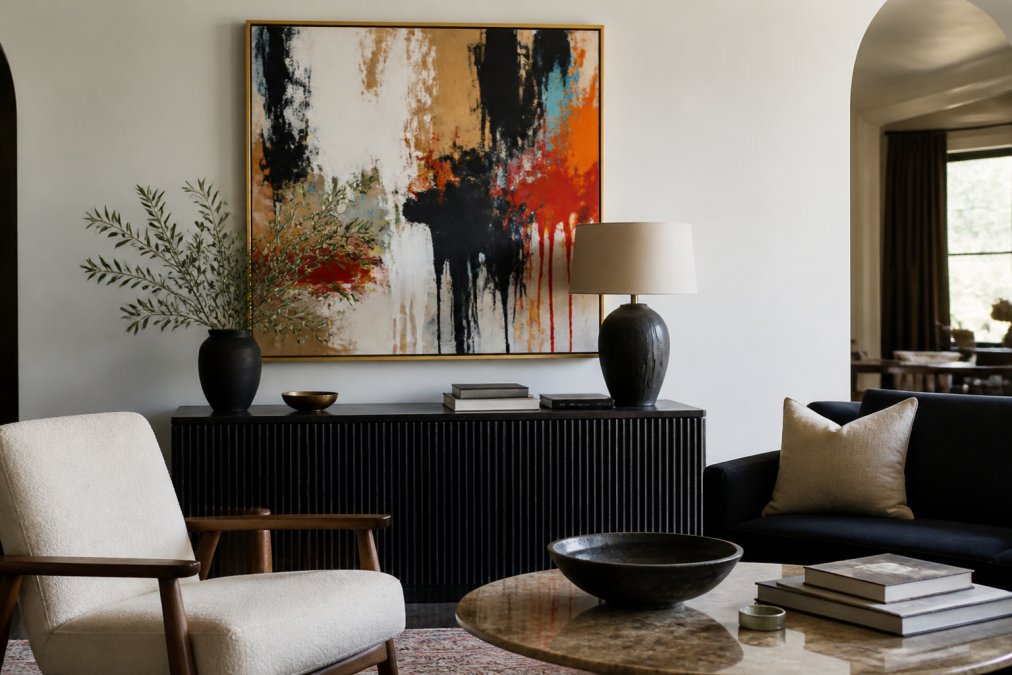
Creating a focal point around your artistic statement pieces begins with spatial positioning. The most impactful placement typically sits at eye level when you enter the room or at the natural center of visual attention, often above a sofa or on the wall opposite primary seating.
Minimalist backdrops amplify impact. Neutral walls, uncluttered surfaces, and breathing room allow the piece to command attention without competing against visual noise. Furniture placement reinforces focal point hierarchy: arrange seating to naturally orient toward your statement art rather than away from it.
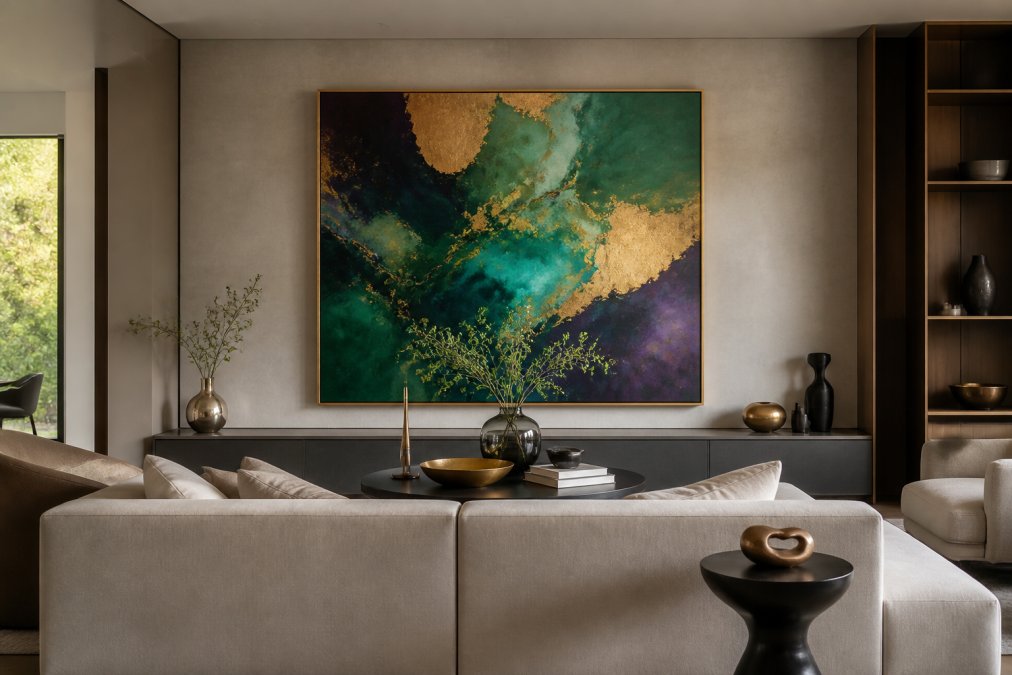
Layering supporting elements matters significantly. A well-chosen area rug, sculptural object, or accent lighting can enhance your focal point’s impact. Lighting transforms how your artistic statement pieces read in the room, directional lighting, picture lights, or track lighting can emphasize texture, depth, and color in ways that flat ambient lighting cannot.
Mastering Scale, Proportion, and Visual Balance
Scale determines whether your artistic statement pieces feel commanding or lost. Your statement art should occupy roughly 50-75% of the wall space above a sofa or console, leaving breathing room but ensuring visual dominance (the American Academy of Dermatology).
Proportion extends beyond the artwork itself to how it relates to surrounding furniture and architectural details. A large abstract canvas above a low-slung modern sofa creates visual tension that works beautifully; that same piece above a delicate antique console might feel jarring.
Visual balance doesn’t require symmetry. Asymmetrical arrangements, where a large statement piece is balanced by a tall sculptural element or architectural feature, often feel more curated and dynamic. The interplay between your statement art and surrounding décor determines whether the room reads as cohesive or chaotic. If your statement piece is maximalist with bold colors and high visual texture, the surrounding space should simplify.
Best Practices for Mixing Art Styles in One Space
Mixing art styles requires a unifying principle, color palette, era, medium, or mood. Without at least one connecting thread, your collection risks reading as random accumulation.
Spacing between pieces matters as much as the pieces themselves. Clustered gallery walls work when items share intentional relationships; scattered artwork often creates visual fragmentation rather than composition.
Scale variation prevents monotony. Pairing one oversized statement piece with smaller artworks or sculptural objects creates rhythm and visual interest while maintaining hierarchy. Color relationships between pieces determine whether mixing styles reads as intentional curation. A bold statement piece in jewel tones can work beautifully with black-and-white photography or neutral sculptural elements if you understand the color relationships.
Texture contrast adds depth when mixing styles. A smooth, glossy abstract painting gains presence when paired with a rough-textured woven piece or matte sculptural object, preventing the room from feeling flat.
Using Decor Accent Pillows to Complement Your Statement Art
Accent pillows serve as the bridge between your statement art and the rest of your room’s furnishings. They translate the colors, textures, and mood of your artwork into functional elements that reinforce your design narrative without overwhelming the space.
Select one primary color from your artwork and build your pillow palette around it. If your statement piece features deep emerald and gold tones, your accent pillows might include a solid emerald linen, a gold-toned geometric pattern, and a neutral texture that allows both colors to breathe.
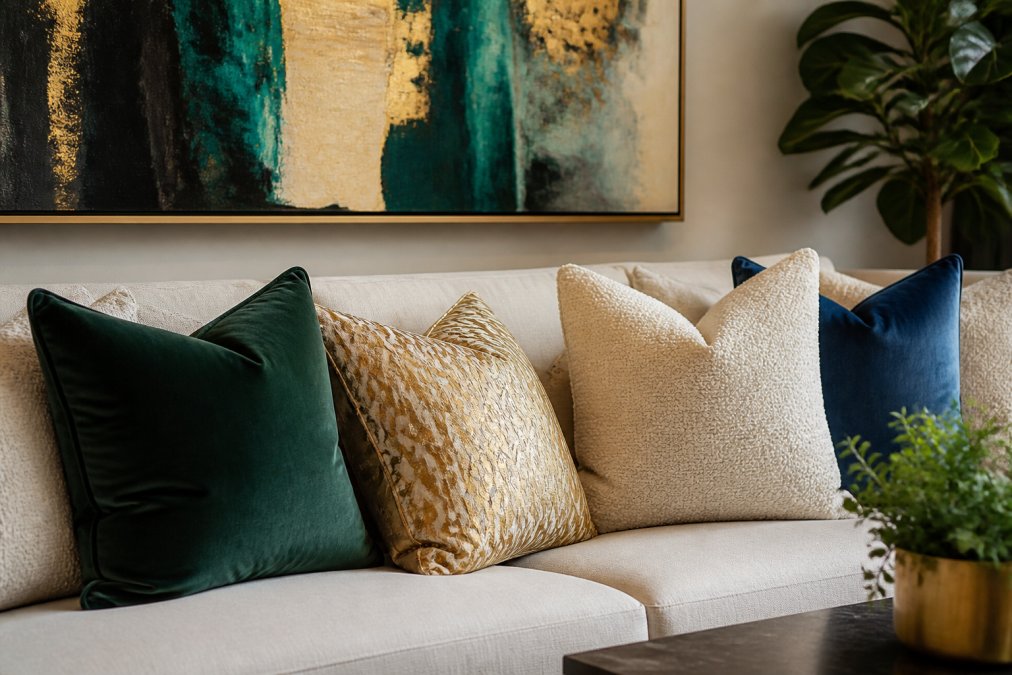
Texture layering through pillows prevents visual flatness. A solid-colored pillow in silk or velvet next to a patterned linen or chunky knit creates tactile interest that makes your seating area feel intentional and curated.
Proportion matters when styling pillows around statement art. Oversized pillows can anchor a large sofa and echo the visual weight of substantial artwork. Placement strategy determines how effectively pillows support your focal point, pillows arranged to frame or direct attention toward your statement art reinforce its importance.
Color restraint often outperforms abundance. Choosing three complementary tones creates sophistication and allows your statement art to remain the primary visual anchor while accent pillows provide supporting harmony.
Lighting, Color Palettes, and Creating Spatial Flow
Lighting transforms how your artistic statement pieces are perceived. Ambient lighting alone creates flatness; directional lighting creates drama. A picture light mounted above your statement art or a well-positioned floor lamp can emphasize texture and reveal color depth.
The color temperature of your lighting matters significantly. Warm lighting (2700K-3000K) creates intimacy and brings out warm tones in artwork, while cool lighting (4000K+) can make colors feel more vibrant (the CDC).
Your bold color palette should extend beyond the statement piece into the surrounding space through thoughtful choices in walls, furniture, and textiles. A monochromatic approach, where walls, major furniture, and accents share subtle variations of a single color family, allows your statement art to command attention without competing against a chaotic background.
Spatial flow describes how your eye moves through a room. Artistic statement pieces create natural stopping points in this flow. Strategic placement ensures these stopping points feel intentional. Layering different light sources prevents the room from feeling one-dimensional and allows you to adjust the room’s mood throughout the day.
Maintaining, Preserving, and Sourcing Sustainable Pieces
Large-scale artwork requires specific care to maintain its visual impact and structural integrity. Regular, gentle cleaning with appropriate tools prevents deterioration. For valuable or delicate pieces, professional conservation advice is worthwhile.
Environmental factors affect preservation significantly. Direct sunlight can fade colors; fluctuating humidity can warp frames or crack canvases (peer-reviewed research). Positioning statement pieces away from direct sunlight and maintaining stable humidity levels protects your investment.
Sourcing sustainable statement pieces reflects both environmental responsibility and long-term design satisfaction. Vintage and antique pieces inherently embody sustainability and often possess superior craftsmanship. Sourcing from local artisans, estate sales, or reputable vintage dealers supports both sustainability and uniqueness.
Budget-friendly DIY approaches to statement art allow creative expression without premium price tags. Large-scale canvas printing of personal photography or commissioned work from emerging artists can create impact at a fraction of gallery-art costs.
Small-space statement styling requires particular care. The solution often lies in vertical emphasis, positioning artwork higher on walls to draw the eye upward and create perceived height. Minimalist surroundings become essential, ensuring your statement piece doesn’t compete against visual clutter.
Long-term curation means reassessing your statement pieces periodically. As your design preferences evolve, your statement art might shift. Rather than viewing this as failure, consider it part of the natural evolution of your personal design narrative.
Decorating with artistic statement pieces transforms your home into a curated sanctuary that reflects your values and inspires daily creativity. The process requires intentionality, understanding not just what you love, but why it works in your specific space and how it interacts with light and surrounding elements.
Verra Luxe Home’s thoughtfully curated collection of premium decor pieces is designed to support this process. Each item blends artistic elegance with practical functionality, ensuring that your statement pieces don’t just look beautiful but actually enhance how you live. Our commitment to durable, high-quality materials means your artistic selections maintain their impact and integrity over time. When you’re ready to transform your space with pieces that truly matter, explore Verra Luxe Home’s collection and discover how the right statement art can reshape your entire home aesthetic. Shop Now.
Frequently Asked Questions
Q: What is the difference between a focal point and an artistic statement piece?
A: A focal point is the primary area or object that draws your eye first when entering a room, it anchors the design narrative. An artistic statement piece is a bold, eye-catching art or decor object that commands attention. Every statement piece can serve as a focal point, but not every focal point requires a statement piece. You might create a focal point through architectural details, lighting, or the arrangement of multiple smaller pieces working together. The key is intentional composition that guides the viewer's gaze and establishes room character.
Q: How do I choose the right scale for artistic statement pieces in a small space?
A: In smaller rooms, one oversized piece often works better than multiple medium-sized items, as it creates visual impact without overwhelming the space. A large abstract painting or sculptural element can anchor a room and make it feel intentional rather than cluttered. Measure your wall space and furniture first, your statement piece should command 50-75% of the available wall area above a sofa or console. Avoid filling every wall; let breathing room enhance the spatial flow. A single large-scale artwork with a minimalist backdrop creates more impact than scattered smaller pieces competing for attention.
Q: Can I mix multiple artistic statement pieces in one room without it looking chaotic?
A: Yes, but only with intentional curation and balance. When mixing statement pieces, ensure they share a common thread, whether that's color palette, era, medium, or artistic movement. Anchor them in different zones of the room rather than clustering them together. Separate each piece with neutral wall space or architectural elements. Layering textural contrast through varied mediums (canvas, sculpture, mixed media) creates visual interest without appearing disjointed. The design narrative should feel curated, not accidental.
Q: What makes high-quality artistic statement pieces worth the investment?
A: Premium pieces combine superior materials, thoughtful craftsmanship, and lasting durability that mass-produced alternatives cannot match. Quality artwork and decor maintain color vibrancy, structural integrity, and aesthetic appeal for years, even in homes with active families. Curated collections from luxury retailers are vetted for cohesion and artistic merit, pieces are selected to work together and elevate your space intentionally. Investing in durable, well-designed statement pieces means you're building a home sanctuary that reflects your values rather than replacing trend-driven items annually. The cost reflects longevity, artistic authenticity, and the transformative impact these pieces have on your living environment.
This article was written using GrandRanker