
Table of Contents
- Budget Friendly Decor Hacks for Beginners: Where to Start
- How to Decorate on a Zero Budget
- Easy DIY Home Decor Projects for Beginners
- Thrift Store Home Decor Ideas That Look Anything But Thrifted
- Affordable Ways to Make a Home Look Expensive
- Five Beginner Mistakes That Make Budget Decor Look Cheap
- Conclusion: Start With One Room, One Weekend
- Frequently Asked Questions
Last Updated: October 8, 2026
Budget Friendly Decor Hacks for Beginners: Where to Start
Budget friendly home decor hacks for beginners work best when you start with what you already own, and that is exactly where these budget friendly home decor hacks for beginners begin.
The good news: a beginner can meaningfully change a room over a single weekend without buying much at all. Below, we walk through the five moves that deliver the biggest visible change for the least money, plus the mistakes that quietly make a budget room look cheap.
The single highest-return decorating decision is not what you buy. It is the order you do things in: clear, rearrange, restyle, then buy only what still feels missing.
How to Decorate on a Zero Budget
Decorating on a zero budget means working with the items already in your home before spending a cent. The process is simple: empty the surface, remove everything, and put back only what earns its place.
Start with one room and one surface, such as a coffee table or a console. Clear it completely. Then return items one at a time, asking whether each piece adds something. Most people find they own more usable decor than they realized, just spread thin across too many surfaces.
Next, move furniture off the walls. Pulling a sofa a few inches forward often makes a room feel larger and more intentional. Swap accessories between rooms: a lamp from the bedroom can change a living room corner entirely.
The Home Depot affordable home decor ideas guide recommends repurposing furniture and household items as a starting point, which matches what we see work best.
Easy DIY Home Decor Projects for Beginners
Easy DIY home decor projects for beginners should take an afternoon, not a weekend, and require no special tools. The projects below all follow that rule.
Five Projects You Can Finish in One Afternoon
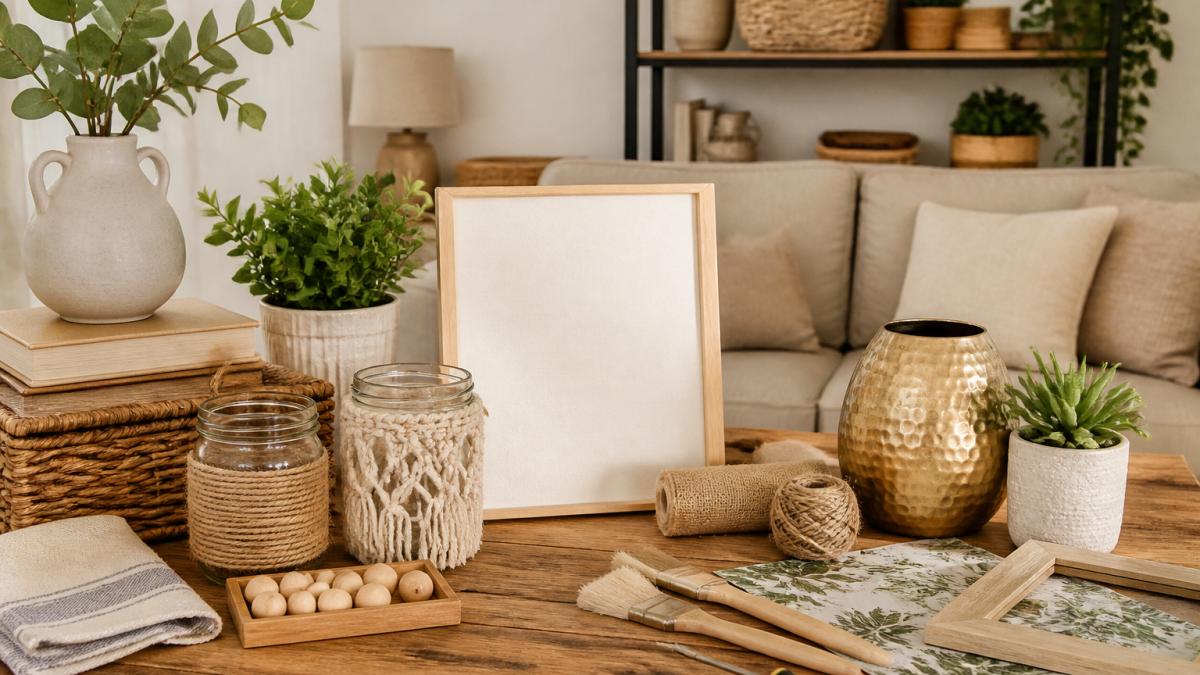
- Swap plain lampshades for textured or woven ones
- Lean a large framed print against the wall instead of hanging it
- Group three candles on a tray to create one intentional display
- Roll a throw blanket into a basket beside the sofa
- Move a plant to a spot where it catches afternoon light
Each project changes how a room reads without changing what it costs. The Spruce guide to low-cost decor upgrades points to restyling existing belongings and updating lampshades as effective, inexpensive refreshes.
Layering height is what makes a styled surface look considered. A stack of two books under a small object instantly gives it presence, and it costs nothing.
Thrift Store Home Decor Ideas That Look Anything But Thrifted
Thrift store home decor ideas work when you shop for material and shape rather than for a finished look. A brass candleholder, a heavy ceramic vase, or a solid wood frame can read as expensive once it is cleaned up and placed well.
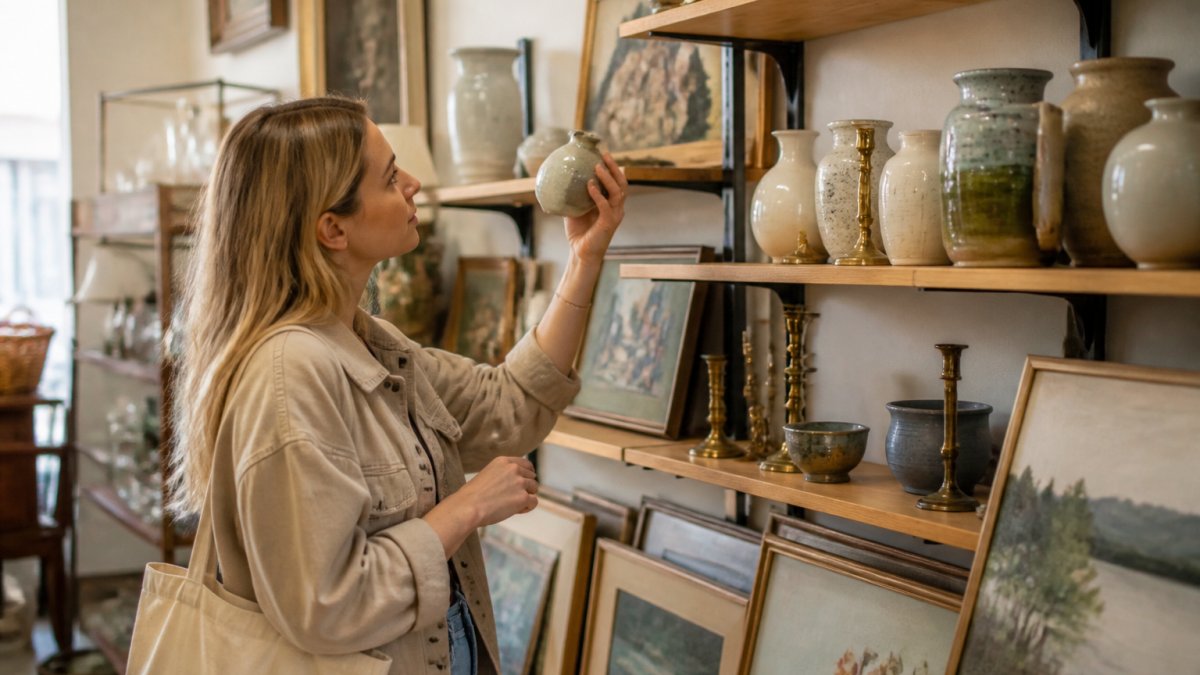
Shop with a list and a color palette in mind. If you are building around warm neutrals, skip the bright blue vase no matter how good the price is. Buy in odd numbers when grouping, and favor pieces with weight: thin, lightweight items tend to look inexpensive next to substantial ones.
One warning: avoid buying a whole shelf of small objects. Three strong pieces will always outperform ten weak ones.
Affordable Ways to Make a Home Look Expensive
Affordable ways to make a home look expensive come down to a short list of details that the eye reads as quality. None of them require a large purchase.
The Details Buyers Notice First
- Consistent hardware: matching handles on cabinets and drawers
- Proper lighting: warm bulbs at eye level rather than overhead only
- Negative space: empty surfaces, not filled ones
- Scale: art and mirrors sized to the wall, not the furniture
- Texture: one natural material per room, such as linen, wood, or stone
The Little House of Four low-budget decorating article suggests dressing up windows and treating them as a focal point, a detail that reliably lifts a room.
| Detail | What It Costs | Why It Reads Expensive |
|---|---|---|
| Matching hardware | Low | Signals a single, considered design |
| Layered lighting | Low to medium | Removes flat, harsh overhead light |
| Larger art | Medium | Correct scale looks custom |
| Natural texture | Low | Adds depth the eye reads as quality |
Five Beginner Mistakes That Make Budget Decor Look Cheap
The fastest way to make a budget room look cheap is to fill every surface. Beginners often buy many small items instead of a few larger ones, and the result feels cluttered rather than styled.
The other four mistakes we see most often:
- Hanging art too high, which leaves a gap between the piece and the furniture
- Mixing too many competing colors instead of sticking to two or three
- Using cool white bulbs, which flatten warm wood and fabric
- Buying sets, which make a room look like a catalog page rather than a home
Buying a matching set of accessories is the most common beginner error. It fills a room quickly, but it removes the layered, collected look that makes a space feel personal.
Conclusion: Start With One Room, One Weekend
One room, one weekend, and one clear order of operations will change more than a month of scattered shopping. Clear first, rearrange second, restyle third, and only then decide what is genuinely missing.
When a room still feels unfinished after those steps, the gap is usually one or two anchor pieces rather than more small accessories. That is where we come in. Verra Luxe Home curates premium decor built to blend artistic elegance with practical durability, so the pieces you add hold up in real homes and work together rather than clashing. Our collection is designed to help you personalize a space with sophisticated charm instead of mass-produced filler.
Get started with Verra Luxe Home and turn one room into a sanctuary of style this weekend.
Frequently Asked Questions
How can beginners decorate their home on a budget?
Start with what you already own: rearrange furniture, restyle shelves, and swap accessories between rooms. Then set a small budget for one focal point per room, like a lamp or a mirror. Thrift stores and clearance aisles cover the rest. Beginners get the best results by finishing one room at a time instead of buying pieces for the whole house at once.
What are the easiest DIY home decor projects for beginners?
Stick to projects that need no special tools: swapping lamp shades, painting a frame, adding a cork top to a desk, or refreshing a basket with chalk paint. Each takes an afternoon and costs little. Skip anything requiring power tools or precise measuring until you have a few simple wins behind you.
How can I make my home look expensive without spending a lot?
Focus on the details people notice first: lighting, hardware, and textiles. Swap builder-grade cabinet knobs for brass or matte black, layer curtains from floor to ceiling, and add one large piece of art instead of several small ones. Grouping accessories in odd numbers and leaving empty space between them also reads as intentional and polished.
How do I decorate a room with little or no money?
Shop your own home before buying anything. Move a rug from the bedroom to the living room, pull books and bowls out of cabinets, and rotate art between rooms. Rearranging and restyling what you own costs nothing and often changes a room more than a new purchase would. Once that is done, you will know exactly what is missing.
What should I buy first when decorating on a budget?
Buy the largest piece in the room first, usually a rug or a sofa, because everything else coordinates around it. After that, prioritize lighting and window treatments, since both change how a room feels more than small accessories do. Save accent pieces for last so you can match them to what you already have.