Table of Contents
- Why Professional Home Renovation Styling Is Worth the Investment
- Decorating Tips for Non-Designers: How to Get a Curated Look
- How to Layer Decor for a Cohesive Look That Lasts
- Setting a Home Renovation Styling Budget That Works
- The Psychological and Lifestyle Benefits of Professional Styling
- Sustainable and Smart: Future-Proofing Your Renovation Styling
- Making Professional Home Renovation Styling Work for You
- Frequently Asked Questions
Last Updated: October 2, 2026
Why Professional Home Renovation Styling Is Worth the Investment
Professional home renovation styling is the practice of hiring a trained stylist to curate, arrange, and finish a renovated space so it looks intentional rather than assembled, bridging the gap between construction finished and room lived-in.
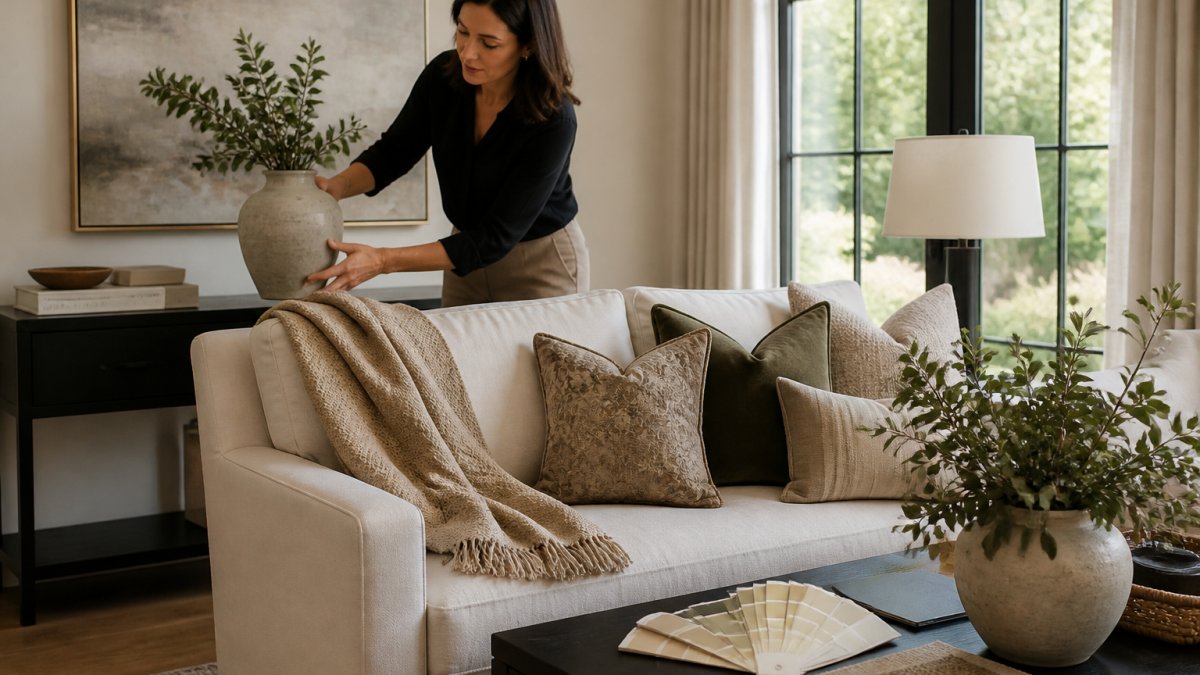
The financial case is straightforward: a well-styled renovation supports property value because buyers respond to finished, photographable rooms, and agents note that staged homes show better.
Three things professional styling does that most homeowners cannot replicate alone:
- Spatial planning at the finish level. A stylist reads sightlines, scale, and negative space, then places furniture and decor to direct movement through the room.
- Access to trade resources. Designers and stylists buy from wholesale and to-the-trade sources, which widens the pool of material and furniture options beyond retail.
- Decision fatigue relief. Renovations exhaust decision-making capacity. Handing the final layer to someone else protects the quality of the choices you still have to make.
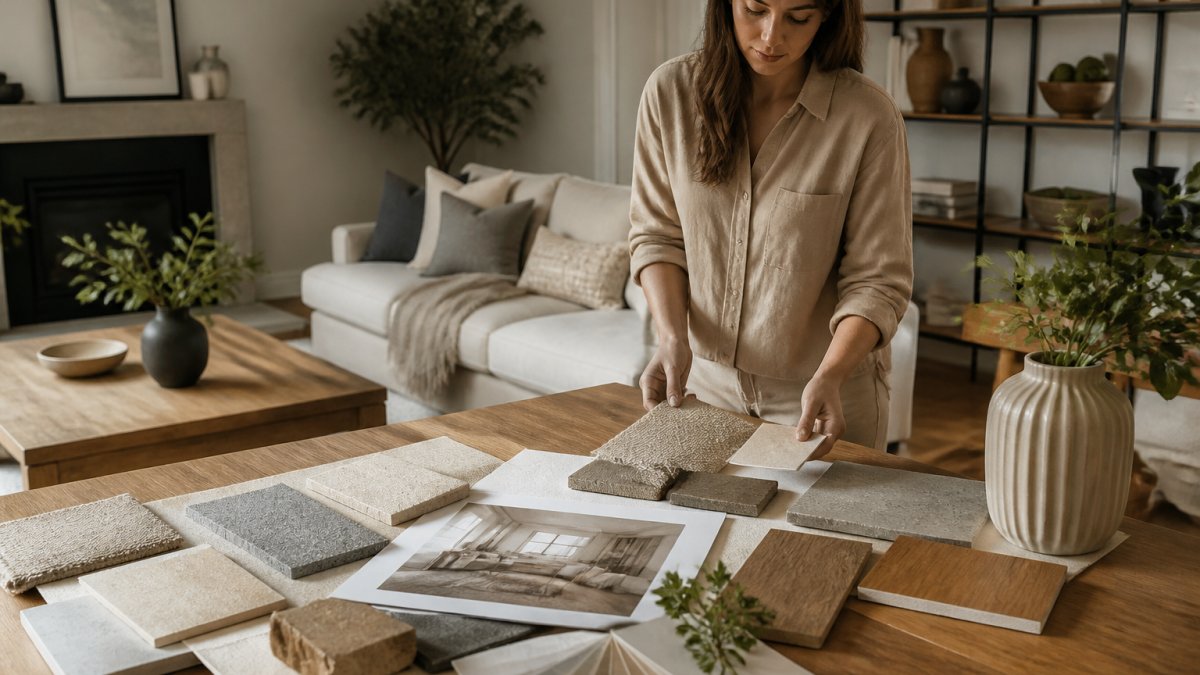
Ask your stylist for a “finish schedule” alongside a furniture plan. It is a one-page document listing every finish, fixture, and textile by room, and it prevents the most common renovation failure: three beautiful materials that clash when installed side by side.
Decorating Tips for Non-Designers: How to Get a Curated Look
The fastest route to a curated look is a consistent palette, a clear focal point per room, and restraint on the number of finishes.
Start with what stays. Identify the fixed elements, flooring, cabinetry, countertops, and architectural details, and build the palette around them rather than fighting them.
A practical sequence for non-designers:
- Pick three finishes maximum per room: one dominant, one secondary, one accent.
- Repeat a material at least twice in a room so it reads as intentional.
- Vary height, not just width. A shelf styled with objects at three heights reads better than a row of same-sized pieces.
- Leave one surface empty. Negative space is a design decision, not a gap.
- Buy the largest piece first. Rugs and art anchor a room; accessories fill it.
What most guides miss is that cohesion comes from repetition, not matching sets.
How to Layer Decor for a Cohesive Look That Lasts
Layering decor means building a room in deliberate strata: base layer, mid layer, top layer. Each has a job, and skipping one is why rooms feel flat or cluttered.
Work through the layers in order:
- Base layer: sofa, rug, large case goods, window treatments. These set scale and color.
- Mid layer: lighting, side tables, large art, mirrors. These add function and reflection.
- Top layer: textiles, books, ceramics, small art, greenery. These carry the styling.
The test for a finished room is simple: stand in the doorway, squint, and check whether the eye lands somewhere specific. If it wanders, the focal point is unclear; if it lands and stops, the top layer is too sparse.
Do not style a room before the lighting is final. Decor chosen under temporary work lights will read wrong once the permanent fixtures are installed, and returning pieces after installation is far harder than waiting two weeks.
Setting a Home Renovation Styling Budget That Works
A home renovation styling budget is the line item most homeowners forget to reserve, and it determines whether the finished space looks designed or merely renovated.
A common rule of thumb is to reserve a portion of the total renovation budget for styling and furnishings on a whole-home project, and a higher share on a single-room refresh.
A workable framework:
| Styling Scope | What It Covers | Best For | Time Commitment |
|---|---|---|---|
| Consultation only | Palette, layout, shopping list | Confident DIY homeowners | 2-4 hours |
| Partial styling | Key rooms, sourced pieces | Single-room renovations | 1-3 weeks |
| Full turnkey | Every room, installed and finished | Whole-home renovations | 4-12 weeks |
What actually drives the number up or down:
- Square footage and room count. A primary suite and a great room consume more budget than three small bedrooms because the anchor pieces are larger.
- Anchor vs. accessory ratio. Sofas, rugs, case goods, and window treatments carry most of the cost. Accessories are the cheapest layer and the easiest to phase.
- Custom vs. in-stock. Custom upholstery and made-to-order window treatments add lead time and cost but fit the space; in-stock pieces ship faster and cost less but constrain dimensions.
- Trade vs. retail sourcing. To-the-trade pricing can lower the cost of a given piece, but designers typically bill a design fee or markup, so the net savings vary by project.
- Install and delivery. White-glove delivery, assembly, and styling day labor are real line items. Ask whether they are included or billed separately.
Three habits keep the budget honest: reserve styling funds at the start rather than pulling from contingency, which construction surprises consume; separate durable pieces from seasonal ones so you are not replacing core items yearly; and buy anchors first, since a rug or sofa sets the palette everything else follows.
Ask for a phased budget that separates “must install now” from “can add in six months.” A room styled in two phases usually looks better than one styled in a single rushed pass, and it spreads the cost across two budget cycles.
The Psychological and Lifestyle Benefits of Professional Styling
The psychological payoff of a professionally styled home is the benefit homeowners underrate most, and it tends to outlast the aesthetic one. A finished space reduces the low-grade friction of living in a project: rooms that work get used, and rooms that feel unresolved get avoided.
Consider what changes when a renovation is actually finished:
- Decision fatigue drops. No more open loops about paint, hardware, or where the art goes.
- The home becomes usable again. You host, cook, and rest in rooms that were previously off-limits.
- Pride of place increases. A space that reflects your values invites you to spend time in it.
- Maintenance gets easier. A clear system for what belongs where means tidying takes minutes, not an afternoon.
This is the part most renovation coverage skips: the value of styling is not only resale optics, but the daily experience of a home that works.
Sustainable and Smart: Future-Proofing Your Renovation Styling
Future-proofing means choosing decor and finishes that will still suit the space in ten years.
Sustainable and eco-friendly sourcing. Durable, classic pieces cost more upfront and far less over time, the real argument for buying well rather than often. Where to focus:
- Solid wood over veneer and MDF for pieces that take daily wear. Solid wood can be refinished; veneer and particleboard generally cannot.
- Natural fibers such as wool, linen, cotton, jute, and hemp over acrylic and polyester where the textile will be touched, sat on, or walked on. Wool rugs in particular resist crushing and clean well.
- Low-VOC and water-based finishes on furniture, cabinetry, and paint. These reduce off-gassing in the weeks after installation, which matters most in bedrooms and small rooms with limited airflow.
- Reclaimed and recycled materials for accent pieces, shelving, and architectural details. They add character and divert material from the waste stream.
- Locally made and domestically produced goods where possible, which shortens shipping distance and often improves repairability because replacement parts are easier to source.
- Energy efficiency at the finish level. Window treatments are the most underrated efficiency tool in a renovation. Cellular shades, lined drapery, and exterior shading reduce heat gain in summer and heat loss in winter, and they are far cheaper to install during a renovation than to retrofit later.
Smart home integration. Planning beats purchasing here. The goal is not to fill the house with devices, but to make the wiring and placement decisions that let you add devices later without opening walls.
- Plan outlet and device placement during construction. Retrofitting smart lighting, motorized shades, or a video doorbell after drywall is far more disruptive and expensive than roughing in the wiring now.
- Neutral wiring over proprietary systems. A neutral low-voltage wire and a standard switch box give you options across brands. Proprietary systems lock you into one ecosystem.
- Smart lighting and motorized shades are the two upgrades with the clearest daily payoff, because they affect how the room feels at every hour rather than adding a single feature.
- Thermostats, leak sensors, and smoke and CO detectors are the practical safety and efficiency layer. They are inexpensive relative to construction and easy to add during a renovation.
- Keep a device schedule. A one-page list of every smart device, its app, and its login prevents the common problem of a house full of devices no one can control after the original installer moves on.
Post-renovation maintenance and longevity. Longevity is a maintenance habit as much as a purchase decision. Keep a finish care sheet for every surface, and follow it.
- Stone and tile: reseal natural stone on the schedule the fabricator recommends, and use pH-neutral cleaners. Acidic cleaners etch marble and limestone.
- Wood: keep indoor humidity stable, because wood expands and contracts with moisture and gaps open when humidity swings.
- Textiles: rotate and flip rugs and cushions so wear is even, and clean wool and linen per the manufacturer’s instructions rather than with generic upholstery cleaner.
- Metal finishes: unlacquered brass patinas and is meant to; lacquered brass and polished nickel need a soft cloth and no abrasives.
- Window treatments: vacuum cellular shades and drapery on a low setting to keep them operating smoothly and to reduce dust.
The single most durable styling decision is a restrained palette. Neutrals and natural materials absorb trend shifts, while bold, trend-specific choices date fastest and cost the most to undo. Pair that palette with neutral wiring and a written care schedule, and the room is set up to last rather than to be redone.
Making Professional Home Renovation Styling Work for You
Getting value from professional home renovation styling comes down to timing, communication, and knowing what you are buying.
A few practical rules:
- Involve your stylist before finishes are locked. Palette decisions made early prevent expensive material conflicts later.
- Coordinate with your contractor on sequencing. Styling installs after construction oversight ends, but the plan should exist during it.
- Ask for a cohesive curation, not a shopping list. The value is in how the pieces work together, not in the individual items.
- Confirm the durability story. If a piece will live in a home with kids and pets, ask how it is finished and how it cleans.
For homeowners who want the finished result without assembling it piece by piece, a curated collection of premium decor solves the hardest part: choosing pieces that hold together as a room.
Finishing a renovation is the hardest part to get right, and the easiest to postpone.
Frequently Asked Questions
What is the 30% rule in remodeling?
The 30% rule suggests keeping your renovation budget at or below a certain percentage of your home’s current value. This helps prevent over-improving for the neighborhood, which can make it hard to recoup costs at resale. Professional home renovation styling can help you allocate that budget wisely, focusing on high-impact updates that boost property value without overspending.
How does professional styling increase home resale value?
Professional styling enhances aesthetic appeal and spatial planning, making your home more attractive to buyers. Well-styled homes often sell faster and for higher prices because they help buyers envision themselves in the space. Styling also highlights key architectural details and functional layout, which can justify a higher asking price. According to industry data, staged homes can sell for more than unstaged ones, though results vary by market.
What are the biggest renovation mistakes to avoid?
Common mistakes include ignoring the home renovation styling budget, skipping professional expertise, and making impulsive design choices that clash with existing decor. Another mistake is underestimating the importance of contractor coordination and project timeline. To avoid these, plan your budget with a contingency, hire professionals for styling and construction oversight, and use decorating tips for non-designers to maintain a cohesive look throughout your renovation.
How do I choose a professional stylist for my renovation project?
Look for a stylist with a portfolio that matches your aesthetic and experience in home renovations. Ask about their process for material sourcing, trade resources, and how they handle contractor coordination. A good stylist will offer turnkey solutions, from spatial planning to curated finishes, and will work within your home renovation styling budget. Check reviews and request references to ensure they can deliver the professional expertise you need for a cohesive result.